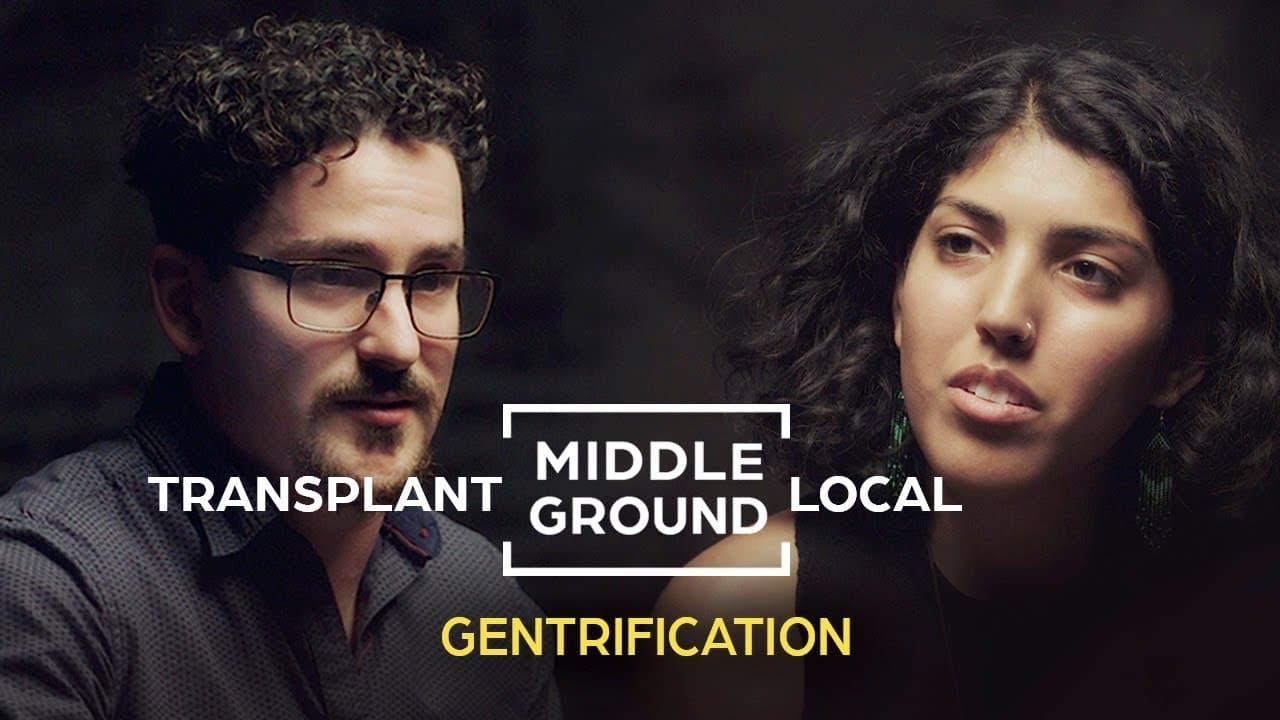
How Does Gentrification Divide City Residents?
TL;DR
Gentrification can improve neighborhoods through development, jobs, walkability, and rising property values, but it can also displace renters, erase local history, and weaken residents’ sense of belonging. Locals and transplants find common ground around preserving community identity, expanding access to stable housing and education, recognizing unequal circumstances, and balancing personal responsibility with empathy.
Transcript
what was once a race thing isn't a race thing anymore it's a need for LA to be more developed for you know for everyone my name is Lourdes I am 20 years old and I am a student my name is Terrence I'm 26 transplant and I work currently for security at LAX I'm Dominique right I'm 32 and I don't know what my employee status is so I can't really tell y... Read More
Key Insights
- Freedom to relocate can have damaging effects even without harmful intent. When newcomers attract friends and additional investment, housing costs and neighborhood conditions may change until people who lived there first can no longer remain in their community.
- Gentrification can weaken belonging by forcing longtime residents farther from familiar streets, relationships, and institutions. A participant from Echo Park describes watching people she grew up with move about 30 miles away because they could no longer afford housing in the area.
- Home is both a location and an evolving emotional state. Some participants connect it to a specific neighborhood and its history, while others who moved frequently define it through family, relationships, identity, or the place where they became themselves.
- Historical preservation is necessary because development can erase culturally meaningful places. Participants cite Detroit’s Motown heritage, the Fox Theater, and concerns about replacing the Crenshaw mall with a luxury-oriented development that may not serve the surrounding community.
- Neighborhood reinvestment can create jobs, improve walkability, and benefit property owners. Supporters argue that development keeps communities active and provides opportunities, while critics stress that those benefits depend on whether projects address the needs and purchasing power of existing residents.
- Stable housing is presented as a basic starting point rather than a promise of luxury. One participant argues that everyone should have somewhere indoors to live, because basic stability allows people to begin improving their circumstances without diminishing another person’s home.
- Personal responsibility can influence the direction of a person’s life, but unequal circumstances complicate simple comparisons. Participants debate whether people deserve only what they create for themselves, while acknowledging that some lack supportive parents, useful knowledge, education, or guidance.
- Empathy is a central requirement for addressing housing inequality. The discussion rejects the assumption that everyone can succeed through identical effort, because people carry different burdens, and it encourages sharing knowledge, expressing kindness, and understanding circumstances beyond individual control.
Install to Summarize YouTube Videos and Get Transcripts
Explore YouTube Video Summarizer or Get YouTube Transcript Extractor
Questions & Answers
Q: How can gentrification displace longtime residents?
Gentrification can displace longtime residents when newcomers and investment change neighborhood costs until existing renters can no longer afford to stay. One Echo Park resident describes seeing people she grew up with move about 30 miles away. The loss extends beyond housing because displaced residents also lose familiar relationships, history, routines, and their established sense of belonging.
Q: Why can moving into a neighborhood affect its existing community?
Moving into a neighborhood can affect the existing community even when a newcomer has no harmful intentions. Participants suggest that one person may attract friends and encourage further demand or investment. Those cumulative changes can increase pressure on housing and alter a historically significant space, eventually making it difficult for earlier residents to remain in the place they built.
Q: What benefits can neighborhood development provide?
Neighborhood development can provide job opportunities, greater walkability, renewed economic activity, and benefits for property owners. One participant who works with people who flip houses says some owners welcome the changes, while some renters appreciate being able to walk more easily. The discussion nevertheless stresses that benefits vary depending on who lives there and whom a project serves.
Q: Why do some residents oppose luxury development?
Some residents oppose luxury development because it may replace meaningful community spaces without serving the people already living nearby. The proposed transformation of the Crenshaw mall into something resembling The Grove is criticized on the grounds that existing residents may not be able to afford luxury offerings. Critics therefore question development that changes an area while ignoring local needs.
Q: How does gentrification threaten neighborhood history?
Gentrification can threaten neighborhood history when economically valuable projects replace places connected to a community’s identity and memories. Participants argue that the pursuit of money has already erased history and that preservation is necessary to avoid repeating past mistakes. Detroit’s Motown roots, museums, and the Fox Theater illustrate why culturally meaningful institutions can feel personally irreplaceable.
Q: What does home mean to locals and transplants?
Home means different things depending on a person’s experience. A lifelong resident may connect home to a particular street, neighborhood, community, and history. People who moved frequently may locate home in family, relationships, or their current state of being. Another participant describes home as something that changes across life stages and sometimes must be deliberately rebuilt.
Q: Does everyone deserve stable housing?
Participants disagree about the language of deserving, but several argue that everyone should have basic housing stability. The claim is not that everyone needs luxury accommodations, but that each person should have somewhere indoors to live and a stable starting point. Others emphasize effort and personal responsibility while acknowledging that some people begin with a particularly difficult set of circumstances.
Q: How can empathy shape responses to housing inequality?
Empathy can improve responses to housing inequality by recognizing that people do not begin with the same knowledge, parenting, education, opportunities, or burdens. Participants criticize the apathetic idea that another person can succeed simply because someone else did. They propose sharing useful knowledge, offering guidance, practicing kindness, and understanding that housing struggles cannot always be reduced to insufficient effort.
Summary & Key Takeaways
-
Locals and transplants discuss whether people should be free to move anywhere, even when newcomers may unintentionally contribute to displacement. Participants distinguish legal mobility from its community effects, arguing that moving into a historically significant neighborhood can raise costs, alter its culture, and prevent longtime residents from remaining there.
-
The participants compare personal meanings of home. Some associate home with a particular neighborhood, its history, and relationships built over decades, while others view home as a feeling that moves with family or develops during new life stages. Displacement is therefore presented as both a housing problem and an emotional loss.
-
The discussion contrasts development’s possible benefits with its unequal consequences. Property owners may welcome higher values, renters may appreciate greater walkability, and reinvestment may create jobs. Others warn that luxury projects can neglect existing residents. The group ultimately emphasizes housing stability, education, responsibility, historical preservation, kindness, and empathy.
Read in Other Languages (beta)
Share This Summary 📚
Summarize YouTube Videos and Get Video Transcripts with 1-Click
Try YouTube Summary with ChatGPT & Claude or YouTube Transcript Generator
Explore More Summaries from Jubilee 📚





Summarize YouTube Videos and Get Video Transcripts with 1-Click
Try YouTube Summary with ChatGPT & Claude or YouTube Transcript Generator