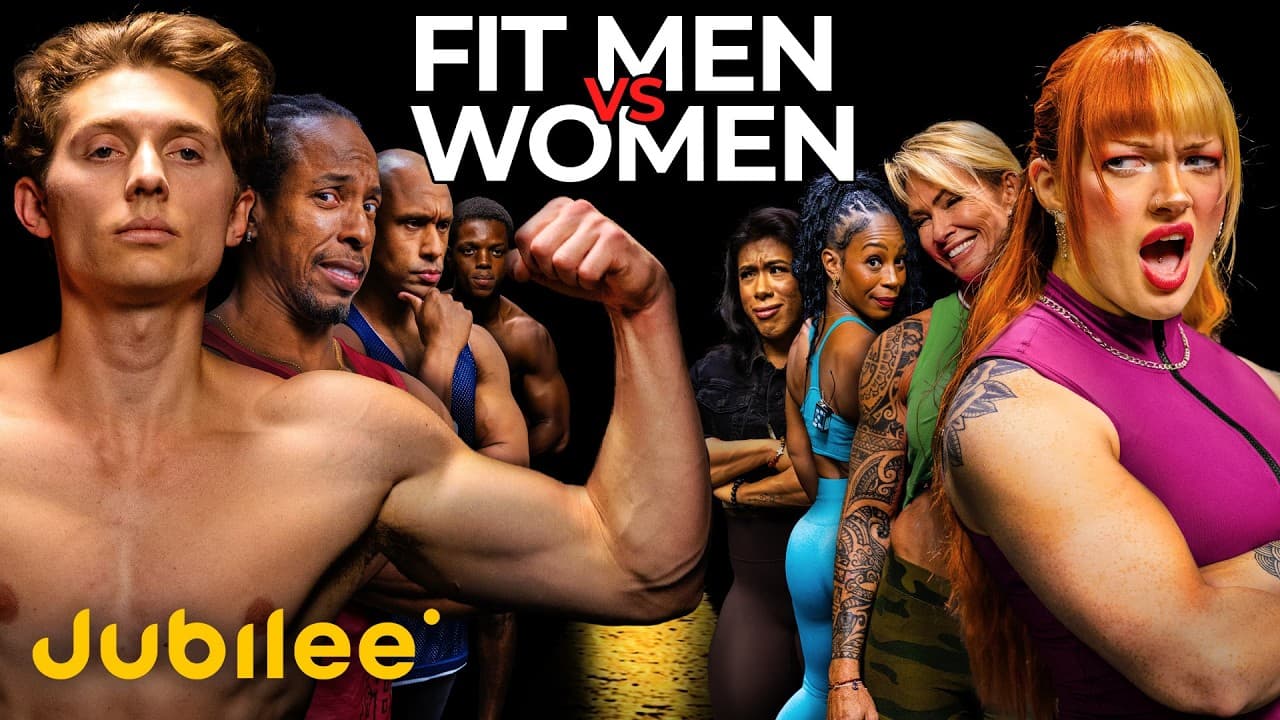
Do Gyms Favor Fit Men Over Fit Women?
TL;DR
The video explores the dynamics between fit men and women in gym culture, discussing perceptions, experiences, and societal norms. It highlights how men and women face different challenges and judgments, with men often seen as more dominant in gym spaces. The conversation also touches on societal expectations and the influence of social media on fitness perceptions.
Transcript
obese women or thick girls or any type of girl is gonna do fine a fat man that has Bank yeah is going to do way better than a thick woman with no Bank his money makes that sugy step forward if you agree with the prompt a gym is a masculine space do any of you feel uncomfortable going to the gym or how are you kind of adapted to it now was it kind o... Read More
Key Insights
- Gym culture is perceived as masculine, making some women feel judged or uncomfortable.
- Women in gyms often face unsolicited advice from men, assuming they lack knowledge.
- Social media influences gym culture, with many using gyms for content creation rather than fitness.
- Attractiveness is often linked to perceived health, affecting how people view themselves and others.
- Fat acceptance varies, with obese women often seen as more socially acceptable than obese men.
- Fit women face challenges in monetizing their physique compared to men, despite having large followings.
- The fitness industry is heavily influenced by aesthetics, impacting personal and professional dynamics.
- Personal trainers' gender preferences can be influenced by perceived expertise and personal comfort.
Install to Summarize YouTube Videos and Get Transcripts
Explore YouTube Video Summarizer or Get YouTube Transcript Extractor
Questions & Answers
Q: How does gym culture affect women differently than men?
Gym culture is often perceived as masculine, which can make women feel judged or uncomfortable, especially in weightlifting areas. Women frequently face unsolicited advice from men, who assume they lack knowledge, despite their experience. This dynamic can lead to feelings of exclusion and reinforce stereotypes about gender roles in fitness.
Q: What role does social media play in gym culture?
Social media significantly influences gym culture, with many individuals using gyms as backdrops for content creation rather than focusing on fitness goals. This shift has led to a culture where aesthetics are prioritized over genuine health and fitness, impacting how people perceive themselves and others in gym environments.
Q: Why are obese women often seen as more acceptable than obese men?
Obese women are often perceived as more socially acceptable than obese men due to societal norms and expectations around attractiveness. Women, regardless of size, are often seen as more desirable in social contexts, whereas obese men face harsher judgments and less acceptance, impacting their social and dating experiences.
Q: How do societal expectations influence perceptions of attractiveness?
Societal expectations often link attractiveness to perceived health, influencing how individuals view themselves and others. This perception affects personal and professional dynamics, with fit individuals often seen as more disciplined and desirable, while those with higher body fat are judged as less healthy or attractive.
Q: What challenges do fit women face in monetizing their physique?
Fit women often face challenges in monetizing their physique compared to men, despite having large followings. The fitness industry is heavily influenced by aesthetics, and while women may have significant social media presence, they struggle to sell workout programs or be taken seriously compared to their male counterparts.
Q: How does personal trainer gender preference vary?
Gender preference for personal trainers can vary based on perceived expertise and personal comfort. Some individuals may prefer male trainers for building muscle, assuming they have more expertise, while others might choose female trainers for a more empathetic approach or to avoid judgment in a traditionally male-dominated space.
Q: What impact does gym attire have on perceptions?
Gym attire can significantly impact perceptions, with individuals often dressing to highlight their physique or for comfort. While some argue that attire is chosen for personal motivation, others acknowledge that it can be influenced by the desire for attention or to present oneself positively in a social media-driven culture.
Q: Why is fitness often equated with aesthetics?
Fitness is often equated with aesthetics due to the visual nature of social media and the fitness industry's emphasis on appearance. This focus on aesthetics can overshadow the importance of health, leading individuals to prioritize looking fit over being genuinely healthy, impacting both personal and professional fitness dynamics.
Summary & Key Takeaways
-
The video delves into the perceived male dominance in gym culture, where women often feel judged or receive unsolicited advice from men, despite having experience. This dynamic can create discomfort for women, especially in weightlifting areas.
-
Social media has shifted gym culture, with many individuals attending gyms for content creation rather than genuine fitness goals. This has led to a new dynamic where aesthetics often overshadow health and fitness.
-
The discussion also touches on societal expectations around attractiveness and health, with a focus on how these perceptions affect both men and women differently in the fitness world.
Read in Other Languages (beta)
Share This Summary 📚
Summarize YouTube Videos and Get Video Transcripts with 1-Click
Try YouTube Summary with ChatGPT & Claude or YouTube Transcript Generator
Explore More Summaries from Jubilee 📚






Summarize YouTube Videos and Get Video Transcripts with 1-Click
Try YouTube Summary with ChatGPT & Claude or YouTube Transcript Generator