How Progressives and MAGA Debate Family and 2028
TL;DR
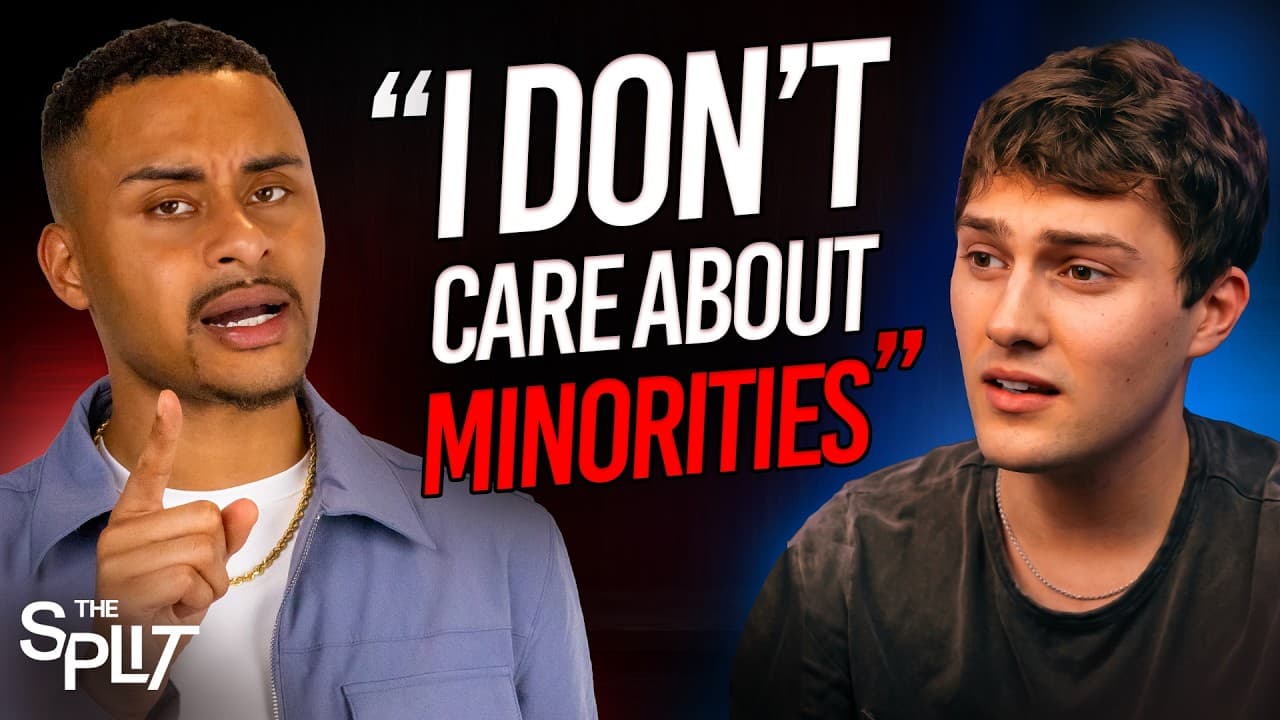
Political claims should be judged by the quality of their evidence, not by how suspicious an event feels or how forcefully a pundit presents it. The exchange shows a conservative and a progressive challenging each other over Candace Owens's allegations about Charlie Kirk, the consequences of inflammatory rhetoric, political role models, the nuclear family, public benefits, and possible candidates for the 2028 election.
Transcript
I don't care about minorities. I care about majorities and and overwhelming evidence to get to the bottom of who assassinated Charlie Kirk. No. >> Do you think Republicans are good role models? >> In no world is conservative policy doing a better job at protecting the nuclear [music] family. >> Do you think cutting food stamps? Do you think that's ... Read More
Key Insights
- The central evidentiary dispute is whether unexplained or allegedly unusual details constitute proof of a coordinated assassination plot. Austin treats several reported details as grounds for suspicion, while David argues that calling those details suspicious does not demonstrate that any conspiracy occurred.
- Austin's defense of Candace Owens is explicitly qualified rather than unconditional. He says she has made extreme claims and can be wrong, but contends that her questions about Charlie Kirk's death should not all be dismissed merely because of her reputation.
- David's criticism is that conspiracy-focused pundits can profit from political violence and public emotion. He characterizes Candace Owens and Alex Jones as unreliable investigators whose assertions do not become evidence simply because they repeatedly identify supposedly suspicious circumstances.
- The security-team phone call is interpreted in two incompatible ways. Austin views immediate contact between members of Charlie Kirk's and Ben Shapiro's security teams as potentially suspicious, while David considers communication after a friend's shooting an ordinary precaution against another possible threat.
- The debate distinguishes controversial speech from direct responsibility for violence. David argues that inflammatory political rhetoric can carry consequences and place a public figure in danger, while Austin describes Charlie Kirk as a political commentator and free-speech advocate whose views did not justify violence.
- Operation Northwoods is introduced by Austin as an example supporting general distrust of the United States government. Within the exchange, however, that historical reference does not establish who killed Charlie Kirk or verify any of the specific allegations attributed to Candace Owens.
- Foreign influence is raised as a broader concern about political commentators. David cites other pundits who allegedly received money and suggests that online narratives may align with foreign interests, but he does not present evidence that Candace Owens herself was paid by any foreign actor.
- The program's wider structure connects media credibility with disputes about Republican role models, food stamps, nuclear families, and the 2028 presidential election. The hosts frame these subjects through adversarial partisan exchanges, predictions, hot takes, and direct engagement with audience comments.
- More videos with Charlie Kirk:
Install to Summarize YouTube Videos and Get Transcripts
Explore YouTube Video Summarizer or Get YouTube Transcript Extractor
Questions & Answers
Q: Why does Austin defend Candace Owens's Charlie Kirk claims?
Austin says his defense is hesitant because he believes Candace Owens has previously made extreme or incorrect statements. Nevertheless, he argues that reported gaps involving footage of Tyler Robinson, the handling of a rifle, communication between security teams, removal of a camera memory card, and an alleged exploding microphone create unanswered questions. His position is that these details justify further scrutiny, not that every claim from Owens is correct.
Q: Why does David reject the alleged Charlie Kirk conspiracy?
David argues that the discussion offers suspicions rather than verified evidence of a coordinated plot. He disputes the idea that a security-team phone call is inherently suspicious and suggests it could reflect concern that Ben Shapiro might also face danger. He also portrays Candace Owens and Alex Jones as commentators who repeatedly profit from emotionally charged stories, making their unsupported interpretations unreliable in his view.
Q: What evidence about Tyler Robinson is disputed in the debate?
Austin claims that available footage does not clearly show Tyler Robinson breaking down and later reassembling the rifle, despite what Austin describes as the original police report. He also questions how Robinson could approach, take a shot from 200 yards, escape notice, and handle the weapon as alleged. David does not validate these details and argues that the cited material does not prove a conspiracy.
Q: Why is the security-team phone call discussed as suspicious?
Austin says a member of Charlie Kirk's security team contacted a member of Ben Shapiro's security team immediately after the shooting, and he treats the timing as a possible sign of undisclosed coordination. David offers a simpler interpretation: after seeing a friend shot, security personnel could reasonably warn another political figure's team about a potential threat. The exchange provides competing interpretations, not proof of misconduct.
Q: How does the debate connect political rhetoric with violence?
David argues that words can have consequences and that an inflammatory political figure may face greater danger because of the reactions that rhetoric provokes. He cites Charlie Kirk's activities and statements about immigrants as relevant context while still rejecting the alleged shooter's actions. Austin resists that framing, describing Kirk as a political commentator and free-speech advocate and emphasizing that disagreement cannot justify killing him.
Q: What is the argument about pundits and foreign influence?
David suggests that some online political figures have received money connected to foreign interests and that their messaging can align with the goals of United States adversaries. He asks whether Candace Owens could be similarly influenced, but provides no direct evidence that she was paid. Austin rejects the suggestion and asks what foreign interest would be served by her claims about Israel or the United States government.
Q: What role does Operation Northwoods play in Austin's argument?
Austin invokes Operation Northwoods to support the general proposition that the United States government has contemplated underhanded actions. He says it was a planned CIA operation intended to incite war with Cuba and that John F. Kennedy declined it. In the logic of his argument, this history makes government misconduct conceivable, but it does not directly verify any allegation concerning Charlie Kirk's assassination.
Q: What broader topics does The Split debate in this episode?
According to the title, introduction, and timecodes, the episode covers embarrassing political news stories, whether progressivism is harming nuclear families, and the hosts' preferred candidates for the 2028 presidential election. It also includes a prediction segment called Best Guess, a Hot Takes section, and discussion of audience comments. The opening additionally raises Republican role models, food stamps, Hunter Biden, and partisan policy differences.
Summary & Key Takeaways
-
Austin hesitantly defends Candace Owens, arguing that questions about footage, security-team behavior, a memory card, and the handling of a rifle make the official account of Charlie Kirk's assassination appear suspicious. He acknowledges that Owens has promoted extreme claims, but maintains that some reported details deserve closer examination rather than immediate dismissal.
-
David rejects the allegations as unsupported conspiracy theories promoted by commentators who profit from fear, anger, and political violence. He argues that labeling ordinary security communication or unclear footage as suspicious does not establish wrongdoing. He also questions whether pundits may advance narratives that align with foreign interests, although no funding evidence concerning Owens is presented.
-
The broader program places this dispute alongside debates about whether progressive or conservative policies better protect nuclear families and which figures deserve support in the 2028 presidential election. The listed segments also include rapid political takes, prediction exercises, hot takes, and responses to audience comments, presenting disagreement as direct partisan confrontation.
Read in Other Languages (beta)
Share This Summary 📚
Summarize YouTube Videos and Get Video Transcripts with 1-Click
Try YouTube Summary with ChatGPT & Claude or YouTube Transcript Generator
Explore More Summaries from Jubilee 📚



Summarize YouTube Videos and Get Video Transcripts with 1-Click
Try YouTube Summary with ChatGPT & Claude or YouTube Transcript Generator