How Does China’s LGFV Debt Threaten Its Economy?
TL;DR
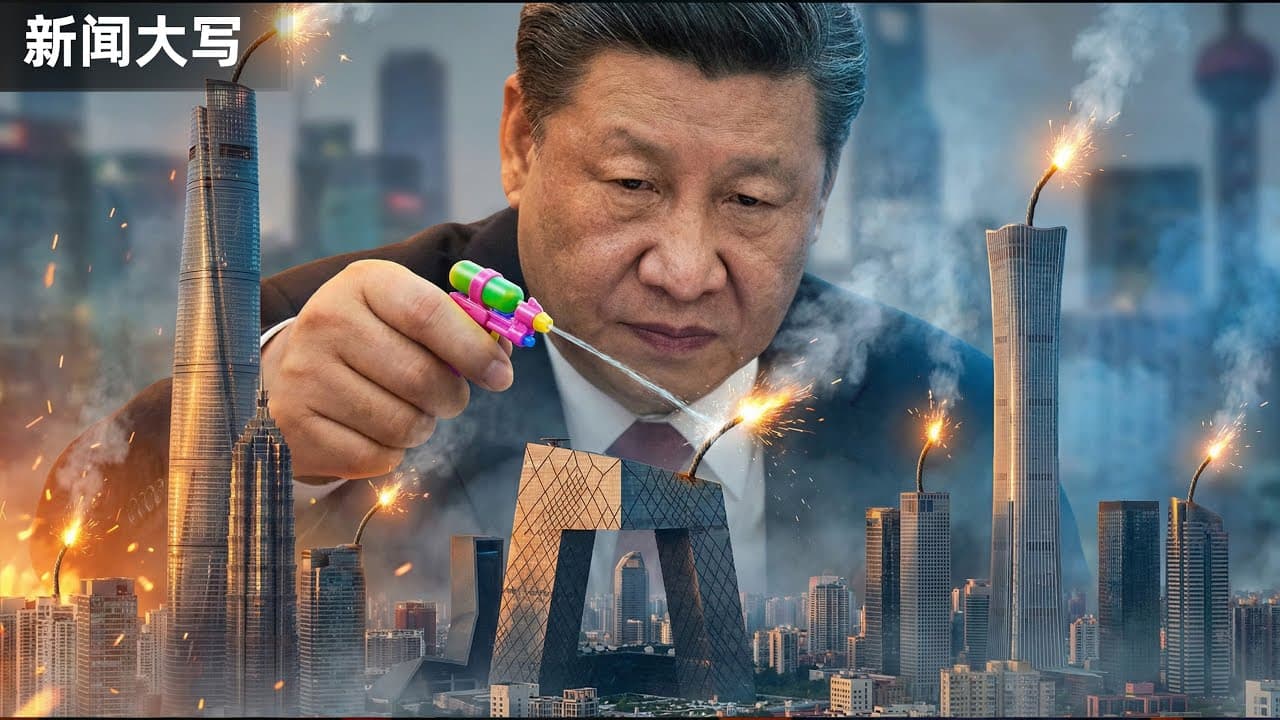
China’s LGFV debt is portrayed as a larger systemic risk than Evergrande because financing platforms combine infrastructure obligations, property rescues, falling land-related income, and continual refinancing. The proposed policy approach is to protect necessary projects rather than entire companies, prevent a sudden collapse, and spread debt resolution across future years through extensions, swaps, and platform restructuring.
Transcript
Next Monday, August 25, at 9:00 a.m. China Evergrande, once Asia's biggest property developer will be delisted by the Hong Kong Stock Exchange. Bowing out. This real-estate giant, once worth HK$400 billion, has finally fallen. Leaving behind an RMB 2.4 trillion debt black hole as its epitaph. Evergrande's market cap fell from the peak to under HK$2... Read More
Key Insights
- Evergrande’s delisting is presented as a warning about wider financial contagion: the developer fell from a peak market value of HK$400 billion to below HK$2.2 billion before delisting, while leaving approximately RMB 2.4 trillion in debt.
- Guangzhou’s LGFV absorbed multiple Evergrande-related exposures: it invested RMB 10 billion for a 4.81% stake in Evergrande Real Estate, guaranteed installments on RMB 3.25 billion of overdue trust principal, and accepted land-development and stadium obligations.
- LGFVs are described as local governments’ super credit cards: they finance projects that governments want but cannot directly afford, including subways, schools, hospitals, industrial parks, property rescues, financial stabilization measures, and projects criticized as serving appearances rather than productive needs.
- China’s nationwide LGFV debt is estimated in the program at around RMB 60 trillion, far exceeding Evergrande’s liabilities. The central danger is not one failed developer, but a broad network of leveraged platforms whose obligations connect property, banking, public finance, infrastructure, and local services.
- The 1994 tax-sharing reform is identified as the institutional origin of LGFVs: major taxes moved toward the central government, local revenue declined, and local spending duties remained. Financing platforms then borrowed through corporate structures because governments were legally barred from issuing bonds themselves.
- The 2008 stimulus accelerated LGFV borrowing because the central government’s RMB 4 trillion program required local authorities to raise much of the supporting finance. By the end of 2010, local government debt reached RMB 10.72 trillion, including RMB 4.97 trillion held by financing platforms.
- The 2014 Budget Law revision opened a formal borrowing channel by allowing local governments to issue general and special bonds while prohibiting covert LGFV borrowing. The program argues that official quotas remained insufficient for investment ambitions, so local authorities developed less visible financing methods.
- The stated resolution principle is to save projects rather than companies and provide a floor without supporting the entire market. Debt extensions, swaps, platform restructuring, and gradual absorption can divide the risk across future years, although employment, credit, public services, housing, and deposits may still be affected.
Install to Summarize YouTube Videos and Get Transcripts
Explore YouTube Video Summarizer or Get YouTube Transcript Extractor
Questions & Answers
Q: What is an LGFV and why did China create these platforms?
A local government financing vehicle, or LGFV, is a company created to borrow and fund development on behalf of a local authority. The program traces their origin to the 1994 tax-sharing reform, which reduced local revenue without removing responsibilities for infrastructure, education, and healthcare. Local authorities transferred assets such as land, equity, and toll rights into these companies, which then obtained bank loans or issued bonds.
Q: How did Guangzhou’s LGFV become exposed to Evergrande?
Guangzhou City Construction Investment Group became exposed through both investment and rescue arrangements. In 2020, it invested RMB 10 billion for a 4.81% stake in Evergrande Real Estate. After Evergrande’s funding chain broke, Guangzhou arranged for the platform to guarantee installment repayment of RMB 3.25 billion in overdue trust principal, acquire part of a returned parcel, continue building the football stadium, and provide additional funding.
Q: Why is LGFV debt presented as more dangerous than Evergrande’s debt?
The program estimates nationwide LGFV debt at around RMB 60 trillion, compared with Evergrande’s approximately RMB 2.4 trillion debt. LGFVs also sit across several connected systems because they fund infrastructure, support land markets, rescue property projects, and help stabilize finance. Their liabilities therefore connect local budgets, banks, housing, public projects, employment, credit, and services rather than remaining concentrated in one property developer.
Q: How did the 1994 tax-sharing reform contribute to LGFV debt?
The 1994 reform shifted major taxes, including value-added tax, toward the central government while local governments retained responsibilities such as infrastructure, education, and healthcare. Local authorities therefore faced a mismatch between available revenue and required spending. Because they were barred from issuing bonds directly, they established corporate financing platforms that could borrow against transferred land, equity, toll rights, and other assets while keeping the liabilities outside formal government debt accounts.
Q: How did the 2008 stimulus increase local financing debt?
After the 2008 global financial crisis, China introduced an RMB 4 trillion stimulus and encouraged local governments to launch construction projects. Central funds served only as initial financing, so local authorities had to raise the remaining money. Banks expanded lending and financing platforms multiplied. By the end of 2010, local government debt reached RMB 10.72 trillion, with LGFVs holding RMB 4.97 trillion, nearly half of the total.
Q: Why did legal local government bonds fail to eliminate hidden borrowing?
The 2014 Budget Law revision allowed local governments to issue general and special bonds through a formal channel while strictly restricting covert borrowing by LGFVs. According to the program, however, local authorities remained dependent on high investment and high debt, while official bond quotas did not cover their desired spending. They consequently developed disguised financing methods, causing hidden liabilities to continue despite the new legal framework.
Q: How did LGFVs become involved in China’s property market?
LGFVs were repeatedly directed to absorb developers’ problems by repaying obligations, buying failed land parcels, supporting urban-renewal projects, and continuing unfinished construction. Many appeared among the most aggressive land buyers in 2021, while state capital backed most newly launched housing projects described in the program. These interventions helped stabilize land and housing activity, but also transferred developers’ debts, losses, and construction commitments onto already leveraged public financing platforms.
Q: How does the program expect China to manage LGFV debt risk?
The program summarizes the approach as protecting projects rather than entire companies and establishing a floor without supporting the whole market. Its examples include extending bank loans, swapping some hidden liabilities into official provincial or municipal bonds, restructuring or retiring platforms, and spreading repayment pressure across future years. This strategy aims to avoid a sudden explosion, although the accumulated burden can still influence credit, employment, public services, housing, and deposits.
Summary & Key Takeaways
-
Evergrande’s collapse illustrates how property risk migrated toward local government financing vehicles. Guangzhou’s largest financing platform invested RMB 10 billion in Evergrande Real Estate, later guaranteed repayment of an overdue RMB 3.25 billion trust principal, acquired related land, and accepted substantial construction and cash obligations connected with the football stadium project.
-
LGFVs emerged after the 1994 tax-sharing reform reduced local revenue while leaving infrastructure, education, and healthcare responsibilities in place. Because local governments could not issue bonds directly, they created companies that received land, equity, and toll rights, then borrowed from banks or issued bonds to finance roads, bridges, subways, schools, hospitals, and industrial parks.
-
The debt expanded sharply during infrastructure-led stimulus, especially after the RMB 4 trillion program following the 2008 global financial crisis. Later reforms legalized general and special local bonds, restricted covert platform borrowing, and swapped some hidden liabilities into official debt, but local investment dependence and insufficient formal quotas encouraged continued disguised borrowing.
Read in Other Languages (beta)
Share This Summary 📚
Summarize YouTube Videos and Get Video Transcripts with 1-Click
Try YouTube Summary with ChatGPT & Claude or YouTube Transcript Generator
Explore More Summaries from 王志安 📚





Summarize YouTube Videos and Get Video Transcripts with 1-Click
Try YouTube Summary with ChatGPT & Claude or YouTube Transcript Generator