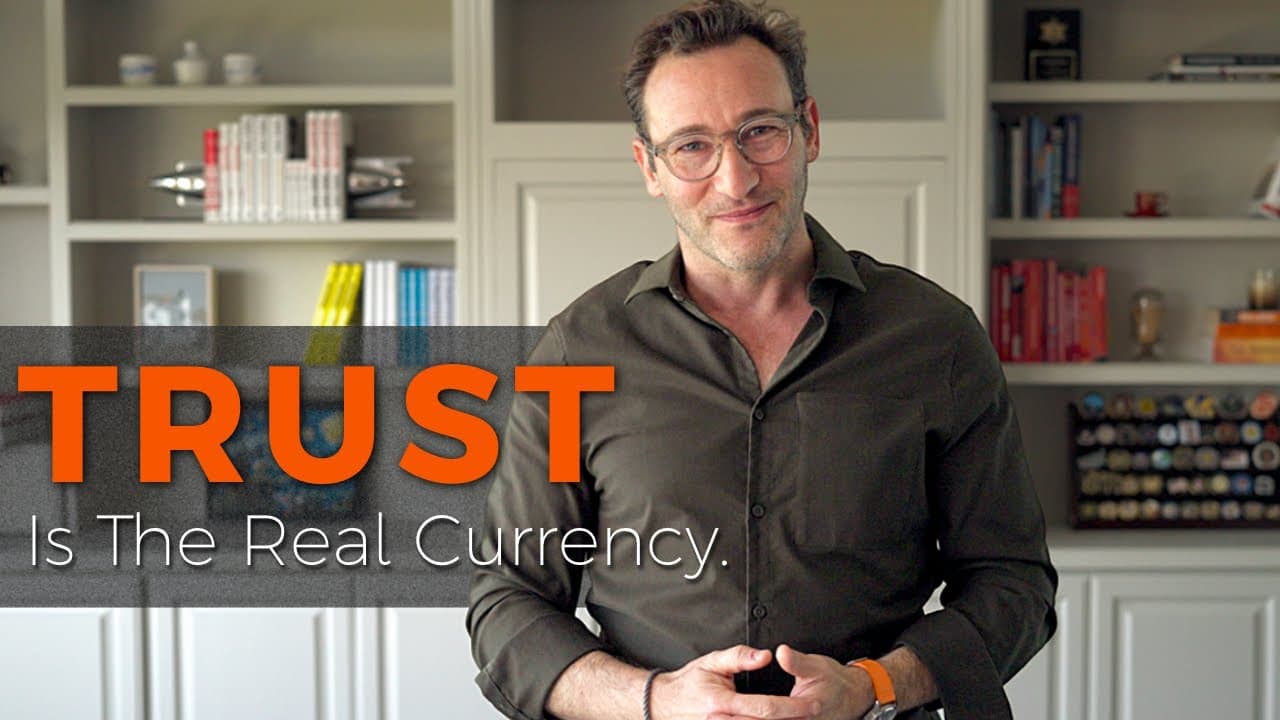
How does accountability build trust in a community?
TL;DR
Accountability is the key to trust, shown when people own up to mistakes. In high stakes settings like the military, admitting faults promptly preserves leadership credibility and safety, while denial harms trust and can endanger others. Trust emerges from transparent responsibility, not from perfection.
Transcript
So to be clear, the military is not perfect. They've got plenty plenty of problems. We have they have amazing leaders and they've got some really bad leaders. Um but as a unbalance, the the the lessons the good lessons tend to be very exaggerated, easier to see because the stakes are higher. It's life and death for us. The stakes are just dollars a... Read More
Key Insights
- Trust is the currency that sustains groups under pressure.
- Accountability means taking responsibility when mistakes happen, not just when caught.
- In high-stakes environments, observers judge honesty quickly, affecting leadership legitimacy.
- Denial erodes trust faster than admitting fault with a plan to fix it.
- Ostracizing individuals damages morale and can increase risk of violence or harm.
- Communities survive because members believe others will back them up, especially in danger.
- Human trust evolved from small, tight-knit groups where backstopping was essential.
- The same dynamics apply to everyday organizations, not just the military.
Install to Summarize YouTube Videos and Get Transcripts
Explore YouTube Video Summarizer or Get YouTube Transcript Extractor
Questions & Answers
Q: How does accountability affect trust in leadership?
Accountability directly impacts trust by showing that leaders will take responsibility for their actions and choices. When leaders own up to mistakes, they demonstrate integrity, reinforce reliability, and maintain confidence among team members. This behavior reduces uncertainty, fosters psychological safety, and encourages others to act with similar honesty, ultimately strengthening cohesion.
Q: What lesson did the Marine Corps officer story illustrate about responsibility?
The Marine Corps story shows that true responsibility means owning actions at the moment they occur, not only when confronted with proof. A leader who accepts responsibility before being compelled to do so preserves trust with the troops, signaling that the leader will uphold commitments under stress, which is crucial in combat situations.
Q: Why is trust described as a primitive social mechanism in the talk?
Trust is described as primitive because it evolved in small groups where cooperation and backstopping determined survival. Individuals who were trusted and reliable were more likely to be supported and protected by others. This deep-seated instinct guides modern behavior, sustaining communities even when rules and technology change.
Q: How can ostracism affect a community according to the transcript?
Ostracism damages a community by creating fear and reducing social safety. When people feel excluded, they may hide, lash out, or engage in harmful behavior to protect themselves. The talk links exclusion to dangerous outcomes, including increased risk of violent actions, by undermining the mutual protection that trust enables.
Q: What role do high stakes play in recognizing lessons about trust?
High stakes magnify the consequences of trust decisions, making good or bad leadership more visible. When the outcomes are life and death, the reliability of a leader in owning up to mistakes becomes obvious, helping observers discern who can be trusted to act with integrity when it matters most.
Q: How does the talk relate human behavior to natural instincts like those of gazelles?
The speaker uses the gazelle analogy to show that groups organize around risk and vulnerability. Just as a herd protects the weak, humans rely on trust to safeguard the group. When someone is ostracized, it resembles placing the vulnerable outside the herd, heightening danger and undermining collective security.
Q: What happens when people lie to look good, according to the discussion?
Lying to look good undermines trust because it signals that self-interest overrides group safety. When people fear exposure, they hide the truth, causing others to doubt whether leaders will stand by them. This doubt erodes cohesion and increases the likelihood of harm during critical moments.
Q: Why is accountability important in non-military contexts as well?
Accountability matters in any organization because it preserves trust, safety, and cooperation. When members take responsibility for errors, teams can correct course quickly, maintain morale, and continue functioning under pressure. The talk argues that these dynamics are universal, extending beyond military settings to everyday life.
Summary & Key Takeaways
-
In this discussion, accountability is framed as the fundamental currency of trust within any group. The stakes make the consequences of honesty and denial easy to observe, illustrating how responsible behavior strengthens cohesion and safety. The narrative contrasts military examples with everyday social dynamics to highlight universality.
-
The speaker emphasizes that trust requires admitting errors and taking action, not masking failures. Ostracizing or mocking individuals weakens groups and heightens risk. The comparison to primitive social instincts underscores how deeply rooted trust mechanisms are in human behavior.
-
Ultimately, the takeaway is that responsible leadership and transparent actions create durable trust. When people see consistency between words and deeds, they feel safe and supported, reducing the likelihood of destructive outcomes and fostering a resilient community.
Read in Other Languages (beta)
Share This Summary 📚
Summarize YouTube Videos and Get Video Transcripts with 1-Click
Try YouTube Summary with ChatGPT & Claude or YouTube Transcript Generator
Explore More Summaries from Simon Sinek 📚




Summarize YouTube Videos and Get Video Transcripts with 1-Click
Try YouTube Summary with ChatGPT & Claude or YouTube Transcript Generator