How to Build a Career Around Purpose and Optimism
TL;DR
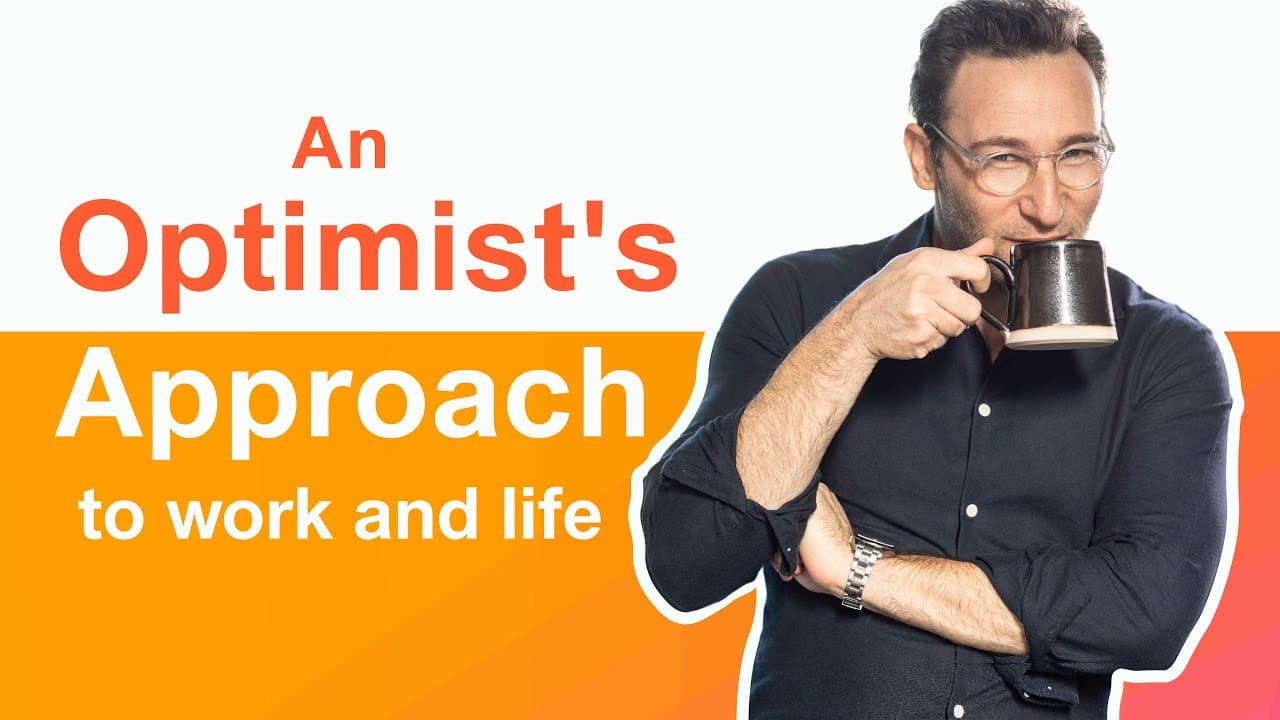
Define yourself by enduring values and a distant vision, not by a job title that may disappear or change. A meaningful career can develop without a detailed plan when each opportunity is judged by whether it advances your chosen direction, while real-world experiments help you test new ideas, escape professional pigeonholes, and keep progressing toward a brighter future.
Transcript
how do you just find like what you do you're not a motivational speaker like where do you fall in what what like what bucket would you say you've fallen in terms of what you do for a living I'm just let's just start with with that and then we're gonna delve into hopefully lots of other stuff so I mean my my immediate reactions to say I'm an optimis... Read More
Key Insights
- Identity is more resilient when it is based on who a person is rather than what that person does. Connecting identity entirely to work can create a crisis after job loss, retirement, voluntary departure, or a major professional transition.
- A distant vision can provide direction without prescribing every career step. Sinek imagines a world where most people feel inspired, safe, and fulfilled, then evaluates opportunities according to whether they move him closer to that desired future.
- Leadership is presented as the strongest route toward better workplaces. Leaders can create organizations where people feel that they belong and contribute to something larger than themselves, bringing the envisioned world closer through the environments they build.
- Career formats can remain flexible when purpose stays consistent. Writing books and giving speeches became useful ways for Sinek to spread his ideas, although he had not originally expected to become either an author or a public speaker.
- A concise description of work can function as a compatibility filter. Sinek says he teaches leaders and organizations how to inspire people, allowing listeners who connect with inspiration to continue the conversation while others reveal different priorities.
- The successful TEDx talk rested on years of message development. Sinek had delivered longer versions for three years, encountered difficult questions, refined the thinking, and confirmed that the central idea resonated before presenting its shorter recorded form.
- Technical imperfections do not automatically prevent an idea from succeeding. Sinek's TEDx appearance occurred in a modest setting and included a microphone problem, yet the talk still gained a large audience after its initial release and later placement on TED's main website.
- Real-world testing can help a person move beyond professional pigeonholes. When clients requested only his familiar subject, Sinek sometimes introduced newer ideas to selected audiences, openly acknowledged that the experiment could fail, and used their responses to develop his thinking.
Install to Summarize YouTube Videos and Get Transcripts
Explore YouTube Video Summarizer or Get YouTube Transcript Extractor
Questions & Answers
Q: How can you avoid defining yourself by your job?
Define yourself through enduring qualities, beliefs, and the future you want to help create, rather than through a professional label. A job can end because of dismissal, personal choice, retirement, or changing interests. If identity depends entirely on that role, its loss may produce an identity crisis. Sinek instead calls himself an optimist and treats writing, speaking, and other activities as changeable ways to express that identity.
Q: Why is a long-term vision more useful than a detailed career plan?
A long-term vision establishes a direction while leaving room for unexpected opportunities and changing methods. Sinek says a person needs a vision, a vector, and a direction, but does not need to know every individual step. His own writing and speaking career was not planned. Those activities became worthwhile because they helped advance his vision of people feeling inspired, safe, and fulfilled through their work.
Q: What does optimism mean in Simon Sinek's approach to work?
Optimism is an identity grounded in the belief that a brighter future can be built, not merely a speaking topic or professional category. Sinek focuses on a distant world he may never fully reach, where most people wake inspired, feel safe, and end their day fulfilled. His work consists of finding practical ways to move closer to that future, especially by supporting leaders who create strong organizations.
Q: How did Simon Sinek find a new direction after losing passion for marketing?
Sinek recognized that he had fallen out of love with a career he had deliberately chosen and a business that appeared successful from the outside. The Golden Circle helped him see that he knew what he did and, to some extent, how he did it, but did not understand why. His effort to recover his own passion and energy led unexpectedly toward work focused on purpose, leadership, and inspiration.
Q: Why did Simon Sinek's TEDx talk connect with a large audience?
The talk's reach was unexpected, but the underlying message had already been tested and refined. Sinek had presented versions of it for three years, often in longer formats, and had answered enough difficult questions to work out weaknesses in his thinking. He therefore knew the idea resonated, even though he could not predict that a short TEDx recording from a modest venue would spread so widely.
Q: What can creators learn from the technical problems in Sinek's TEDx talk?
Technical problems do not necessarily erase the value of a well-developed idea. Sinek described the recording as low quality and recalled that his microphone broke while he was speaking. The talk nevertheless continued to attract viewers. The experience supports a practical conclusion from his account: imperfect execution can still succeed when the message has resonance, has been tested repeatedly, and communicates something audiences find meaningful.
Q: How can professionals escape being pigeonholed by successful past work?
Professionals can introduce new work through carefully chosen real-world experiments, while recognizing that audiences and clients often request the familiar material they already trust. Sinek encountered this when organizations wanted only his established ideas about starting with why. He sometimes chose an audience, explained that he wanted to test newer thinking, acknowledged that it might fail, and used the live setting to broaden his work.
Q: How should someone explain what they do in a short conversation?
A short explanation should state the contribution you make in language that reflects your central belief. Sinek uses the line that he teaches leaders and organizations how to inspire people. Listeners who value the idea of inspiration naturally ask how he does that, creating a deeper conversation. Listeners who focus only on company categories reveal a different orientation, so the description also serves as an immediate filter for shared interests.
Summary & Key Takeaways
-
Simon Sinek identifies as an optimist rather than defining himself through a profession. His long-term vision is a world where most people begin each day inspired, feel safe, and finish fulfilled by their work. Writing, speaking, and teaching leaders are useful methods for advancing that vision, not fixed components of his identity.
-
Sinek's career changed after he lost his passion for the marketing business he had deliberately built. Discovering the Golden Circle helped him recognize that he knew what he did but not why he did it. That personal search for renewed passion unexpectedly created a new professional direction centered on purpose, inspiration, and leadership.
-
His TEDx talk succeeded despite its modest setting, technical problems, and lack of a deliberate plan for viral reach. Sinek had refined versions of its message for three years, so he already knew the ideas resonated. He applies a similar method to new material by testing it before real audiences and accepting possible failure.
Read in Other Languages (beta)
Share This Summary 📚
Summarize YouTube Videos and Get Video Transcripts with 1-Click
Try YouTube Summary with ChatGPT & Claude or YouTube Transcript Generator
Explore More Summaries from Simon Sinek 📚
Summarize YouTube Videos and Get Video Transcripts with 1-Click
Try YouTube Summary with ChatGPT & Claude or YouTube Transcript Generator