How to Sell by Solving Problems People Value
TL;DR
Successful selling starts with solving problems people already care about, especially those involving time, money, sex, approval, or peace of mind. Focus on urgent pain, become genuinely useful, build authentic relationships, and discuss customer outcomes instead of your own targets. Reciprocity may support negotiations, but it is not guaranteed to work.
Transcript
Can I show you the highest value comment on hacker news that I've ever seen? >> Yeah, that has a lot of weight. >> This is from like years and years ago, but it's this comment about sales cuz Hacker News is full of engineers and they're like, "Hey, like you know, I suck at sales. Anybody can help me get better at this." And this guy wrote seven poi... Read More
Key Insights
- Sales is fundamentally about people and problem solving, not the technical category of the product. A seller should begin by understanding what the buyer wants changed, then connect the offering directly to that desired outcome in clear and practical language.
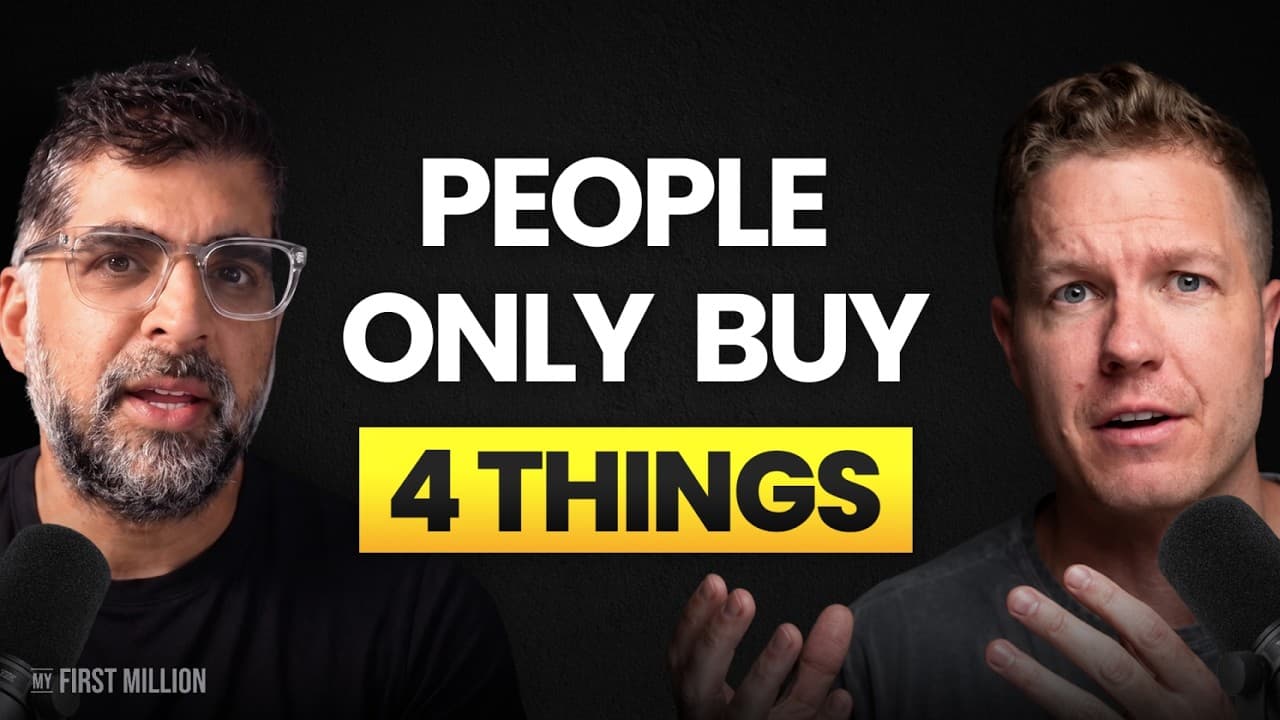
- People buy outcomes connected to time, money, sex, approval, or peace of mind. An offering becomes easier to sell when its value is framed through one or more of these motivations rather than through features that have no obvious personal or business consequence.
- Urgent pain is a more dependable sales driver than optional prevention. The aspirin and vitamins comparison suggests that buyers consistently seek relief from immediate problems, while spending on benefits that might matter later is less predictable.
- Relationships influence purchasing when competing offers are otherwise equal. The sales advice is to make the practical factors comparable, then create genuine friendships by being helpful, trustworthy, and consistently present rather than relying only on a polished pitch.
- Usefulness creates commercial opportunities when it is offered authentically. Sharing relevant posts, recording thoughtful suggestions, writing birthday cards, proposing business improvements, and introducing compatible people can demonstrate value before a formal sales conversation begins.
- Reciprocity works by making people more inclined to return kindness after receiving a favor. The motorcycle story presents a Coke as a thoughtful gesture that helped establish goodwill before the buyer requested a lower price from the seller.
- Reciprocity is not a guaranteed persuasion formula. When a principal declined an offered Diet Coke, the attempted tactic produced no leverage and did not prevent the program from being shut down, showing that context and the recipient's response still matter.
- Customer problems matter more than the seller's internal pressures. Buyers do not care about a salesperson's quota, payroll, operating expenses, or burn rate, so the conversation should remain centered on the problem being solved and the value delivered.
- More videos from this channel:
- More from this channel: My First Million
Install to Summarize YouTube Videos and Get Transcripts
Explore YouTube Video Summarizer or Get YouTube Transcript Extractor
Questions & Answers
Q: What are the main things people buy?
People buy outcomes related to time, money, sex, approval, or peace of mind. The practical lesson is that an offer should be connected to a result the buyer already values. Technical details, code, chemicals, or product categories matter only when they help explain how the offer delivers one of those meaningful outcomes.
Q: How can engineers become better at sales?
Engineers can improve at sales by simplifying the process and focusing on people rather than technology. They should identify the buyer's problem, understand why solving it matters, and clearly connect the proposed solution to time, money, approval, peace of mind, or another stated motivation. The advice is to act directly instead of making sales unnecessarily complicated.
Q: Why should sellers focus on urgent problems?
Urgent problems create stronger and more predictable buying motivation than optional improvements. The discussion describes this as selling aspirin rather than vitamins: people reliably seek relief when they feel pain, but they purchase preventive benefits less consistently. Sellers should therefore identify immediate consequences and show how their offer provides relevant relief.
Q: How do relationships help close sales?
Relationships can influence a purchase when the competing options are otherwise equal. People are more inclined to buy from friends, so sellers should combine a competitive offer with genuine relationship building. That means being helpful, trustworthy, and attentive over time, rather than treating friendliness as a superficial technique used only when asking for money.
Q: How can a salesperson provide value before making an offer?
A salesperson can provide value by sharing useful posts, sending thoughtful business ideas, recording tailored videos, remembering birthdays, and introducing people who would benefit from meeting each other. These actions demonstrate practical usefulness before a transaction. The approach should be consistent and authentic, with no immediate return demanded from the recipient.
Q: What is the rule of reciprocity in negotiation?
The rule of reciprocity says that receiving a kind action can make someone more likely to return a favor, even when the favors are not equivalent. In the motorcycle negotiation, bringing the seller a Coke helped create goodwill before requesting a lower price. The example presents generosity as a possible influence, not a binding obligation.
Q: Why can reciprocity fail as a sales tactic?
Reciprocity can fail because the other person may reject the gift, ignore the gesture, or remain focused on the underlying issue. In the school meeting story, the principal declined the offered Diet Coke and still shut down the program. A favor cannot substitute for value, agreement, authority, or a persuasive response to the actual concern.
Q: What should sales conversations focus on?
Sales conversations should focus on the customer's problem and the outcome the proposed solution can produce. Buyers do not care about the seller's quota, payroll, operating expenses, or burn rate. Internal pressure may explain why the seller wants a deal, but it does not give the buyer a compelling reason to purchase.
Summary & Key Takeaways
-
Sales can be approached simply: understand people, identify meaningful problems, and present useful solutions. Buyers ultimately seek improvements involving time, money, sex, approval, or peace of mind. A sales message becomes stronger when it connects an offering to one of these desired outcomes instead of concentrating on technical details or features.
-
Urgent problems create more reliable demand than optional improvements. The discussion compares pain relief with vitamins to show why buyers consistently address immediate discomfort but purchase preventive benefits less predictably. Sellers should therefore clarify the painful problem, demonstrate relevant value, and explain how their offer improves the buyer's situation in practical terms.
-
Relationships and generosity can support sales when they are consistent and authentic. Useful actions include sharing relevant posts, offering tailored ideas, making introductions, and remembering personal occasions without demanding repayment. Reciprocity can encourage cooperation, but the rejected Diet Coke example shows that a small gift is never a guaranteed negotiation technique.
Read in Other Languages (beta)
Share This Summary 📚
Summarize YouTube Videos and Get Video Transcripts with 1-Click
Try YouTube Summary with ChatGPT & Claude or YouTube Transcript Generator
Explore More Summaries from My First Million 📚



Summarize YouTube Videos and Get Video Transcripts with 1-Click
Try YouTube Summary with ChatGPT & Claude or YouTube Transcript Generator