How to Find and Validate Million-Dollar Ideas
TL;DR
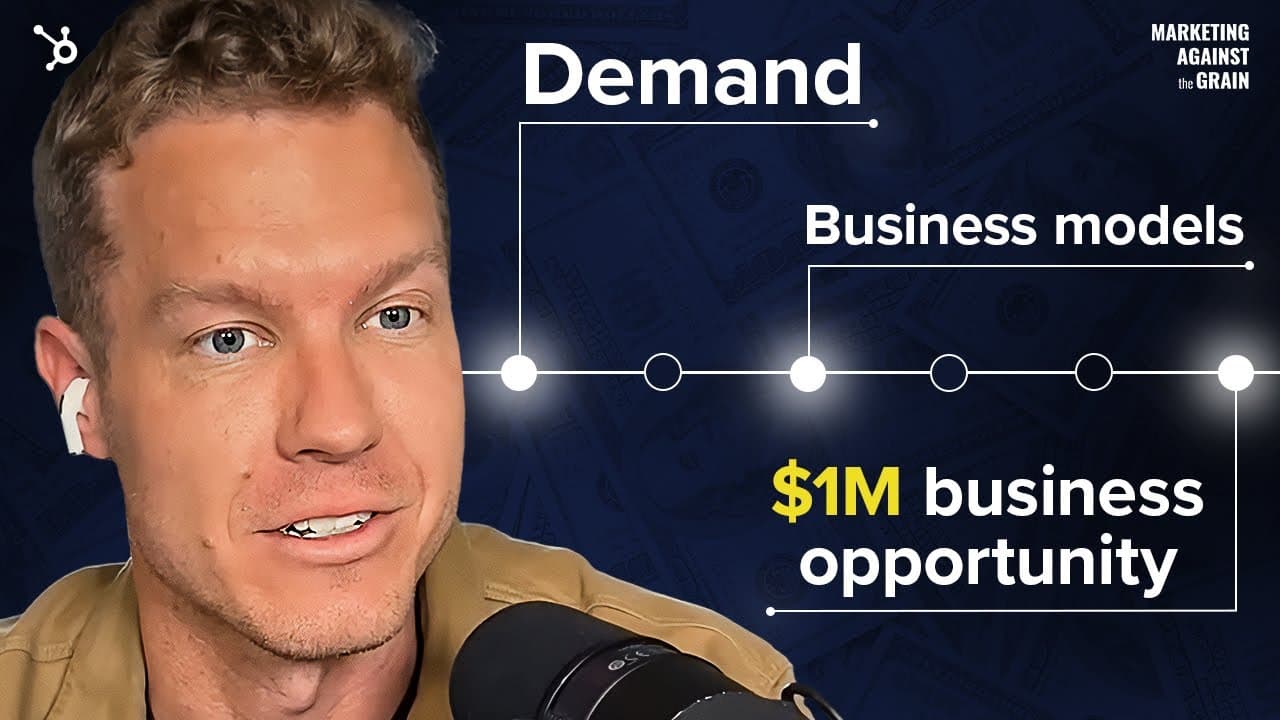
Start by identifying a real problem, estimating how many people share it, and studying the companies already serving that demand. Then examine leaders’ shortcomings, compare their business models, and look for unresolved customer needs, using traffic estimates, public company reports, and financial filings to support each conclusion.
Transcript
and when you see a big company like 1800 flowers or hkin so a company that has millions of customers when they say one or two lines like that that gets me really interesting all right we're live Sean is not here so I'm going to do a question and answer session I tweeted out that I'm going to be doing this and we have a bunch of questions Jonathan's... Read More
Key Insights
- Business idea research is a six-part cycle involving demand, audience size, market leaders, incumbent shortcomings, effective business models, and unresolved customer problems. Parr looks for a small but compelling clue in each area, then connects those clues into a possible company concept.
- Demand can be estimated through website traffic patterns. Parr uses Similarweb’s free plugin to obtain traffic estimates, notice unusually popular websites, and identify seasonal changes, such as the large February and Mother’s Day increases observed for 1-800-Flowers.
- Public company reports are sources of specific market clues. Parr reads annual reports to find one or two revealing statements, especially when a company with millions of customers identifies a small segment as its fastest-growing category.
- Fast growth inside a large company can signal a focused opportunity. Annual reports highlighted succulent plants among millennial customers at 1-800-Flowers and Heineken Zero as a small but rapidly growing segment, which made those categories worthy of further investigation.
- Incumbent shortcomings can define the problem a new business should solve. 1-800-Flowers reported heavy reliance on holiday revenue and a desire to increase purchases of accessories, while its strongest profit margins came from products such as vases rather than flowers.
- Product differentiation can address both repeat purchasing and accessory margins. Businesses inspired by the succulent research created self-watering wall plants and distinctive pots featuring artists, humor, state themes, or flags, and several later raised millions of dollars.
- Companies House filings can reveal the economics of UK businesses. Parr checks companies using “LTD” and found that a VPN review website with roughly 12 million visitors reported about $18 million in revenue and $16 million in profit.
- Affiliate content can be a highly profitable business model when purchase intent and commissions align. The VPN review company earned a cut when readers bought recommended services, prompting Parr to consider similar search-focused content for technology products such as payroll software.
- More videos from this channel:
- More from this channel: My First Million
Install to Summarize YouTube Videos and Get Transcripts
Explore YouTube Video Summarizer or Get YouTube Transcript Extractor
Questions & Answers
Q: How do you find and validate a promising business idea?
Start by identifying a problem and determining how many people share it. Next, study the leading companies already serving that market, examine why they succeed, and identify their weaknesses. Compare the business models that appear most effective, then look for customer problems that remain unresolved. Traffic estimates, annual reports, and company financial filings can provide evidence for each stage.
Q: What are the six steps in Sam Parr’s business idea process?
The process examines six areas: customer demand, the number of people who share the problem, the leaders already operating in the market, the shortcomings of those leaders, the business models that work most effectively, and the problems that are still not being solved. A useful idea emerges by finding notable clues within these areas and connecting them.
Q: How can Similarweb help research a business idea?
Similarweb provides estimated website traffic through a plugin, with a free version that Parr considers sufficient for his research. He uses it whenever an unusual website attracts his attention. Traffic volume can indicate audience demand, while changes over time can expose seasonal behavior, as shown by the February and Mother’s Day traffic increases for 1-800-Flowers.
Q: Why are annual reports useful for finding business opportunities?
Annual reports can reveal growth categories, strategic concerns, revenue patterns, and product economics inside public companies. Parr searches them for one or two lines that expose an important trend. He became interested when 1-800-Flowers identified succulents as fast-growing among millennial customers and when Heineken described Heineken Zero as its fastest-growing segment despite its small size.
Q: What business opportunities came from researching 1-800-Flowers?
The research showed strong overall demand, predictable holiday traffic, growing interest in succulents, dependence on seasonal purchases, and attractive margins from vases. Those observations suggested businesses that could encourage year-round buying while selling differentiated containers and accessories. Resulting concepts included self-watering wall plants and decorative pots featuring artists, jokes, state themes, or flags.
Q: How do incumbent weaknesses lead to new business ideas?
An incumbent’s weakness identifies a result customers or the company itself is not receiving. In the 1-800-Flowers case, most revenue arrived around holidays, so steadier purchasing was desirable. The company also wanted customers to purchase more accessories, while vases produced strong margins. A new entrant could therefore explore recurring plant demand, differentiated vases, or products suited to non-holiday occasions.
Q: How can Companies House be used to evaluate a market?
Parr checks Companies House when he finds an interesting UK company whose name includes “LTD.” He says UK companies with at least $10 million in revenue must file financial information there. The filings allowed him to see that a VPN review business generated about $18 million in revenue and about $16 million in profit, validating both demand and profitability.
Q: Why did the VPN review website suggest an affiliate business opportunity?
The website attracted roughly 12 million visitors and earned money through affiliate commissions. It published VPN reviews and received a cut when a reader purchased a recommended service. Its reported revenue and profit made the model compelling, leading Parr to consider other technology products with sizable affiliate fees, search demand, and customer problems, including payroll software.
Summary & Key Takeaways
-
Sam Parr evaluates business opportunities through a repeatable research cycle: identify customer demand, estimate the size of the affected audience, study successful companies, uncover their shortcomings, compare effective business models, and locate unresolved problems. He searches for one compelling clue in each category, much like building a song around a memorable hook.
-
The 1-800-Flowers example began with website traffic and seasonal peaks, then moved into annual reports. Those reports identified growing interest in succulent plants, dependence on holiday revenue, and strong margins from vases. These clues suggested opportunities involving repeat plant purchases, distinctive containers, accessories, and products designed for year-round demand.
-
A highly profitable VPN review website revealed another opportunity pattern. Companies House filings showed about $18 million in revenue and $16 million in profit, while the site attracted roughly 12 million visitors. Its affiliate model prompted questions about applying search-driven review content to other technology categories, including payroll software, although Parr did not pursue it.
Read in Other Languages (beta)
Share This Summary 📚
Summarize YouTube Videos and Get Video Transcripts with 1-Click
Try YouTube Summary with ChatGPT & Claude or YouTube Transcript Generator
Explore More Summaries from My First Million 📚



Summarize YouTube Videos and Get Video Transcripts with 1-Click
Try YouTube Summary with ChatGPT & Claude or YouTube Transcript Generator