What Is the Great Filter and Are We Alone?
TL;DR
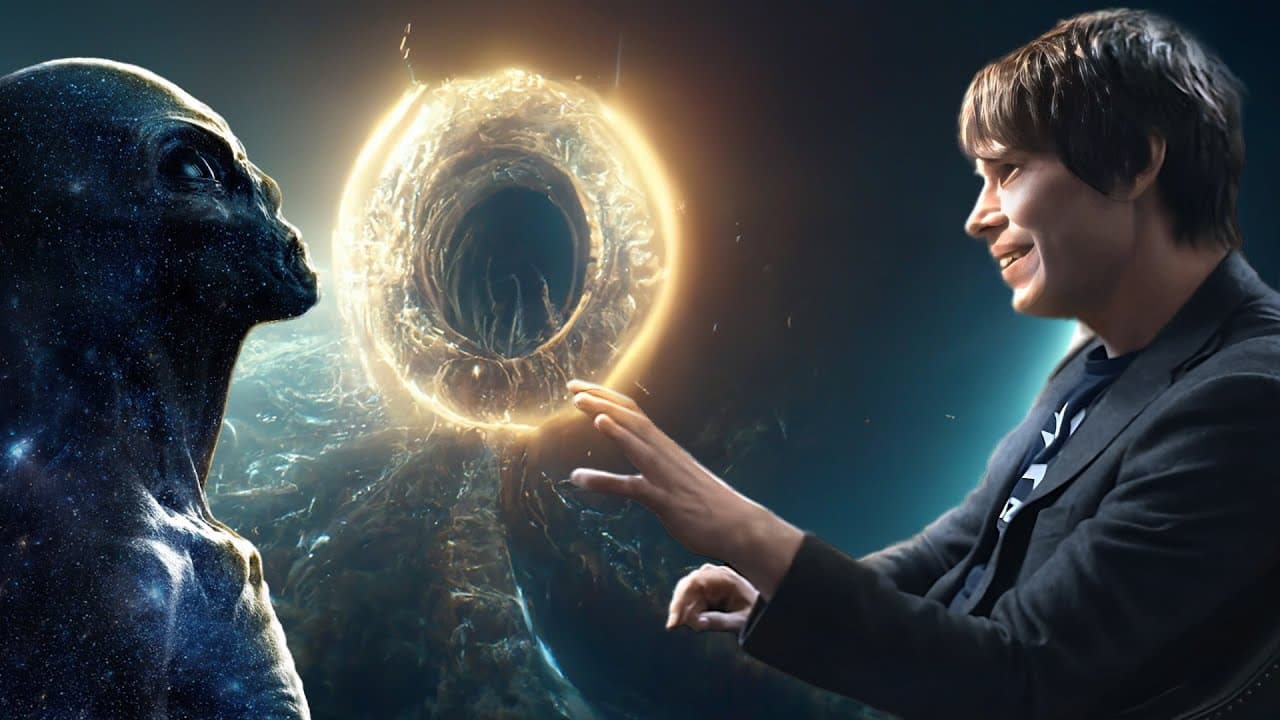
The Great Filter explains why intelligent life is so rare by positing a nearly insurmountable barrier in a civilization’s path to the stars. The video asks whether this barrier lies behind us or ahead, links it to the Fermi Paradox, and ponders whether life is common or civilization prone to self destruction, urging reflection on our future.
Transcript
I don't understand what what is your purpose here if civilizations are common then there should be civilizations ahead of us because there's been so much time you imagine the time scales we've been around take 40 000 years I don't know how long our civilization's been around let's say that the Galaxy is pretty much as old as the universe i... Read More
Key Insights
- The Great Filter is a nearly insurmountable barrier that could prevent civilizations from reaching the stars.
- The idea explains the Fermi Paradox by suggesting why we do not see obvious signs of advanced life.
- The filter could occur early in life, during the emergence of technology, or later after intelligent behavior evolves.
- Some civilizations may remain undetectable due to small, efficient technologies or nontraditional signatures.
- The discussion weighs whether the filter is behind us or ahead of us, influencing our sense of cosmic rarity or danger.
- The possibility of self annihilation through warfare or unchecked technology is a key concern tied to the Great Filter.
- Oppenheimer's reflections on responsible power mirror the broader question of whether humanity can navigate the filter.
- Protecting our island of meaning depends on recognizing life as a core property that gives universe meaning.
Install to Summarize YouTube Videos and Get Transcripts
Explore YouTube Video Summarizer or Get YouTube Transcript Extractor
Questions & Answers
Q: What is the Great Filter and why is it important to the Fermi Paradox?
The Great Filter is described as a nearly insurmountable barrier in the progression of civilizations toward spacefaring status. It is used to explain the Fermi Paradox, the question of why we do not observe clear signs of extraterrestrial life, by suggesting that most civilizations fail to reach a detectable stage. The concept invites us to consider whether humanity has already passed a major hurdle or still must face a future obstacle that could prevent us from expanding into the galaxy.
Q: Is the Great Filter behind us or ahead of us?
The video presents two possibilities: the Great Filter could be behind us, meaning early life or simple civilizations rarely progress to advanced stages, or ahead of us, implying future challenges could extinguish our civilization before we become detectable across interstellar distances. Each scenario carries implications for how likely intelligent life is elsewhere and how fragile our future may be.
Q: How does life relate to meaning in the universe according to the video?
The speaker argues that life is the most important phenomenon in the universe because, without living things, the universe would be meaningless. Consciousness, a property of living beings, is tied to meaning, making the survival and flourishing of life central to our understanding of the cosmos and our responsibility within it.
Q: What role do technology and warfare play in the Great Filter discussion?
Technology and warfare are highlighted as potential hurdles tied to the Great Filter. The video notes that while technological advances are remarkable, they can also pose existential risks, such as unchecked development or nuclear capabilities. These factors could act as barriers that prevent civilizations from enduring long enough to become detectable across the galaxy.
Q: Why is the Fermi Paradox still puzzling according to Cox?
The paradox remains puzzling because, despite the vast age and size of the galaxy, we lack solid evidence of other intelligent civilizations. Multiple explanations are discussed, including limited detectability, the possibility that civilizations self-destruct, or that they exist in forms that are not easily observable, leading to ongoing cosmic silence.
Q: What are some ways civilizations might avoid detection yet progress technically?
Possible explanations include civilizations becoming nano-scale or non-obvious in their signatures, using efficient energy methods that are difficult to detect, or dispersing probes and activities in ways that do not produce easily observable signals. The idea is that we may be missing signs simply because they do not look like traditional spacefaring evidence.
Q: How does Oppenheimer relate to the Great Filter discussion?
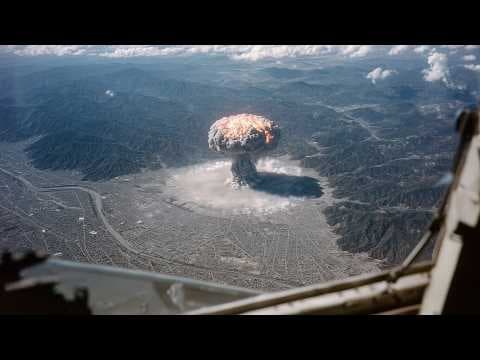
Oppenheimer is cited as someone who wrestled with the responsibility of creating powerful technology like the atomic bomb. The narrative uses his reflections to illustrate the tension between scientific progress and wisdom to control that knowledge, suggesting that misjudgments could contribute to a civilization failing to survive long enough to reach the stars.
Q: What action items does Cox suggest for humanity regarding the Great Filter?
While not prescribing specific steps, the discussion implies a responsibility to protect life and avoid self-inflicted catastrophe. By considering whether we are an early or late potential survivor, we are urged to think about long-term survival, the value of life, and the precautions necessary to ensure humanity endures long enough to become a truly cosmic civilization.
Summary & Key Takeaways
-
The video introduces the Great Filter as a potential barrier in civilization development, shaping the silence of the cosmos.
-
It contrasts behind us versus ahead of us as possibilities for the filter, connecting this idea to Fermi Paradox and the search for extraterrestrial life.
-
It ends with a call to consider civilization longevity and responsibility for preserving life as a meaningful phenomenon in the universe.
Read in Other Languages (beta)
Share This Summary 📚
Summarize YouTube Videos and Get Video Transcripts with 1-Click
Try YouTube Summary with ChatGPT & Claude or YouTube Transcript Generator
Explore More Summaries from Science Time 📚
Summarize YouTube Videos and Get Video Transcripts with 1-Click
Try YouTube Summary with ChatGPT & Claude or YouTube Transcript Generator