What Is the Fermi Paradox and the Great Filter?
TL;DR
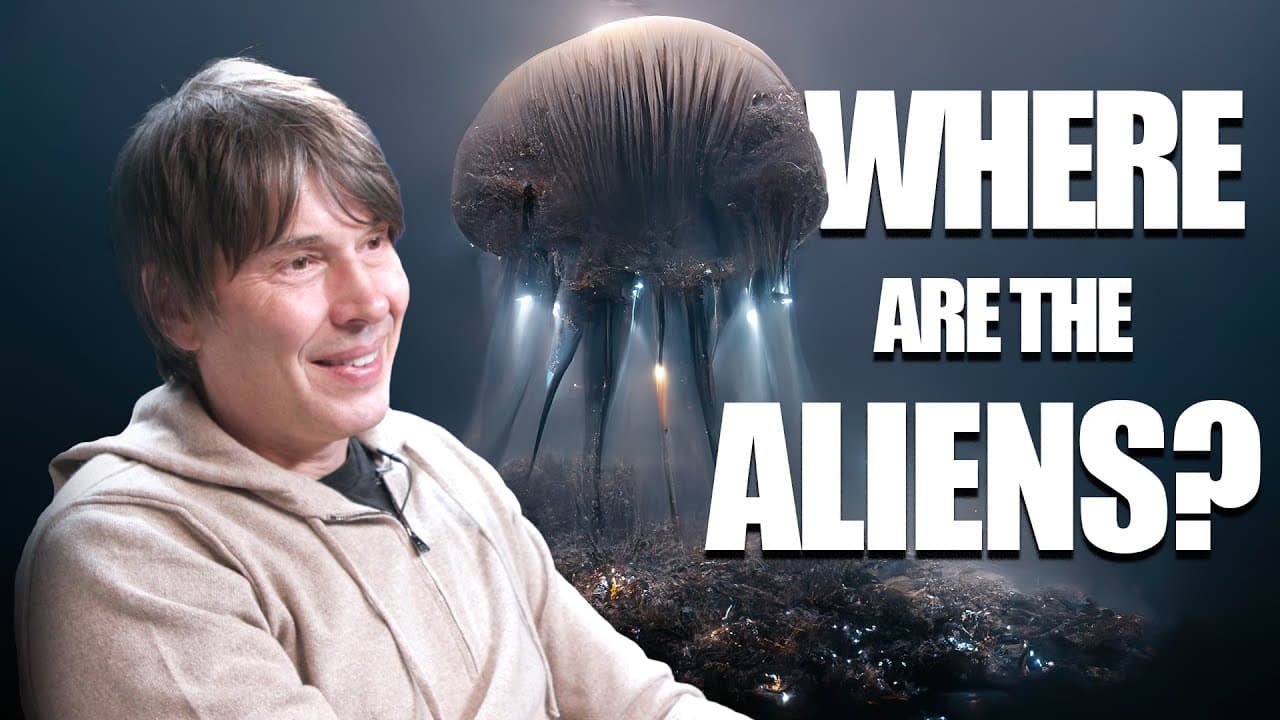
The Fermi Paradox asks why we do not observe advanced civilizations despite many habitable worlds. The Great Filter is a possible barrier that could prevent civilizations from expanding beyond their home planet, which may lie in our past or future. Reflect on civilization risks and our responsibility to survive.
Transcript
Since the dawn of civilization, we have gazed at the stars and wondered, "Are we truly alone? Billions of suns blaze across our galaxy, each offering the possibility of alien worlds teeming with life. Yet, when we look up at the night sky for signals, we are met with silence. This begs the question, is life extremely rare or just hard to detect? I'... Read More
Key Insights
- The Fermi Paradox questions why we have not detected other civilizations given the galaxy size and age.
- The Great Filter is a theoretical barrier that could prevent civilizations from becoming detectable interstellar species.
- Self replicating machines, or von Neumann machines, illustrate how a civilization might spread through a galaxy if feasible.
- If such replicators were possible, even a few hundred million years ago, they could hypothetically saturate the galaxy.
- Some solutions suggest civilizations may self-destruct or be transient, reducing overlap with our detectability window.
- The zoo hypothesis offers a controversial idea that advanced civilizations observe us without direct interaction.
- The Drake equation is referenced to discuss the potential number of detectable civilizations, with a caution about uncertainty.
- A practical takeaway is to consider that we may need to solve similar survival challenges to reach interstellar capability.
Install to Summarize YouTube Videos and Get Transcripts
Explore YouTube Video Summarizer or Get YouTube Transcript Extractor
Questions & Answers
Q: How does the Fermi Paradox describe our observations of the galaxy?
The Fermi Paradox notes that even though the Milky Way has billions of stars and many planets where life could arise, we have seen no clear evidence of other civilizations. This tension between expectation and observation drives inquiries into whether life is rare, civilizations are short lived, or signals simply go undetected by our technology.
Q: What is the Great Filter and why is it important?
The Great Filter is a theoretical barrier that could prevent life from progressing to a stage where it becomes detectable across interstellar space. If the filter lies in our past, it would mean we are unusually early or lucky; if in our future, it implies civilizations face insurmountable challenges before achieving interstellar expansion, which informs how we view our own prospects.
Q: Why are self replicating machines used in the discussion of the paradox?
Self replicating machines are used to model how a civilization might spread through a galaxy by sending out copies that build more copies using local resources. The concept helps illustrate how quickly a civilization could potentially fill the galaxy and why, given enough time, evidence of such activity might be expected unless there are limiting factors.
Q: Could civilizations be extremely long lived, and would that change the paradox?
If civilizations endured for very long periods, the likelihood of detectable activity increasing would grow, making the silence more puzzling. Conversely, if civilizations are short lived, the window for detection narrows, reducing observed instances of interstellar signals and making the paradox easier to reconcile.
Q: What does the zoo hypothesis propose and how credible is it?
The zoo hypothesis suggests advanced civilizations intentionally avoid contact with less developed worlds, observing us as if from a zoo. While it offers a neat explanation for the lack of contact, it raises questions about how such civilizations would avoid detection and whether perfect discretion is plausible given our growing observational capabilities.
Q: Why might the Great Filter be in our future rather than our past?
If the Great Filter lies ahead, it would imply civilizations must navigate collapse risks from nuclear weapons, climate challenges, or resource limits to reach interstellar capability. This interpretation emphasizes present day stewardship, urging us to address existential risks and sustain progress to avoid a potential cosmic bottleneck.
Q: What role does planetary climate play in the paradox?
Industrialization and resource use can alter a planet’s atmosphere and climate, presenting a barrier to long term civilization survival. This raises the possibility that many civilizations may stall or fail before developing reliable interstellar technologies, which would help explain why we do not see widespread evidence of others.
Q: How should we interpret the possibility that we are alone in the Milky Way?
If we are alone, the implication is both a vulnerability and a responsibility. It suggests that humanity has a unique chance to persist and advance, but also that the galaxy might present formidable barriers to others. The sober takeaway is to safeguard our future while staying curious about cosmic neighbors.
Summary & Key Takeaways
-
This video explains the Fermi Paradox and why civilizations might be rare or transient in the galaxy, using von Neumann style self replicating machines as a model and discussing limitations of detectability and lifetime of civilizations.
-
The speaker balances explanations of population scale, time, and technology with the idea that we should behave as if we are alone in the Milky Way while remaining open to alternative possibilities.
-
The discussion ends by stressing that the Great Filter should prompt vigilance in safeguarding our civilization and considering how to navigate the challenges of industrialization and potential self destruction.
Read in Other Languages (beta)
Share This Summary 📚
Summarize YouTube Videos and Get Video Transcripts with 1-Click
Try YouTube Summary with ChatGPT & Claude or YouTube Transcript Generator
Explore More Summaries from Science Time 📚

Summarize YouTube Videos and Get Video Transcripts with 1-Click
Try YouTube Summary with ChatGPT & Claude or YouTube Transcript Generator