What Are Dark Matter and Dark Energy?
TL;DR
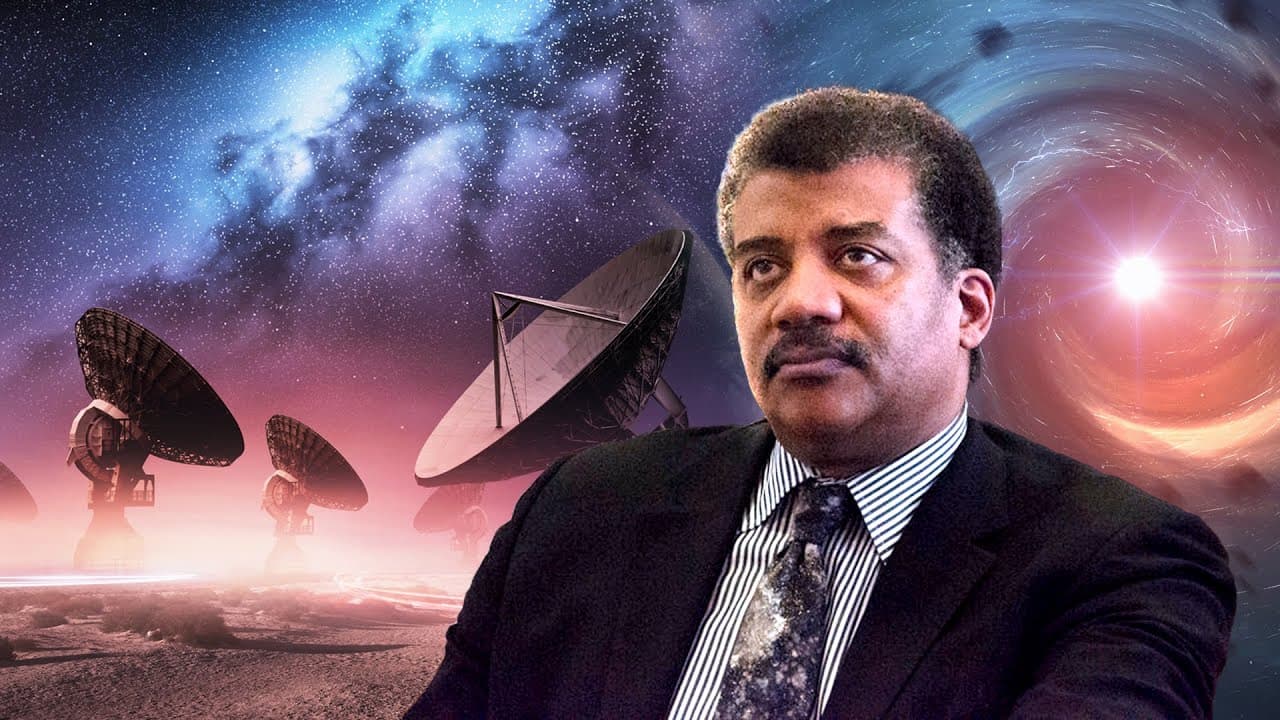
Dark matter and dark energy make up the majority of the universe, yet remain largely mysterious. While dark matter is known for its gravitational effects, dark energy is responsible for the accelerating expansion of the universe. Scientists continue to explore these phenomena using advanced telescopes and innovative detection methods, hoping to unravel their true nature.
Transcript
what is the universe made of this is a question that humans have been asking since we first looked up into the night sky the universe is thought to consist of three types of substance regular matter dark matter and dark energy regular matter consists of the atoms that make up stars planets human beings and every other visible object in th... Read More
Key Insights
- The universe is composed of regular matter, dark matter, and dark energy.
- Dark matter is inferred from its gravitational effects but remains invisible.
- Dark energy causes the universe's expansion to accelerate unexpectedly.
- Regular matter constitutes only 4.6% of the universe.
- The Wilkinson Microwave Anisotropy Probe helped determine the universe's age.
- Dark matter might originate from other universes in the multiverse.
- Exoplanets could serve as detectors for dark matter through heat measurement.
- The Roman Space Telescope aims to explore dark energy and dark matter.
Install to Summarize YouTube Videos and Get Transcripts
Explore YouTube Video Summarizer or Get YouTube Transcript Extractor
Questions & Answers
Q: What is dark matter?
Dark matter is a form of matter that does not emit, absorb, or reflect light, making it invisible and detectable only through its gravitational effects on visible matter. It is believed to make up about 27% of the universe, influencing the structure and behavior of galaxies and galaxy clusters.
Q: What is dark energy?
Dark energy is a mysterious force that is causing the accelerated expansion of the universe. It constitutes roughly 68% of the universe. Unlike dark matter, dark energy does not have a gravitational pull but rather acts as a repulsive force, counteracting gravity and leading to the universe's rapid growth.
Q: How do scientists detect dark matter?
Scientists detect dark matter through its gravitational effects on visible matter, such as the rotation speeds of galaxies and the movement of galaxy clusters. Advanced telescopes and detection methods, like using exoplanets as potential detectors, are employed to study dark matter's influence and properties.
Q: Why is the universe's expansion accelerating?
The universe's expansion is accelerating due to dark energy, a force that acts opposite to gravity. This unexpected acceleration was observed through distant supernovae and challenges previous assumptions about the universe's behavior, indicating a need for new theories and understanding of cosmic forces.
Q: What role does dark matter play in the universe?
Dark matter plays a crucial role in the universe by providing the gravitational framework necessary for the formation and stability of galaxies and galaxy clusters. Its presence influences the large-scale structure of the universe, despite being invisible and only detectable through its gravitational effects.
Q: How do scientists study dark energy?
Scientists study dark energy by observing the universe's expansion and its effects on cosmic structures. Telescopes like the Hubble and upcoming Roman Space Telescope provide data on distant galaxies and supernovae, helping researchers understand dark energy's influence on the universe's accelerating growth.
Q: What is the significance of the Wilkinson Microwave Anisotropy Probe?
The Wilkinson Microwave Anisotropy Probe (WMAP) is significant for its role in measuring the cosmic microwave background radiation, providing precise data on the universe's age and composition. It helped establish that regular matter constitutes only a small fraction of the universe, with dark matter and dark energy making up the majority.
Q: How might exoplanets help in detecting dark matter?
Exoplanets could help detect dark matter by capturing it through their gravity, leading to annihilation at their cores and releasing energy as heat. This heat could be measured by infrared telescopes like the James Webb Space Telescope, offering a novel method to study dark matter without requiring new instruments.
Summary & Key Takeaways
-
Dark matter and dark energy are critical components of the universe, yet their nature is still unknown. Dark matter is identified through gravitational effects, while dark energy is linked to the universe's accelerating expansion. Scientists are using advanced technology and innovative methods to study these phenomena, aiming for breakthroughs in understanding.
-
The universe's composition includes 4.6% regular matter, with the rest being dark matter and dark energy. The Wilkinson Microwave Anisotropy Probe has provided insights into the universe's age, while the Roman Space Telescope is set to further explore these mysterious entities.
-
Dark matter's gravitational influence is essential for the universe's structure, while dark energy's role in expansion challenges previous scientific assumptions. Innovative detection methods, including using exoplanets, are being developed to uncover more about these elusive components.
Read in Other Languages (beta)
Share This Summary 📚
Summarize YouTube Videos and Get Video Transcripts with 1-Click
Try YouTube Summary with ChatGPT & Claude or YouTube Transcript Generator
Explore More Summaries from Science Time 📚




Summarize YouTube Videos and Get Video Transcripts with 1-Click
Try YouTube Summary with ChatGPT & Claude or YouTube Transcript Generator