How Does Peter Thiel Seek Political Influence?
TL;DR
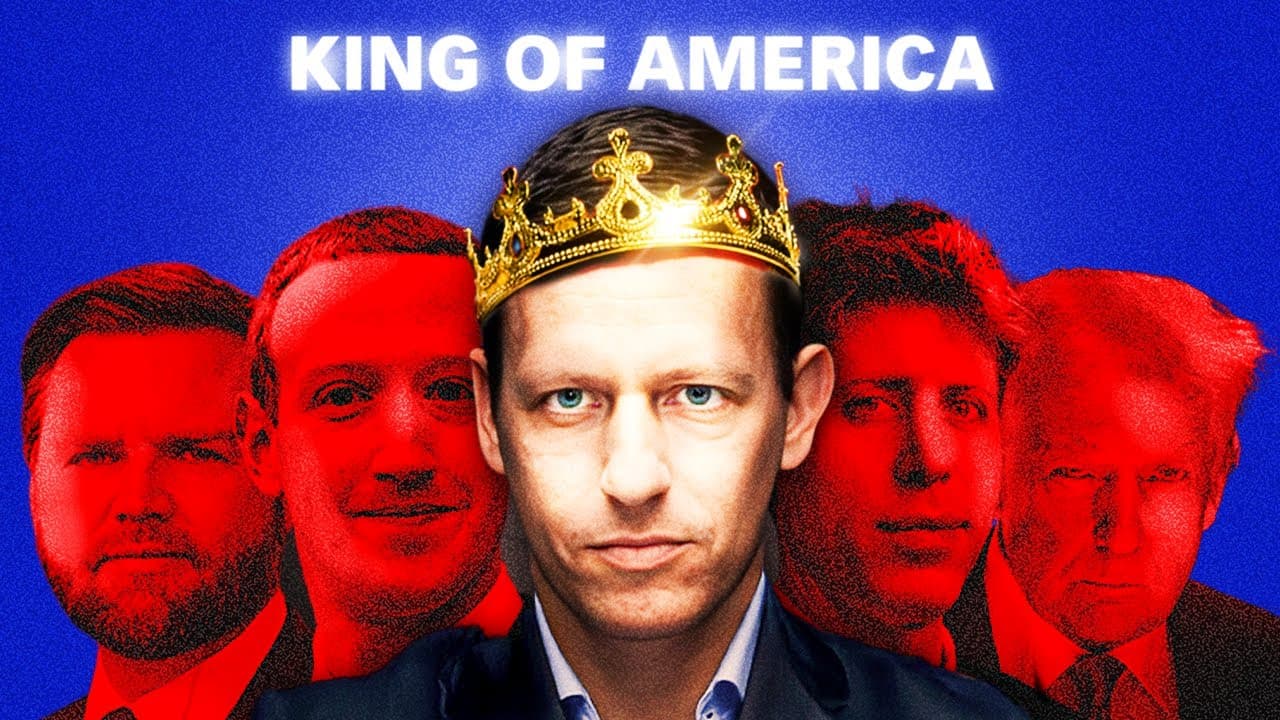
Peter Thiel seeks influence by combining technology companies, capital, political funding, and durable networks of ideologically aligned people. The account argues that his libertarian definition of freedom, public skepticism toward democracy, support for Donald Trump, backing of JD Vance, and involvement with Palantir reveal a long-term effort to reshape how political and institutional power operates.
Transcript
You would prefer the human race to endure, right? >> Uh, >> you're hesitating. >> Well, I Yes. >> I don't know. I I would >> This is Peter Teal. >> This is a long hesitation. So many hesitation. >> There's so many questions and questions. >> Should the human race survive? >> Uh, yes. Okay. But >> he's been a major player in Silicon Valley for a lon... Read More
Key Insights
- Peter Thiel is portrayed as a strategist who applies chess-like, long-term thinking to business and politics. His status as a national chess master and his admiration for Garry Kasparov provide the narrative's central metaphor for patiently building influence and anticipating several moves ahead.
- Thiel's influence is rooted in technology, investment, and political relationships. He co-founded PayPal and Palantir, became Facebook's first outside investor, supported Donald Trump's first campaign, and helped advance JD Vance's career, according to the account presented in the transcript.
- Thiel's stated political philosophy questions whether freedom and democracy are compatible. The narrative interprets this position, together with his political spending and elite networks, as evidence that his preferred system may concentrate authority among a small number of wealthy and powerful decision-makers.
- Palantir is described as a technology company whose tools help intelligence agencies and militaries anticipate an opponent's next move. The account raises concern that such predictive capabilities can reconfigure institutional power and may potentially be directed toward the behavior of ordinary people.
- Thiel's childhood included formative years in Swakopmund under apartheid South African occupation. The narrative says his family benefited from racially privileged institutions while his father worked at a uranium mine connected to South Africa's secret nuclear weapons program.
- Libertarianism is presented as prioritizing personal freedom, economic freedom, property rights, free markets, and limited government. The account argues that radical versions can subordinate social justice and civil rights when those values conflict with an economic definition of freedom.
- Stanford was a decisive setting for Thiel's ideological development. He became a Reagan-supporting conservative, viewed the campus as excessively left-wing, clashed with anti-Reagan and anti-apartheid demonstrators, and reportedly connected liberal students with the bullying and hostility he experienced.
- The Stanford Review was Thiel's early vehicle for building influence and gathering like-minded allies. Founded with 11 other conservative men, it used a combative editorial style, challenged campus culture, attracted prominent conservative attention, and helped launch his role as a public intellectual.
- More videos from this channel:
- More from this channel: fern
Install to Summarize YouTube Videos and Get Transcripts
Explore YouTube Video Summarizer or Get YouTube Transcript Extractor
Questions & Answers
Q: How does Peter Thiel seek political influence?
Peter Thiel is presented as combining wealth, technology companies, political funding, and carefully cultivated networks to influence public power. The transcript says he bankrolled Donald Trump's first campaign, accelerated JD Vance's career, and developed relationships beginning at Stanford that later supported his business and political ambitions. His strategy is characterized as patient, indirect, and designed around long-term institutional change.
Q: Why does Peter Thiel criticize democracy?
The transcript says Peter Thiel has declared that freedom is incompatible with democracy. It connects that belief to a libertarian framework that prioritizes personal and economic freedom, property rights, free markets, and limited government. Critics in the account argue that this framework can discount social justice and majority rule, potentially favoring concentrated authority among wealthy or exceptionally powerful individuals.
Q: What role does Palantir play in Peter Thiel's influence?
Palantir is described as Peter Thiel's brainchild and as a provider of tools that enable intelligence agencies and militaries to anticipate an enemy's next move. The narrative treats those predictive capabilities as more than a business achievement because they can alter how governments exercise power. It also raises the possibility that similar systems could anticipate the actions of ordinary people.
Q: How did Peter Thiel's childhood shape the narrative about his politics?
The account emphasizes that Peter Thiel spent formative childhood years in Swakopmund while the city was occupied by apartheid South Africa. It says his family enjoyed privileged schools, medical facilities, and country clubs while his father worked at a controversial uranium mine. The narrative connects that environment to a social order in which a ruling minority controlled the majority, without claiming a simple causal explanation.
Q: What happened to Peter Thiel at Stanford?
Peter Thiel entered Stanford in 1985 and reportedly found its social and political culture disappointing. He became a Reagan-supporting conservative, opposed prominent campus attitudes, and clashed with anti-Reagan and anti-apartheid demonstrators. According to the account, bullying by students he perceived as liberal reinforced his sense of being an ideological outsider and encouraged him to organize a like-minded network.
Q: Why did Peter Thiel found the Stanford Review?
Peter Thiel founded the Stanford Review with 11 other conservative men to challenge what they viewed as Stanford's dominant liberal culture. The paper criticized campus politics through an intentionally biting editorial style and published provocative arguments about sexuality, the Western culture curriculum, and a statutory rape case. It also attracted influential conservative attention and gave Thiel an early platform for public influence.
Q: How does chess relate to Peter Thiel's business and political strategy?
Chess provides the account's main framework for understanding Peter Thiel's approach. He became one of the country's top players under age 13 and is described as a national chess master. Garry Kasparov suggested that Thiel's chess ability helped explain his business success and tendency to hire chess players. The narrative associates these skills with anticipating moves, planning patiently, and building long-term advantage.
Q: What is the connection between Peter Thiel and Garry Kasparov?
Peter Thiel and Garry Kasparov met, discussed politics and technology, and shared an interest in chess. Kasparov respected Thiel's intelligence, investments, and entrepreneurial success, while Thiel had admired Kasparov since adolescence. They later drifted apart. The account highlights their political divergence because Kasparov became a prominent pro-democracy activist, while Thiel publicly questioned democracy's compatibility with freedom.
Summary & Key Takeaways
-
Peter Thiel is presented as a billionaire entrepreneur, chess enthusiast, and long-term strategist whose companies and investments have affected technology and politics. The account connects his public criticism of democracy with his support for Donald Trump, assistance to JD Vance, and interest in ambitious ventures involving surveillance, space travel, floating countries, and immortality.
-
The narrative traces Thiel's childhood in apartheid-era southern Africa and his education at Stanford. It argues that privileged early surroundings, bullying, conflict with liberal students, and exposure to conservative and libertarian thought helped shape his worldview. Thiel has denied the reported allegation that he defended apartheid as economically sound while at Stanford.
-
At Stanford, Thiel responded to a campus culture he considered hostile by assembling a network of conservative men and founding the Stanford Review. The newspaper criticized liberal campus politics and gave him an early platform for influence. The account presents this network-building strategy as a pattern that continued through business, technology, and national politics.
Read in Other Languages (beta)
Share This Summary 📚
Summarize YouTube Videos and Get Video Transcripts with 1-Click
Try YouTube Summary with ChatGPT & Claude or YouTube Transcript Generator
Explore More Summaries from fern 📚





Summarize YouTube Videos and Get Video Transcripts with 1-Click
Try YouTube Summary with ChatGPT & Claude or YouTube Transcript Generator