Why Did Germanwings Flight 9525 Crash?
TL;DR
Germanwings Flight 9525 crashed because the co-pilot deliberately locked the captain outside the reinforced cockpit and set the Airbus A320 on a descent into the Alps. Investigators reconstructed the act using cockpit recordings, flight data, medical history, sick notes, and computer activity, revealing serious gaps in self-reporting, medical confidentiality decisions, psychological screening, and cockpit-access safeguards.
Transcript
At 9:27 am on the 24th of March 2015, a plane got in contact with the Marseilles enroute control center. It was an Airbus A320-211 operated by Germanwings headed from Barcelona to Dusseldorf. Everything seemed normal. The captain read back the air traffic controller's clearance at 9:30, allowing him to fly to an enroute waypoint. Only a few minutes... Read More
Key Insights
- Germanwings Flight 9525 was intentionally brought down after the co-pilot locked the captain outside the cockpit and selected a lower altitude. The aircraft descended without responding to repeated calls from air traffic control, French air defense personnel, or another aircraft before crashing into the Alps.
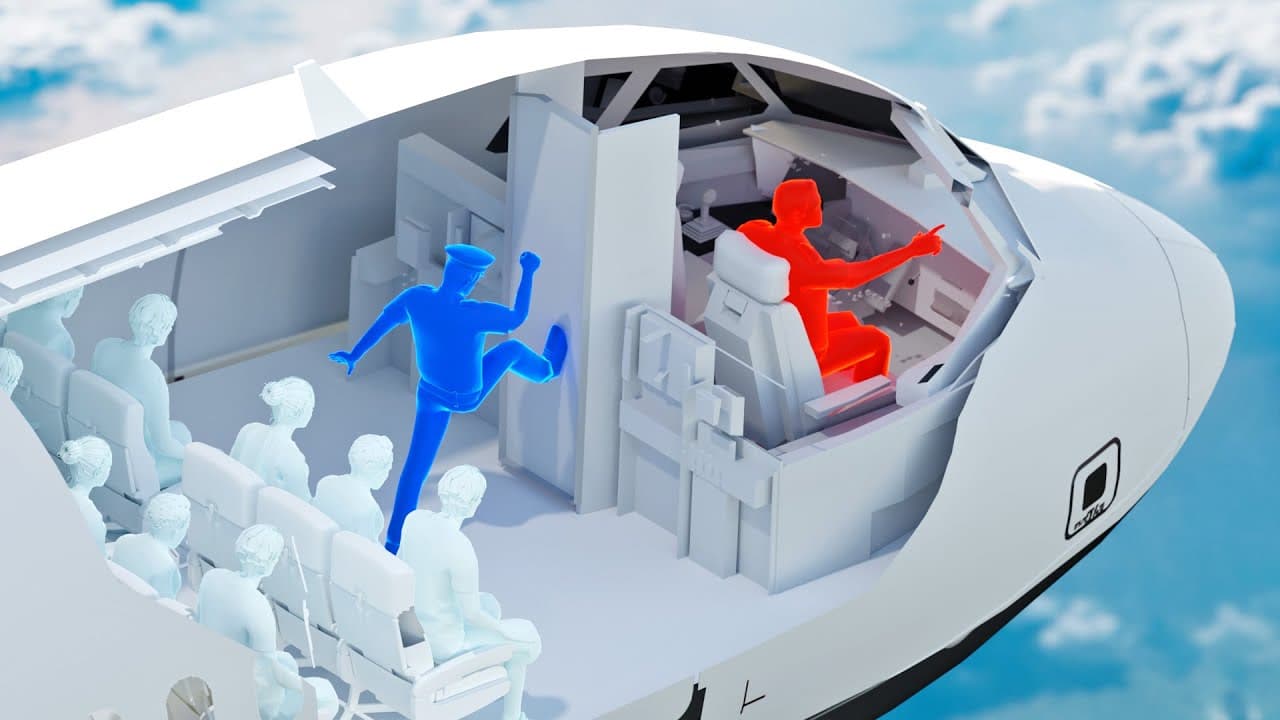
- The cockpit door was designed to protect pilots from hijackers by allowing those inside to override emergency access. A crew member's emergency code normally starts a 30-second timer and opens the door for five seconds, but the lock setting can prevent that process from granting entry.
- The captain spent his final minutes trying to regain control of the aircraft and save everyone aboard. The cockpit voice recorder captured violent blows against the reinforced door at 9:39, but a barrier built to withstand armed intruders left him with little chance of breaking through.
- The crash killed every person aboard, including 144 passengers, four cabin crew members, the captain, and the co-pilot. The passengers included an entire school class returning from a field trip to Spain, while captain Patrick Sondenheimer was a 34-year-old father of two.
- The co-pilot had a documented history of serious mental health problems beginning during Lufthansa flight training. He experienced a deep depressive episode, received antidepressants and psychiatric care, later returned to training after being declared in remission, and eventually joined Germanwings in 2013.
- The co-pilot continued flying despite renewed illness, psychotherapy, heavy antidepressant use, and multiple sick notes issued from February to March 2015. His employer depended on him to disclose that he had been declared unfit for work, but he withheld that information and remained on duty.
- The co-pilot researched the Airbus A320 cockpit-door locking mechanism four days before the crash. During the outbound flight from Dusseldorf to Barcelona, he briefly tested descent settings while the captain was outside the cockpit, then used the same circumstances on the return flight to bring down the aircraft.
- The aftermath produced stronger psychological screening and new cockpit staffing practices at multiple airlines. European aviation authorities proposed several safety regulations, and many airlines adopted a rule requiring two people in the cockpit at all times, although Lufthansa later discontinued that requirement.
Install to Summarize YouTube Videos and Get Transcripts
Explore YouTube Video Summarizer or Get YouTube Transcript Extractor
Questions & Answers
Q: How did Germanwings Flight 9525 crash?
Germanwings Flight 9525 crashed after the co-pilot deliberately locked the captain outside the cockpit and changed the Airbus A320's selected altitude, causing a sustained descent toward the Alps. Air traffic controllers repeatedly attempted contact across different frequencies, but received no response. The captain tried to break through the reinforced cockpit door, but the aircraft struck a mountain at 9:41 a.m., killing everyone aboard.
Q: Why could the captain not reenter the cockpit?
The captain could not reenter because the co-pilot used the cockpit door's lock setting to override every access attempt. Normally, a crew member can call through the intercom or enter an emergency code that begins a 30-second timer and opens the door for five seconds. However, pilots inside can activate the lock control during a suspected hijacking, disabling emergency access. The co-pilot exploited that protective feature.
Q: How did investigators determine that the crash was intentional?
Investigators recovered the cockpit voice recorder and flight recorder during the week of the crash, despite both devices being severely damaged. After reconstructing their data, investigators found that the selected altitude changed almost immediately after the captain left, the cockpit remained locked, and the captain repeatedly attempted to return. The recordings and flight information together formed a clear account of deliberate action by the co-pilot.
Q: What happened during the final minutes of Flight 9525?
The aircraft began descending after the captain left the cockpit at about 9:30 a.m. Marseilles controllers noticed the unexpected altitude loss and repeatedly called the flight without receiving an answer. The captain returned and requested access at 9:34, then tried to force the door. At 9:39, the recorder captured violent blows. Radar contact ended at 9:40, and the aircraft crashed one minute later.
Q: What was known about the co-pilot's mental health history?
The co-pilot experienced a deep depressive episode shortly after entering Lufthansa's Flight Academy and spent several months receiving psychiatric care and antidepressants. He was later declared in remission and returned to training. His depression returned, and doctors subsequently diagnosed hypochondriacal disorder and emergent psychosis. In early 2015, he resumed psychotherapy, took heavy antidepressants, received multiple sick notes, and continued working and flying.
Q: Why did the co-pilot continue flying after receiving sick notes?
The pilot health system relied partly on self-evaluation and expected pilots to tell their employer when they were medically unfit. Although multiple doctors issued sick notes and at least one declared the co-pilot unfit for work, he chose not to inform his employer. The transcript says doctors could break confidentiality when someone threatened public safety, but it does not establish why none reported him to aviation authorities.
Q: Did the co-pilot plan or rehearse the crash?
The evidence described in the transcript indicates preparation before the fatal flight. Four days before the crash, the co-pilot used his computer to research the Airbus A320 cockpit-door locking mechanism. On the outbound journey from Dusseldorf to Barcelona, he briefly tested descent settings while captain Patrick Sondenheimer was outside the cockpit. On the return flight, he used the locked cockpit and descent controls to bring down the aircraft.
Q: What aviation safety changes followed the crash?
Following the crash, the European Aviation Safety Agency proposed multiple safety regulations, and psychological screening for pilots increased. Multiple airlines also adopted a requirement that two people remain in the cockpit at all times, reducing the opportunity for one person to be alone behind the reinforced door. The transcript notes that Lufthansa later phased out this two-person rule, while emphasizing that an incident of this kind remains incredibly unlikely.
Summary & Key Takeaways
-
Germanwings Flight 9525 departed Barcelona for Dusseldorf on March 24, 2015. After the captain left the cockpit, the co-pilot changed the selected altitude and began descending. Air traffic controllers, French air defense personnel, and another aircraft repeatedly called the flight, but nobody answered before radar contact disappeared and the aircraft struck an Alpine mountain.
-
The captain requested cockpit access but the co-pilot used the door-control system to override emergency entry. The reinforced door, designed to resist hijackers, prevented the captain from returning despite repeated attempts and violent blows. All 144 passengers, four cabin crew members, the captain, and the co-pilot died when the aircraft crashed at 9:41 a.m.
-
Investigators found that the co-pilot had previously experienced severe depression and later received diagnoses involving hypochondriacal disorder and emergent psychosis. Multiple doctors issued sick notes, but he continued flying without informing his employer. After the crash, psychological screening increased, and multiple airlines adopted rules requiring two people in the cockpit, although Lufthansa later phased that rule out.
Read in Other Languages (beta)
Share This Summary 📚
Summarize YouTube Videos and Get Video Transcripts with 1-Click
Try YouTube Summary with ChatGPT & Claude or YouTube Transcript Generator
Explore More Summaries from fern 📚






Summarize YouTube Videos and Get Video Transcripts with 1-Click
Try YouTube Summary with ChatGPT & Claude or YouTube Transcript Generator