How Did Oury Jalloh Die in a German Police Cell?
TL;DR
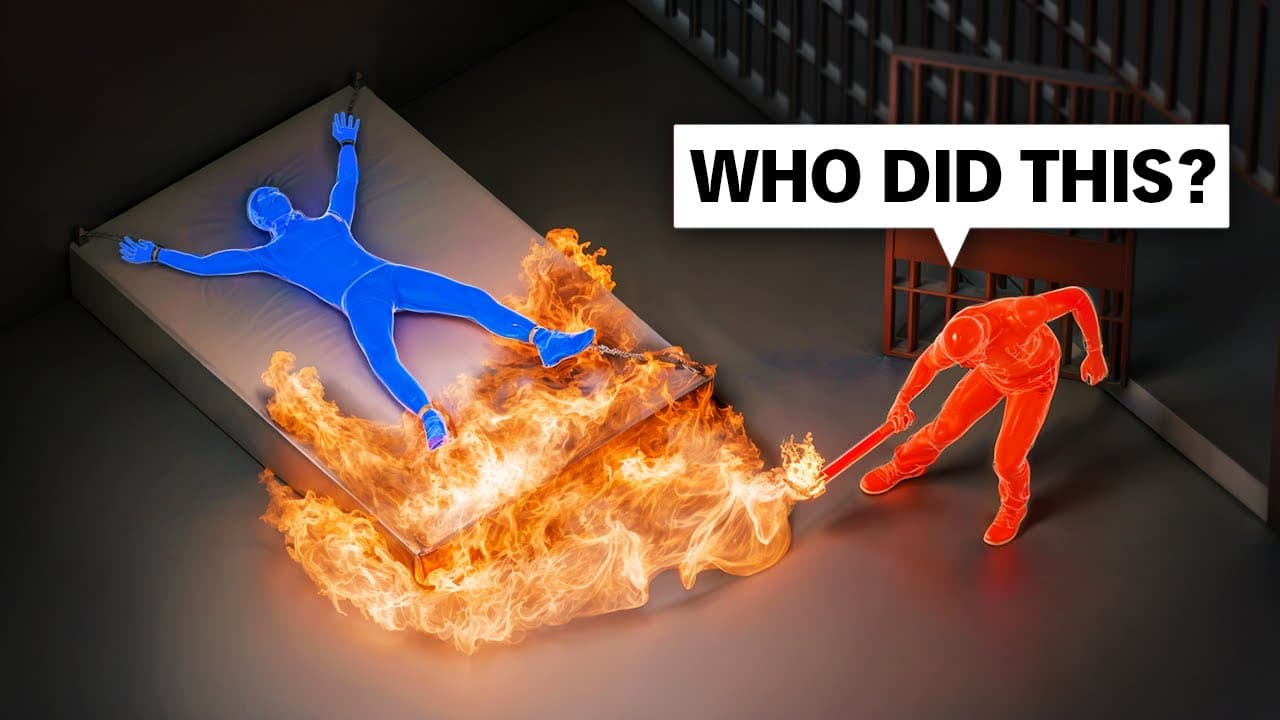
Oury Jalloh died in a fire inside a German police cell on January 7, 2005, while his hands and feet were chained to a bed. Police called the death a suicide, but the missing ignition source, fire-resistant mattress, disputed evidence, contradictory testimony, procedural failures, and expert findings have kept the case unresolved and under scrutiny for nearly 20 years.
Transcript
this is the story of Germany's strangest unsolved mystery on January 7 2005 a man was found burned alive in a police cell the police claim it was a suicide the man was alone in his cell and said his mattress on fire but he was restrained his wrists and ankles were Shackled the mattress was fireproof and he had no lighter on him to ignite a blaze so... Read More
Key Insights
- Oury Jalloh died on January 7, 2005, after a severe fire developed in cell number five at the Dessau police station. His hands and feet had been chained to a metal bed frame because officers said they feared he might harm himself.
- The official police theory is that Jalloh tore open a fire-resistant mattress and ignited the flammable foam inside with a lighter. Investigators believed officers had missed the lighter during their initial search, even though Jalloh was restrained by both wrists and ankles.
- The response to the fire alarms was delayed because duty chief Andreas S. initially treated the first alarm as false and switched it off. After a second alarm, officers heard flames through the intercom, and Jalloh called for help before Andreas S. entered the basement.
- The initial fire investigation proceeded without consulting a fire expert, despite standard protocol described in the account. Investigators swept debris from the burned cell, later reported finding a lighter in the ashes, and approached the case already convinced that Jalloh had started the fire himself.
- The justification for Jalloh's detention is disputed because his complete personal details were already entered in the custody log. Legal experts cited in the account concluded that the detention was unlawful and that officers had not properly explained the identity demand or warned him before using force.
- The account of Jalloh's behavior during the blood draw is contradicted by several witnesses. Two officers described extreme aggression, but three other officers reportedly observed no disturbance, and the doctor stated during the first trial that the procedure had gone smoothly.
- The first trial ended with acquittals for Andreas S. and Hans M. after 59 court days spread across a year and a half. The judge criticized police witnesses for obstructing the search for truth and questioned whether officers who lied should retain their badges.
- The continuing challenge to the official story is supported by thousands of pages of investigation files, court documents, expert reports, parliamentary inquiries, fire experiments, forensic examinations, and filtered court letters. Specialists across numerous disciplines produced findings described as fundamentally conflicting with the police account.
Install to Summarize YouTube Videos and Get Transcripts
Explore YouTube Video Summarizer or Get YouTube Transcript Extractor
Questions & Answers
Q: How did Oury Jalloh die in a German police cell?
Oury Jalloh died after a fire engulfed cell number five at the Dessau police station on January 7, 2005. His mattress burned to ashes, and his body suffered extremely deep burns. Police said he started the fire himself, but he had been left alone with his wrists and ankles chained to a metal bed frame, creating lasting questions about how the blaze began.
Q: Why is the official explanation of Oury Jalloh's death disputed?
The suicide explanation is disputed because Jalloh was restrained by both hands and feet, the mattress had a fire-resistant covering, and officers reported finding no lighter when they searched him. Police nevertheless argued that he tore the covering, exposed the flammable foam, and ignited it. A lighter was found later in swept-up fire debris, while expert findings reportedly contradicted the official account.
Q: What happened when the fire alarms sounded in Oury Jalloh's cell?
When the first fire alarm produced a piercing beep, duty chief Andreas S. assumed it was false and turned it off. Jalloh then yelled for help. A second alarm followed, and the intercom carried the crackling sound of flames. Beata H. urged Andreas S. to check the cell, but by the time firefighters arrived, Jalloh was already dead.
Q: Why was Oury Jalloh taken into police custody?
Police approached Jalloh after city cleaners said he had followed them, requested use of a phone, pulled on a backpack, and made them feel harassed. Beata H. relayed a more serious allegation to patrol officers, saying he had massively harassed and tried to grope them. Officers said they needed to confirm his identity, although his complete details were already recorded in the custody log.
Q: Was Oury Jalloh's detention described as lawful?
Legal experts cited in the account concluded that the detention was unlawful. The officers allegedly failed to give a reason for demanding Jalloh's identification and used force without a prior warning. Their claim that they needed to hold him while confirming his identity was also questioned because the custody log already contained his complete details, including the birth information said to be illegible on his document.
Q: What evidence problems affected the investigation into Oury Jalloh's death?
The investigation contained several disputed elements. Investigators did not consult a fire expert despite the stated standard protocol, and the crime scene team swept up debris before a lighter was reported in the ashes. A bloodstain attributed to Jalloh was found on a table but was never tested against his DNA. The account also says crucial evidence later vanished under mysterious circumstances.
Q: What were the outcomes of the trials concerning Oury Jalloh's death?
The first trial lasted 59 court days across a year and a half. Andreas S., charged over ignoring the alarm, and Hans M., accused of missing the lighter during the search, were both acquitted. About four years later, an extensive retrial ended with Andreas S. convicted of involuntary manslaughter and fined about $155,000, an outcome that drew broad attention across Germany.
Q: Why has the Oury Jalloh case remained active for nearly 20 years?
The case remains active because activists, lawyers, journalists, legal experts, and the initiative established in Jalloh's memory continue questioning the police narrative. Thousands of pages of files, court documents, expert reports, parliamentary inquiries, experiments, examinations, and letters have accumulated. Specialists including fire experts, medical examiners, chemists, radiologists, toxicologists, and criminologists reportedly reached findings that conflict with the official version.
Summary & Key Takeaways
-
Oury Jalloh was detained in Dessau after city cleaners reported feeling harassed by him. Although the situation had reportedly calmed before officers arrived, police forced him into a patrol car, took him to the station, drew his blood, and placed him in cell number five with his hands and feet restrained.
-
Police said Jalloh tore the fire-resistant covering from his mattress and ignited its foam with a lighter that officers had missed during a search. That theory requires him to have completed several difficult actions while shackled by all four limbs. The lighter was discovered only after investigators swept up the fire debris.
-
The first trial ended with both accused officers acquitted, despite contradictions, missing evidence, and criticism from the judge. A later retrial convicted duty chief Andreas S. of involuntary manslaughter and imposed a fine of about $155,000. Activists, lawyers, journalists, and specialists continue challenging the official account through records and experiments.
Read in Other Languages (beta)
Share This Summary 📚
Summarize YouTube Videos and Get Video Transcripts with 1-Click
Try YouTube Summary with ChatGPT & Claude or YouTube Transcript Generator
Explore More Summaries from fern 📚




Summarize YouTube Videos and Get Video Transcripts with 1-Click
Try YouTube Summary with ChatGPT & Claude or YouTube Transcript Generator