How to Build Confidence by Reframing Failure
TL;DR
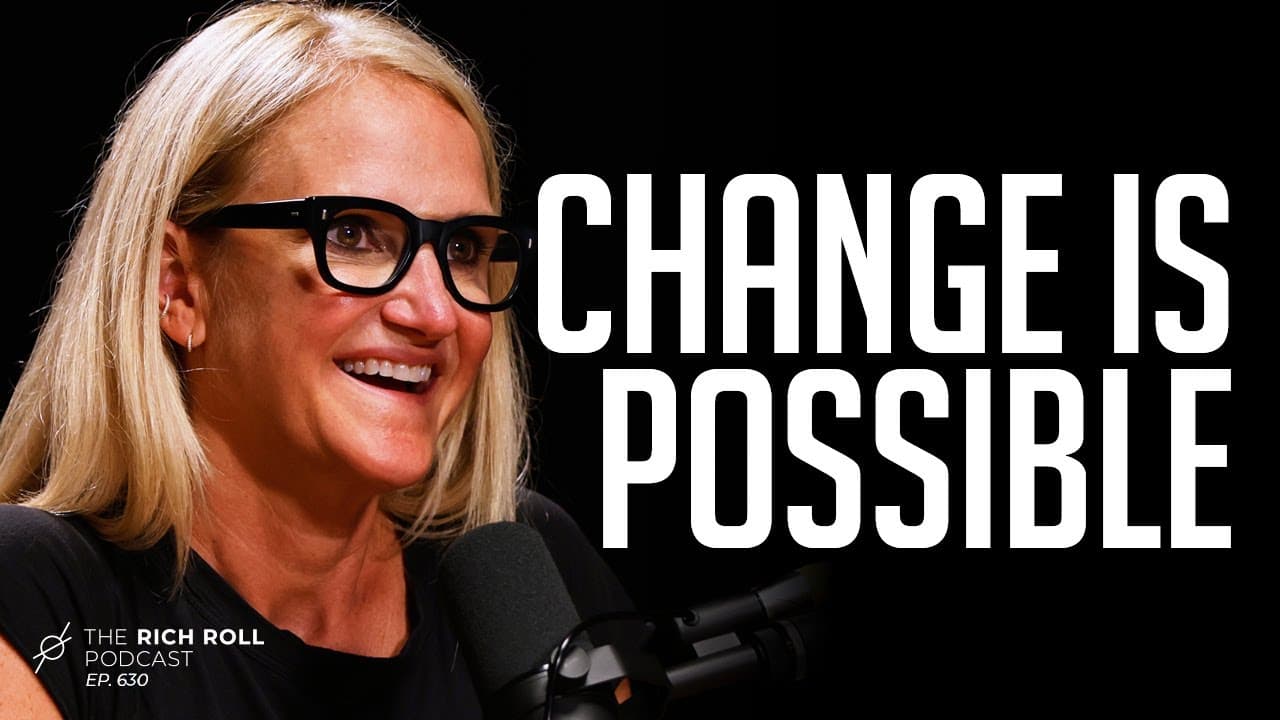
Confidence grows when you treat difficult experiences as lessons that prepare you for what comes next, rather than as final judgments about your ability. Mel Robbins describes how losing her dream talk show helped her recognize that she needed expert leadership around her, a narrower creative role, and enough distance from outcomes to use failure constructively.
Transcript
There is somebody that will fundamentally change because of what they're about to hear us talk about. (upbeat music) Hey everybody, welcome to the podcast. My guest today is the uber inspiring, super authentic queen of grounded, science-backed personal development, my friend, Mel Robbins. Chances are if you are at all online, you already know this ... Read More
Key Insights
- A difficult experience can prepare a person for a later opportunity, even when its purpose is invisible in the moment. Robbins believes that looking backward reveals how lessons, people, failures, and painful periods connect to present abilities and circumstances.
- Confidence is strengthened by viewing the present as one point on a longer life trajectory. Robbins says this perspective helped her maintain faith during a deeply difficult year because an immediate outcome did not have to determine the meaning of the entire experience.
- Detachment from outcomes can change how failure is interpreted. Robbins acknowledges that her talk show was not renewed and calls that result a failure, but she does not treat it as proof that pursuing the opportunity was a mistake or that the experience lacked value.
- Self-awareness can emerge while an experience is still unfolding. Robbins says she recognized during the talk show that being surrounded by experienced specialists allowed her to see the organizational conditions under which she performed well and the responsibilities that did not suit her.
- A dream job can reveal an unexpected mismatch between ambition and working conditions. Robbins had wanted to host a daytime show since childhood, yet discovered that she strongly disliked having limited control over decisions within a large television production operated by Sony Pictures Television.
- Effective work depends on occupying a role that matches personal strengths. Robbins concluded that she was poorly suited to running a company but highly effective when an organization enabled her to focus on coaching, communication, and the work she does best.
- Expert support can make creative work more sustainable. Robbins realized she needed capable specialists around her, along with a strong leader who could manage the organization and redirect her when she moved beyond the responsibilities best aligned with her abilities.
- Organizational preferences differ even among talented collaborators. Robbins enjoyed the support and narrowly defined role provided by a production involving 131 people, while her executive producer discovered that a team of 10 felt too small and that she needed a larger working environment.
- Related book: The 5 Second Rule
- Export your Kindle highlights to Glasp: How to Download Highlights and Notes from Kindle
Install to Summarize YouTube Videos and Get Transcripts
Explore YouTube Video Summarizer or Get YouTube Transcript Extractor
Questions & Answers
Q: How can failure help build confidence?
Failure can build confidence when it is treated as evidence and instruction rather than a permanent judgment. Robbins openly describes her talk show's cancellation as a failure, but she separates that outcome from the value of pursuing the opportunity. The experience clarified her strengths, exposed unsuitable responsibilities, and gave her information for reorganizing how she worked afterward.
Q: How can you reframe a failed dream job?
A failed dream job can be reframed as an experience that reveals what the dream could not show from a distance. Robbins had wanted to host a daytime talk show since childhood, yet doing the job exposed her discomfort with limited control and her preference for a focused creative role supported by experts. The failed outcome therefore produced valuable professional self-knowledge.
Q: Why does Mel Robbins describe life as a school?
Robbins describes life as a school because she believes every experience can teach something that prepares a person for what follows. Looking backward can reveal connections among painful periods, relationships, jobs, and later capabilities. Her broader challenge is to apply that perspective in the present, trusting that today's experience may become a meaningful part of a future path.
Q: How does detaching from outcomes change your response to failure?
Detaching from outcomes allows an experience to retain value even when its visible result is disappointing. Robbins pursued her talk show knowing that the opportunity might be preparing her for something beyond the program itself. When it was not renewed, she could acknowledge the failure honestly while still using its lessons instead of interpreting cancellation as the whole meaning of the experience.
Q: What did Mel Robbins learn from hosting her talk show?
Robbins learned that hosting, coaching, and creating with a large group energized her, while functioning as the chief executive of her own organization did not match her strengths. The show placed her among experienced specialists and gave her a narrowly defined role. That contrast helped her recognize that her business needed expert leadership, clearer responsibilities, and a different structure.
Q: Why is working within your strengths important?
Working within your strengths helps concentrate effort where you contribute most effectively and reduces the strain created by unsuitable responsibilities. Robbins says she excels when an organization allows her to show up and perform her best work. She struggled when she also had to manage the company, so identifying the right role became essential to her effectiveness and happiness.
Q: Why should leaders surround themselves with experts?
Leaders should surround themselves with experts when their own abilities do not cover every responsibility required by an organization. Robbins realized that she had built her business despite weaknesses in management and needed specialists who were better at their respective roles. She also needed someone strong enough to keep her focused when she began stepping into responsibilities outside her best lane.
Q: Can self-awareness develop during a difficult experience?
Self-awareness can develop while a difficult experience is happening, not only after reflection. Robbins says she began recognizing her organizational strengths and weaknesses while hosting the talk show because she was surrounded by expertise for the first time. The production environment gave her a direct comparison between a supported creative position and the executive role she had occupied in her business.
Summary & Key Takeaways
-
Mel Robbins describes her lifelong ambition to host a daytime talk show and the difficulty of entering a production where major decisions were outside her control. Although she enjoyed coaching people and collaborating with a large creative team, the experience exposed how strongly she disliked lacking final authority over her work.
-
Robbins argues that life functions as a school, with experiences, relationships, and painful periods preparing people for later stages. Viewing the present as another point on a larger trajectory can create faith during uncertainty and reduce attachment to whether a particular job, project, or ambition produces the desired outcome.
-
The cancellation of Robbins's talk show became an instructive failure rather than a final defeat. It showed her that serving as a company CEO did not fit her strengths. She concluded that she performs best with knowledgeable people handling specialized responsibilities while she concentrates on coaching, communicating, and creative contributions.
Read in Other Languages (beta)
Share This Summary 📚
Summarize YouTube Videos and Get Video Transcripts with 1-Click
Try YouTube Summary with ChatGPT & Claude or YouTube Transcript Generator
Explore More Summaries from Rich Roll 📚
Summarize YouTube Videos and Get Video Transcripts with 1-Click
Try YouTube Summary with ChatGPT & Claude or YouTube Transcript Generator