How to Speak Natural English at C1 and C2
TL;DR
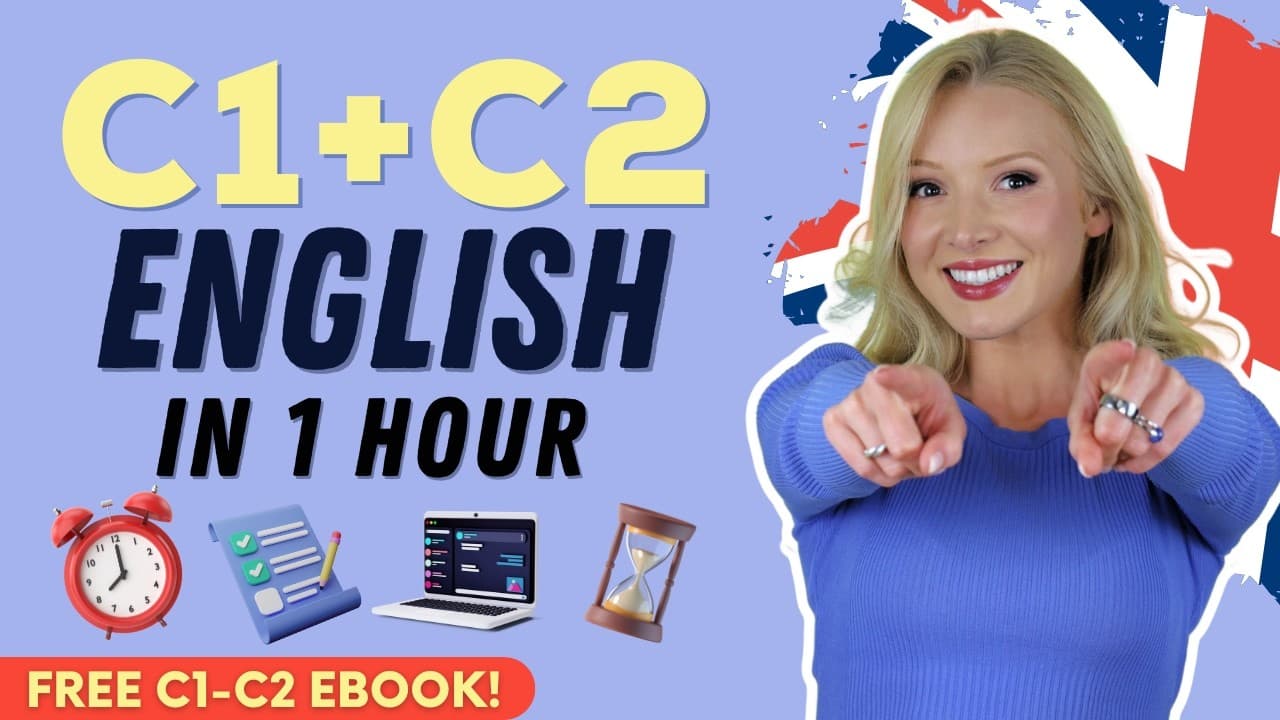
Advanced English depends on choosing expressions that fit the relationship, context, and level of formality. Natural speakers use contractions, ellipsis, understated responses, polite introductory phrases, and words whose meanings change with context. Moving from C1 toward C2 also requires stronger grammar awareness and a broader command of sophisticated vocabulary.
Transcript
If your English is at a B2C C1 level and you're wondering what it really takes to move towards C2, this lesson is for you. This is the perfect place to begin. Today, we are going to review some of the core skills and grammar from the C1 level and take a look at what is needed in the C2 level. We'll look at words that seem simple but carry far more ... Read More
Key Insights
- • “How are you?” is appropriate in almost any situation, but advanced speakers add variety with questions such as “How’s it going?”, “How have you been?”, “How’s life?”, and “Been up to much?”
- • Phatic communication is language used primarily to maintain social contact rather than exchange detailed information. A business acquaintance may expect only “Fine, thanks,” while a close friend asking the same question may genuinely want an honest update.
- • Contractions and ellipsis are common features of natural spoken English. Speakers compress “how are” and “how have,” or omit predictable words in expressions such as “Been up to much?”, “Fine, thanks,” and “Been better.”
- • British responses are often deliberately understated. Expressions including “Not bad,” “Not too bad,” “Can’t complain,” and “Mustn’t grumble” communicate that things are generally acceptable without sounding strongly enthusiastic.
- • Tone can change the meaning of an expression. “Hanging in there” and “Getting by” may be humorous descriptions of ordinary life, but a more serious tone can signal that the speaker is experiencing a genuinely challenging period.
- • Honest negative answers can be softened through indirect wording. “It hasn’t been the easiest week,” “It’s been some day,” “Bit under the weather,” and “Not too clever” communicate difficulty without using the strongest possible description.
- • Advanced introductions are more natural when they provide relevant personal detail. A speaker can state a preferred name, explain a nickname, identify a mutual friend or colleague, introduce another person, or use restrained humour about what people should call them.
- • Moving toward C2 requires control across several areas rather than vocabulary alone. The lesson’s stated areas include natural social exchanges, advanced introductions, C1 grammar, simple words with advanced meanings, and two groups of C2-level or advanced vocabulary.
Install to Summarize YouTube Videos and Get Transcripts
Explore YouTube Video Summarizer or Get YouTube Transcript Extractor
Questions & Answers
Q: How can I ask “How are you?” in advanced English?
Advanced alternatives include “How’s it going?”, “How are you doing?”, “How have you been?”, “How’s life?”, “How’s life treating you?”, and “How are things?” In informal situations, speakers may also ask “Been up to much?”, “All right?”, or “What’s up?” The appropriate choice depends on formality, familiarity, and whether the speaker wants a real update or is simply greeting someone.
Q: What is phatic communication in English conversation?
Phatic communication is language used for social connection rather than for obtaining substantial information. At a conference, a business associate who asks “How’s it going?” may expect only a short reply such as “Fine, thanks.” A close friend using the same words may genuinely want details. Learners therefore need to use context and the relationship between speakers to judge the expected response.
Q: How should I respond naturally when someone asks how I am?
Common neutral responses include “I’m fine, thanks,” “I’m well, thanks,” and “I’m good, thanks.” Speakers frequently omit “I’m” and simply say “Fine, thanks” or “Good, thanks.” More nuanced choices include “Pretty good,” “Not bad,” “Not too bad,” and “Can’t complain.” After answering, it is common to return the question with “You?” or “Yourself?”
Q: Is “I’m good” a correct response to “How are you?”
“I’m good” is widely used as an informal response, although some people describe it as less formal than “I’m fine.” The lesson also distinguishes “I’m doing well” from “I’m doing good.” In a strict interpretation, doing good means performing positive actions, such as volunteering or giving to charity, but speakers commonly use “I’m doing good” to describe their condition.
Q: What are understated British ways to answer “How are you?”
Understated British responses include “Pretty good,” “Not bad,” “Not too bad,” and “Can’t complain.” In the United Kingdom, particularly in the north, speakers may say “Mustn’t grumble,” with “grumble” meaning complain. “Same old” or “Same old, same old” indicates that little has changed. These expressions give a restrained answer rather than showing strong enthusiasm.
Q: How can I honestly say that I am not doing well?
A softened honest answer can begin with “Been better” or “Been better, to be honest.” Other options include “It hasn’t been the easiest week,” “It’s been some day,” and “Oh, you know,” followed by an explanation. If the problem is illness, “Bit under the weather” or the informal British expression “Not too clever” can communicate that you are feeling unwell.
Q: How can I introduce myself naturally at an advanced level?
A polite introduction can begin with “I don’t think we’ve been introduced” or “I’m not sure we’ve met before.” After giving your name, you can explain what people usually call you, using phrases such as “Most people call me,” “I usually go by,” or “It’s short for.” You can also mention a mutual connection or add light humour about your preferred name.
Q: What skills help an English learner progress from C1 to C2?
The lesson presents progress toward C2 as a combination of advanced social language, natural introductions, strong C1 grammar, deeper understanding of apparently simple words, and sophisticated vocabulary. Contextual control is also important because the same expression can change meaning according to tone, formality, and relationship. Greater variety should therefore be combined with accurate judgment about when each expression is appropriate.
Summary & Key Takeaways
-
Advanced answers to “How are you?” range from neutral replies such as “Fine, thanks” to understated British expressions such as “Not bad,” “Can’t complain,” and “Mustn’t grumble.” Context determines whether the question is merely a social greeting or a genuine invitation to share personal news, difficulties, or positive developments.
-
Natural introductions can begin with polite phrases such as “I don’t think we’ve been introduced” or “I’m not sure we’ve met before.” Speakers can then explain their preferred name, mention a mutual connection, introduce a colleague, or add light humour. These choices create a more personal and advanced exchange.
-
Progressing from C1 toward C2 involves more than memorising difficult words. The lesson combines advanced social language, natural introductions, C1 grammar, familiar words with less obvious meanings, and dedicated C2 vocabulary sections. The overall goal is to develop greater variety, contextual sensitivity, and natural control of spoken English.
Read in Other Languages (beta)
Share This Summary 📚
Summarize YouTube Videos and Get Video Transcripts with 1-Click
Try YouTube Summary with ChatGPT & Claude or YouTube Transcript Generator
Explore More Summaries from English with Lucy 📚




Summarize YouTube Videos and Get Video Transcripts with 1-Click
Try YouTube Summary with ChatGPT & Claude or YouTube Transcript Generator