What Are Yuval Noah Harari's Views on Global Risks for Humanity?
TL;DR
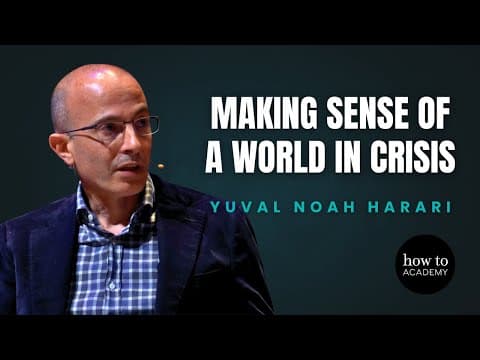
Yuval Noah Harari identifies nuclear war, climate change, and technological disruption as the most pressing global risks facing humanity. He emphasizes the need for responsible governance and a shift in public discourse to address these issues effectively, stating that the future is unpredictable and that humanity's choices will determine whether technology leads to a better or worse future.
Transcript
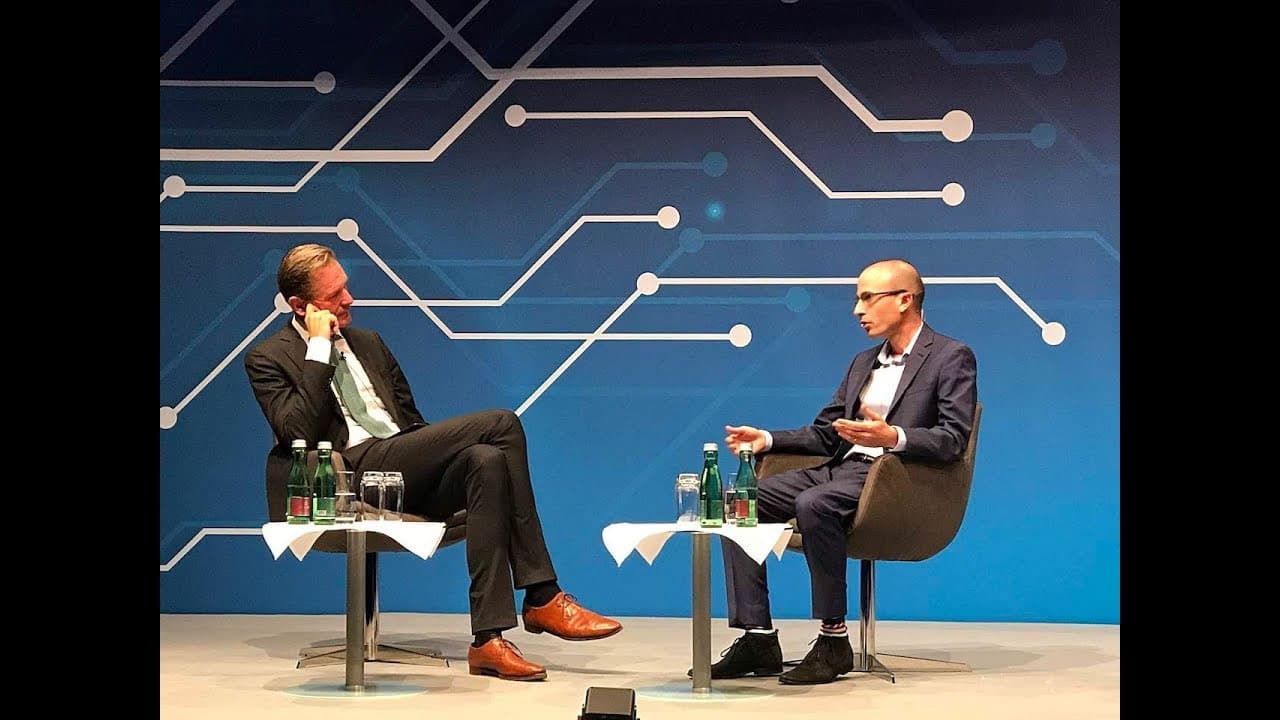
- Welcome to this year's German Newspaper Congress, which is actually hosted by the Federation of the German Newspaper Publishers. And this non-profit organization is at its top level represented by its president, Dr. Mathias Dopfner, who is in his main job CEO of the media and digital company Axel Springer. And he is as well, he is a educated jour... Read More
Key Insights
- 🌍 The future is unpredictable, and no one can accurately predict what will happen in the world in 2050.
- 😮 The rise of AI and biotechnology presents both beneficial opportunities and potential risks for humankind.
- 👻 The success or failure of immigration and integration depend on factors such as timescale, accounting methods, and the willingness of the host country's population to cooperate.
- ❎ Technology, including AI and biotech, is not deterministic; it can be used for positive or negative purposes depending on human choices and governance.
- 🎙️ More videos with Yuval Noah Harari:
Install to Summarize YouTube Videos and Get Transcripts
Explore YouTube Video Summarizer or Get YouTube Transcript Extractor
Questions & Answers
Q: Are you annoyed by being seen as an oracle of future predictions?
Harari prefers discussing the past as a historian, but recognizes that his audience is often more interested in the future. He emphasizes the importance of acknowledging the limitations of human knowledge and presenting multiple possibilities instead of making definite predictions.
Q: Do you have any political ambitions?
Harari does not aspire to become a politician in the traditional sense, but he sees his role as a public intellectual in shaping the conversation and raising awareness about pressing global issues. He calls for a focus on nuclear war, climate change, and technological disruption in political discussions and elections.
Q: How do you view the ideological divisions of right and left in the context of AI and climate change?
Harari believes that these ideological divisions are not necessarily relevant to the challenges posed by AI and climate change. He notes that denial of climate change is more prevalent among right-wing nationalists, but attributes this to their struggle to reconcile nationalistic ideals with the need for global cooperation to address climate change effectively.
Q: What is the likelihood that China will become the dominant player worldwide and implement its non-democratic system in other countries?
Harari acknowledges that there is a high likelihood that China may become a dominant player due to its advancements in AI and biotechnology. However, he also raises questions about the Chinese system's ability to handle major crises and the potential backlash from its population.
Q: How does technology, specifically AI and data analysis, impact the advertising industry?
Harari explains that AI and data analysis enable companies like Google to gather extensive information about individuals, allowing them to tailor advertising to target specific weaknesses and desires. He suggests that this could potentially lead to a future where advertisements are no longer necessary, as AI could provide personalized recommendations based on comprehensive knowledge of individuals.
Summary & Key Takeaways
-
Harari expresses his reluctance to be portrayed as a guru-like figure, emphasizing the unpredictability of the future and the limitations of human knowledge.
-
He discusses his interest in focusing public conversation on pressing global challenges, such as nuclear war, climate change, and the rise of AI and biotechnology.
-
Harari suggests that the world's political leaders are not adequately addressing these issues and highlights the need for a change in public conversation to prevent worst-case scenarios and promote responsible decision-making.
Read in Other Languages (beta)
Share This Summary 📚
Summarize YouTube Videos and Get Video Transcripts with 1-Click
Try YouTube Summary with ChatGPT & Claude or YouTube Transcript Generator
Explore More Summaries from Yuval Noah Harari 📚


Summarize YouTube Videos and Get Video Transcripts with 1-Click
Try YouTube Summary with ChatGPT & Claude or YouTube Transcript Generator