How Much Does It Cost to Prevent Climate Change?

TL;DR
Preventing catastrophic climate change requires an investment of about two percent of global GDP, or approximately $1.7 trillion annually. This funding can create jobs, reduce healthcare costs, and bolster democracy by decreasing reliance on fossil fuels. Redirecting resources from subsidies and waste can cover this cost, making it a feasible path forward.
Transcript
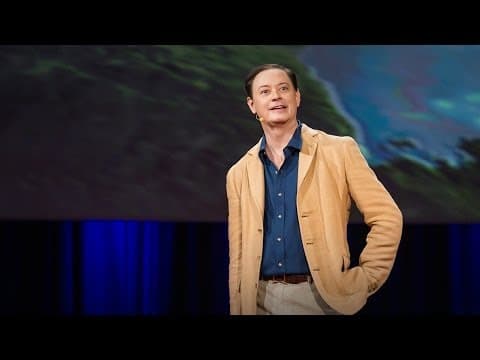
As the climate crisis worsens, too many people are swinging from denial straight to despair. But we should not lose hope. Humanity has enormous resources under its command, and by applying them wisely, we can still prevent ecological cataclysm. Let's talk numbers. What would it cost to prevent catastrophic climate change? Would we have to commit 50... Read More
Key Insights
- 🌍 Investing 2% of global GDP in clean technologies and infrastructure can prevent catastrophic climate change, according to most experts.
- 💼 These investments in renewable energy and sustainability will create new jobs, boost economic opportunities, and save lives by reducing air pollution.
- ✅ Preventing the apocalypse is a feasible project that would cost around 2% of annual global GDP, approximately $1.7 trillion.
- 🌊 Addressing climate change goes beyond just preventing catastrophic climate change; it also requires addressing plastic pollution, loss of biodiversity, and changing behaviors and thinking patterns.
- 🏦 Funds for climate change action can come from redirecting resources, taxing the wealthy and corporations, and reducing wastage and subsidies, like the $500 billion spent on fossil fuel subsidies annually.
- 💪 The power to take action lies with politicians, who have the ability to shift resources, as seen in historical crises like World War II and the 2008 financial crisis.
- 💰 Investment banks and pension funds, with over $56 trillion in assets, can also play a crucial role in funding climate change mitigation efforts. ⏳ It's not too late to take action. Instead of succumbing to defeatism, we should advocate for concrete commitments, like a 2% investment in climate action, from global leaders and at international conferences such as COP 27.
- 🎙️ More videos with Yuval Noah Harari:
Install to Summarize YouTube Videos and Get Transcripts
Explore YouTube Video Summarizer or Get YouTube Transcript Extractor
Questions & Answers
Q: What percentage of global GDP would need to be invested in clean technologies and infrastructure to prevent catastrophic climate change?
Most experts agree that increasing annual investment in clean technologies and infrastructure by around two percent of global GDP would be enough to prevent catastrophic climate change.
Q: How does this investment compare to the total budget?
The investment needed to prevent catastrophic climate change is not as high as some may think. Estimates suggest that it would require only two percent of annual global GDP, which is a relatively low percentage.
Q: What are the potential economic benefits of investing in clean technologies and infrastructure?
Investing in clean technologies and infrastructure can lead to the creation of new jobs and economic opportunities. Additionally, it is likely to be economically profitable in the long run, as it can reduce healthcare expenditures and save millions of people from air pollution-related illnesses.
Q: How would reducing our dependence on fossil fuels benefit democracy and peace?
Many oil and gas-producing countries are governed by autocratic and militaristic regimes. By reducing our dependence on fossil fuels, we can undermine these regimes and promote democracy and peace.
Q: What is the estimated cost to protect the Amazon rainforest and why has it not been done yet?
To protect the Amazon rainforest, it would cost approximately 800 billion dollars, which is less than one percent of global GDP. However, despite this relatively low cost, governments and businesses have not prioritized this investment due to other competing interests.
Q: How much money is wasted on food that goes to waste and fossil fuel subsidies?
Approximately 2.4 percent of global GDP is spent on food that goes to waste every two years. Furthermore, governments spend about 500 billion US dollars annually on direct subsidies for fossil fuels, equivalent to two percent of annual global GDP.
Q: How much money is hidden in tax havens and what can be done about it?
It is estimated that the money hidden in tax havens by the wealthy amounts to around 10 percent of global GDP. Additionally, corporations stash around 1.4 trillion dollars in offshore profits annually, equivalent to 1.6 percent of global GDP. Collecting these taxes and cracking down on tax evasion could provide significant funds for addressing the ecological crisis.
Summary & Key Takeaways
-
Preventing catastrophic climate change is feasible by investing around two percent of global GDP in clean technologies and infrastructure.
-
These investments can create jobs, reduce healthcare expenditures, and promote democracy and peace.
-
The necessary funds can be obtained by redirecting resources, such as reducing food waste and eliminating fossil fuel subsidies, as well as collecting taxes from the wealthy and corporations hiding money in tax havens.
Read in Other Languages (beta)
Share This Summary 📚
Summarize YouTube Videos and Get Video Transcripts with 1-Click
Try YouTube Summary with ChatGPT & Claude or YouTube Transcript Generator
Explore More Summaries from TED 📚




Summarize YouTube Videos and Get Video Transcripts with 1-Click
Try YouTube Summary with ChatGPT & Claude or YouTube Transcript Generator