How Does AI Compare to a College Graduate?
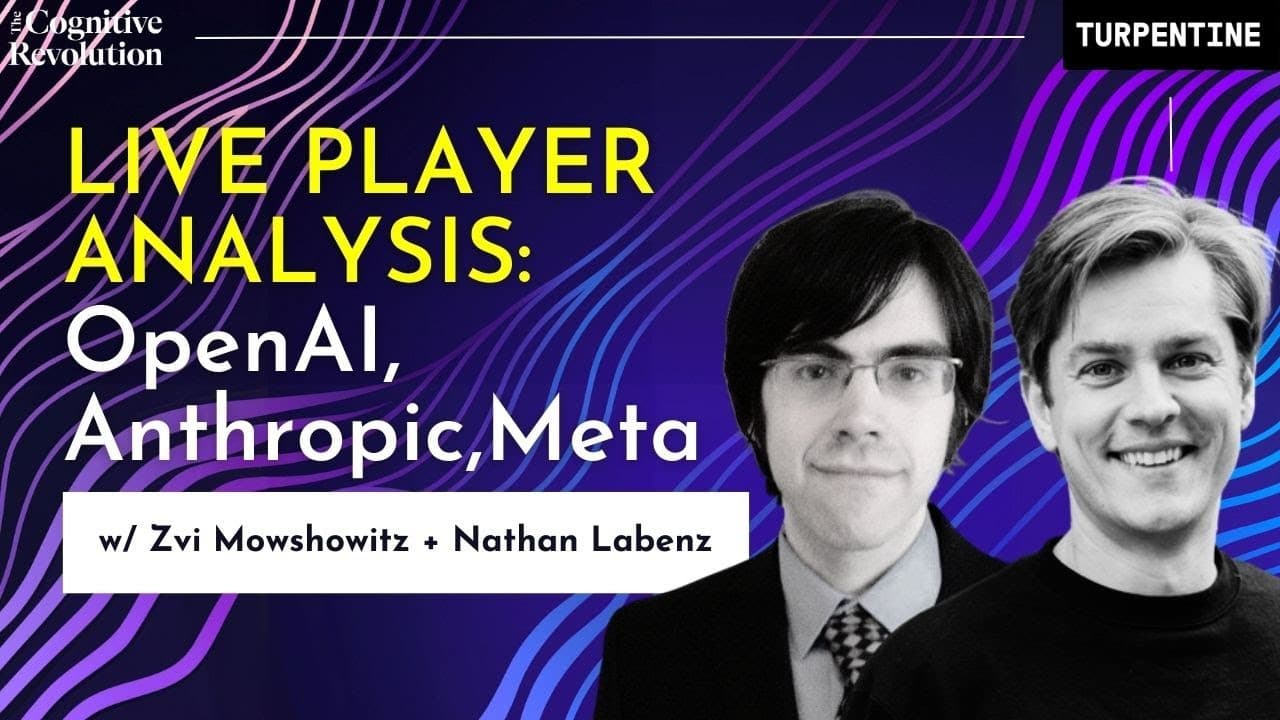
TL;DR
AI systems like GPT-4 and Med-PaLM are advancing rapidly, with capabilities nearing or surpassing human levels in specific tasks. While OpenAI, Anthropic, and Google DeepMind are key players, each has unique approaches to AI development and safety. The potential of AI to automate mundane tasks is immense, but challenges remain in ensuring safety and alignment with human values.
Transcript
One of the things people constantly get wrong is they think about human level as the peak of things. And so like once we've patched this and now it works. That's not really how this goes, right? There is no it goes from not working to working. It goes from working worse to working better. And then it could always go to working better still. And tha... Read More
Key Insights
- AI systems like GPT-4 are compared to well-read college undergraduates in terms of knowledge but differ in reasoning and creativity.
- OpenAI's superalignment project aims to align AI systems with human values, not just to build them quickly.
- Anthropic's use of constitutional AI shows promise in reducing adversarial attacks, but its scalability remains uncertain.
- Breaking tasks into smaller steps can improve AI performance by reducing context clashes and enhancing focus.
- Google DeepMind's recent advancements in robotics and multimodal systems demonstrate the integration of language and action.
- Med-PaLM's multimodal capabilities in healthcare show AI's potential to assist in medical diagnostics and decision-making.
- The competition among AI labs drives rapid advancements but also necessitates careful consideration of safety and alignment.
- AI's ability to handle mundane tasks can free humans for more creative and complex work, but proper implementation is crucial.
Install to Summarize YouTube Videos and Get Transcripts
Explore YouTube Video Summarizer or Get YouTube Transcript Extractor
Questions & Answers
Q: How does AI compare to a college graduate in terms of intelligence?
AI systems like GPT-4 are often compared to well-read college graduates in terms of knowledge and information processing. However, they differ significantly in reasoning and creativity. While AI can process vast amounts of data quickly, it lacks the nuanced understanding and creativity that human graduates possess, especially in novel or complex situations.
Q: What is OpenAI's superalignment project?
OpenAI's superalignment project aims to ensure that future AI systems align with human values and intentions. Rather than focusing solely on building AI systems quickly, the project emphasizes understanding and controlling AI behavior to prevent unintended consequences. This involves developing techniques to align AI systems with human goals and ethics effectively.
Q: How does Anthropic's constitutional AI approach work?
Anthropic's constitutional AI approach involves training AI systems using a set of predefined principles or 'constitution' to guide their behavior. This method shows promise in reducing adversarial attacks by making AI systems more robust against manipulative inputs. However, its scalability to more advanced AI systems remains uncertain, and further research is needed to evaluate its long-term effectiveness.
Q: What are the recent advancements in AI robotics by Google DeepMind?
Google DeepMind has made significant advancements in AI robotics, integrating language models with robotic systems to perform complex tasks. Recent developments include robots that can understand and execute commands involving conceptual understanding, such as identifying and manipulating objects based on their attributes. This integration of language and action represents a step forward in creating more capable and versatile robotic systems.
Q: How does Med-PaLM utilize multimodal capabilities in healthcare?
Med-PaLM utilizes multimodal capabilities by integrating text and image inputs, such as pathology images and case histories, to assist in medical diagnostics. This allows the AI system to provide more accurate and comprehensive assessments, potentially surpassing human doctors in certain evaluation categories. The system's ability to handle diverse types of medical data showcases its potential to revolutionize healthcare diagnostics and decision-making.
Q: What are the potential benefits of AI handling mundane tasks?
AI's ability to handle mundane tasks can significantly increase human productivity by freeing individuals from repetitive and time-consuming activities. This allows humans to focus on more creative and complex work, potentially leading to greater innovation and job satisfaction. However, the successful implementation of AI in these roles requires careful consideration of safety, alignment with human values, and avoidance of unintended consequences.
Q: How does breaking tasks into smaller steps improve AI performance?
Breaking tasks into smaller, discrete steps can improve AI performance by reducing context clashes and enhancing focus on individual tasks. This approach allows AI systems to handle each component of a task more effectively, leading to more accurate and reliable outcomes. By minimizing the complexity of each step, AI can better manage its resources and deliver higher-quality results.
Q: What challenges remain in ensuring AI safety and alignment?
Ensuring AI safety and alignment involves addressing challenges such as preventing adversarial attacks, aligning AI behavior with human values, and controlling AI systems' actions to avoid unintended consequences. Ongoing research focuses on developing techniques to achieve these goals, but the rapid pace of AI advancement necessitates continuous vigilance and adaptation to emerging risks and ethical considerations.
Summary & Key Takeaways
-
AI systems like GPT-4 and Med-PaLM are advancing rapidly, with capabilities nearing or surpassing human levels in specific tasks. OpenAI, Anthropic, and Google DeepMind are key players, each with unique approaches to AI development and safety. The potential of AI to automate mundane tasks is immense, but challenges remain in ensuring safety and alignment with human values.
-
OpenAI's superalignment project aims to align future AI systems with human values rather than just building them quickly. Anthropic's constitutional AI approach shows promise in reducing adversarial attacks, although its long-term scalability is uncertain. Google DeepMind's advancements in robotics and multimodal systems demonstrate the integration of language and action in AI.
-
Breaking tasks into smaller steps can improve AI performance by reducing context clashes and enhancing focus. As AI continues to evolve, the competition among AI labs drives rapid advancements but also necessitates careful consideration of safety and alignment. AI's ability to handle mundane tasks can free humans for more creative work, but proper implementation is crucial.
Read in Other Languages (beta)
Share This Summary 📚
Summarize YouTube Videos and Get Video Transcripts with 1-Click
Try YouTube Summary with ChatGPT & Claude or YouTube Transcript Generator
Explore More Summaries from Cognitive Revolution "How AI Changes Everything" 📚






Summarize YouTube Videos and Get Video Transcripts with 1-Click
Try YouTube Summary with ChatGPT & Claude or YouTube Transcript Generator