What Is Universal Basic AI and How Can It Transform Society?
TL;DR
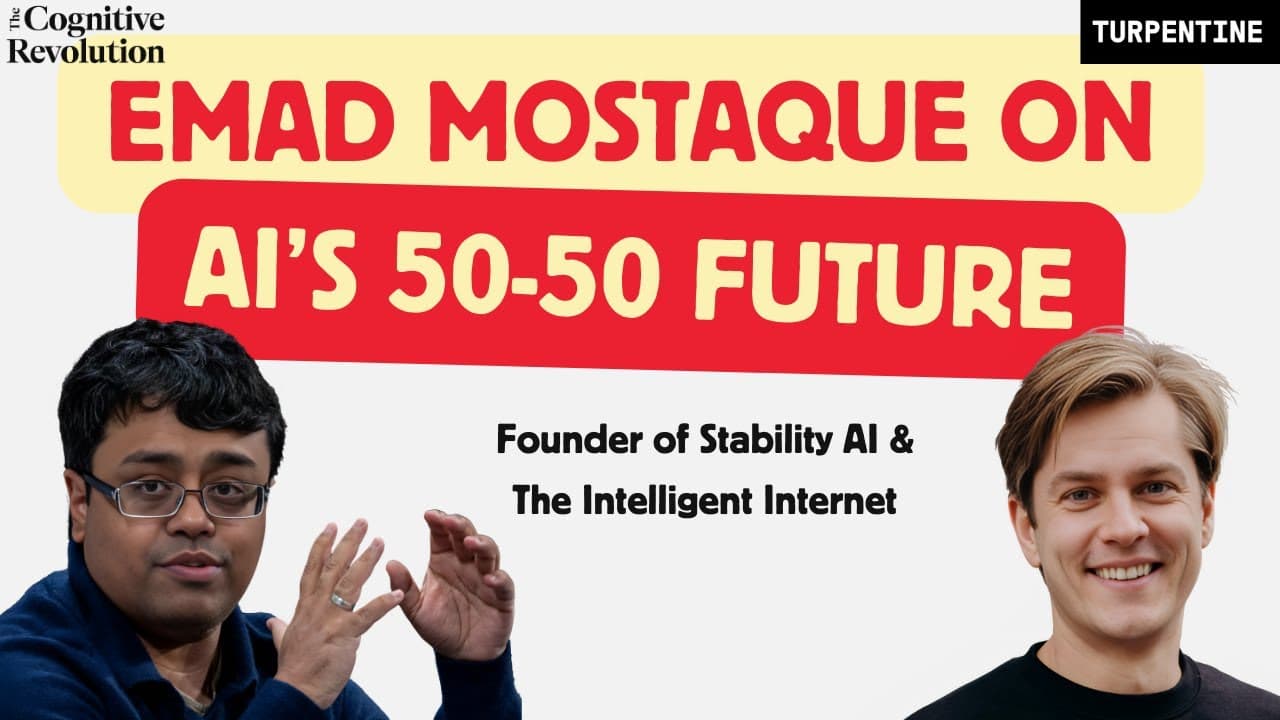
Universal Basic AI aims to create open-source AI infrastructure that enhances human agency and supports communities, focusing on critical sectors like healthcare and education. Emad Mostaque highlights the importance of aligning AI development with human values and proposes a three-tier system for effective AI management, alongside using blockchain to fund these initiatives.
Transcript
where at this point whereby if we don't have ai to help us I think we're in a very bad scenario with AI if we don't build it right we're also in a bad scenario if AI is built right and is aligned and works with us then we're in a very good scenario who owns that AI that is your best friend that is your kid's best friend and how is it constructed an... Read More
Key Insights
- Emad Mostaque highlights the dual potential of AI to either greatly benefit or harm humanity, emphasizing the importance of aligning AI development with human values.
- The concept of 'Universal Basic AI' is introduced, aiming to provide accessible AI infrastructure to improve global living standards in areas like healthcare and education.
- Mostaque criticizes the reliance on closed-source AI models for regulated industries, advocating for open data and open weight models to ensure transparency and safety.
- The Intelligent Internet proposes a three-tier system of AI infrastructure, from national hypernodes to personal AI assistants, to manage and distribute AI resources efficiently.
- Emad discusses the potential for blockchain technology to fund global public goods in AI development, introducing the idea of 'proof of beneficial compute.'
- AI's role in national competitiveness is shifting from traditional labor productivity to the availability and management of AI compute resources.
- The energy efficiency of AI is improving, with the potential for AI models to run on low-power devices, making them accessible even in underdeveloped regions.
- Emad emphasizes the need for AI models that enhance human agency and community, rather than replacing human roles, to create a positive future with AI.
- More videos with Emad Mostaque:
Install to Summarize YouTube Videos and Get Transcripts
Explore YouTube Video Summarizer or Get YouTube Transcript Extractor
Questions & Answers
Q: What is Emad Mostaque's view on AI's potential impact on humanity?
Emad Mostaque believes that AI has the potential to either greatly benefit or harm humanity, depending on how it is developed and aligned with human values. He emphasizes the importance of creating AI systems that enhance human agency and community rather than replacing human roles, to ensure a positive future.
Q: What is 'Universal Basic AI' according to Emad Mostaque?
Universal Basic AI is a concept introduced by Emad Mostaque that aims to provide accessible AI infrastructure to improve global living standards. It focuses on critical areas such as healthcare and education, ensuring that AI is available to everyone and aligned with local contexts and values, ultimately enhancing human potential.
Q: How does the Intelligent Internet propose to manage AI resources?
The Intelligent Internet proposes a three-tier system to manage AI resources efficiently. This includes national or international hypernodes that maintain common knowledge and perform large-scale training, distributed nodes for domain-specific fine-tuning, and personal AI assistants that run locally on consumer devices. This structure aims to optimize AI resource distribution and accessibility.
Q: What role does blockchain technology play in Emad Mostaque's vision for AI?
Blockchain technology plays a crucial role in Emad Mostaque's vision for AI by potentially funding global public goods in AI development. He introduces the idea of 'proof of beneficial compute,' which would incentivize the creation of open and transparent AI infrastructure. This system could help secure funding for AI projects that align with societal needs and values.
Q: Why does Emad Mostaque advocate for open-source AI models in regulated industries?
Emad Mostaque advocates for open-source AI models in regulated industries to ensure transparency, safety, and alignment with human values. He criticizes the reliance on closed-source models, which may not be suitable for decision-making in critical areas like healthcare and education. Open data and open weight models can help build trust and accountability in AI systems.
Q: How does Emad Mostaque view the energy efficiency of AI?
Emad Mostaque views the energy efficiency of AI as a significant area of improvement, with the potential for AI models to run on low-power devices like smartphones. This advancement could make AI accessible even in underdeveloped regions, reducing the energy cost of AI operations and enabling widespread adoption of AI technology globally.
Q: What is the significance of AI in national competitiveness according to Emad Mostaque?
According to Emad Mostaque, AI's role in national competitiveness is shifting from traditional labor productivity to the availability and management of AI compute resources. Nations that build and manage AI infrastructure effectively will have a competitive advantage, as AI becomes a critical component of economic and societal progress.
Q: What are the key components of the Intelligent Internet's three-tier system?
The Intelligent Internet's three-tier system consists of national or international hypernodes for maintaining common knowledge and large-scale training, distributed nodes for domain-specific fine-tuning and services, and personal AI assistants running locally on consumer devices. This structure aims to optimize the distribution and accessibility of AI resources, ensuring they are aligned with societal needs.
Summary & Key Takeaways
-
Emad Mostaque discusses the potential risks and benefits of AI, highlighting the importance of aligning AI with human values to avoid negative outcomes. He introduces the concept of 'Universal Basic AI' to provide accessible AI infrastructure for global improvement in critical areas like healthcare and education.
-
The Intelligent Internet aims to create an open-source AI infrastructure with a three-tier system, including national hypernodes, distributed nodes, and personal AI assistants, to efficiently manage and distribute AI resources. This approach seeks to enhance human agency and community rather than replacing human roles.
-
Mostaque proposes using blockchain technology to fund global public goods in AI development, through a system he calls 'proof of beneficial compute.' This would incentivize the creation of AI infrastructure that is open, transparent, and aligned with the needs of society, ensuring a positive impact on humanity.
Read in Other Languages (beta)
Share This Summary 📚
Summarize YouTube Videos and Get Video Transcripts with 1-Click
Try YouTube Summary with ChatGPT & Claude or YouTube Transcript Generator
Explore More Summaries from Cognitive Revolution "How AI Changes Everything" 📚

Summarize YouTube Videos and Get Video Transcripts with 1-Click
Try YouTube Summary with ChatGPT & Claude or YouTube Transcript Generator