Where Are Micron Chips Manufactured, and How Is Micron Building the Biggest U.S. Chip Fab Despite the China Ban?
TL;DR
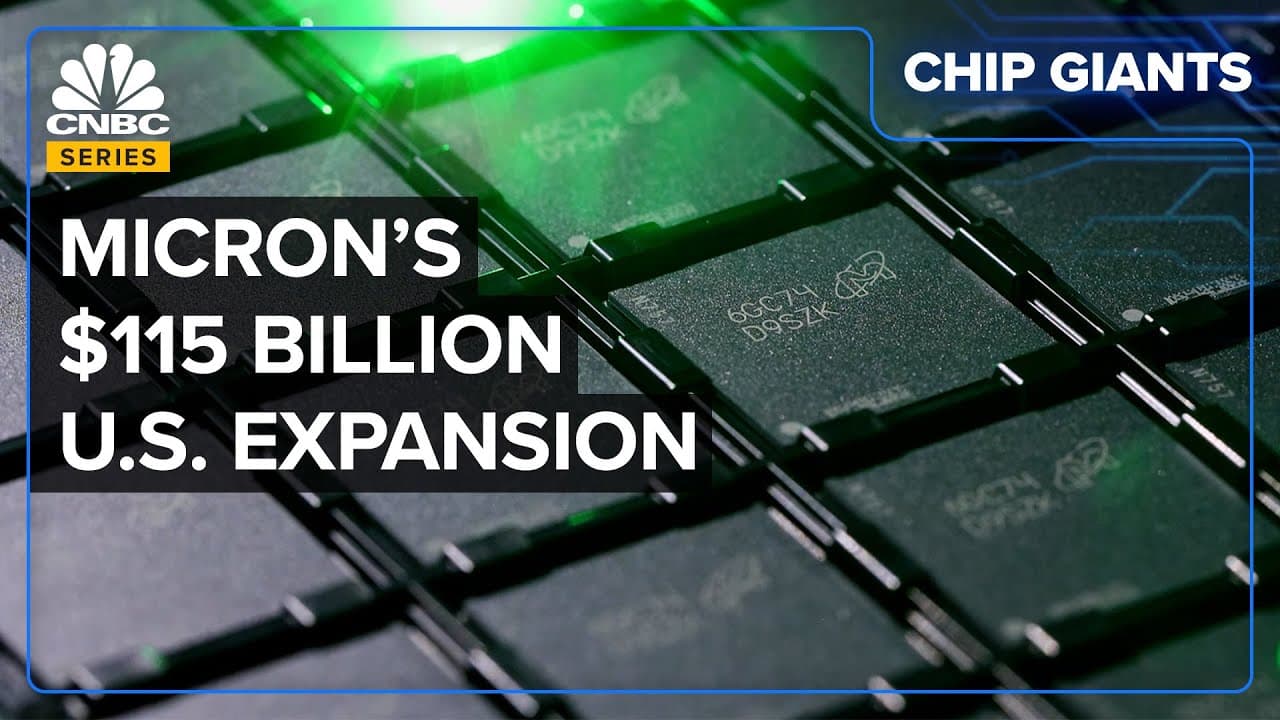
Micron chips are manufactured in Boise, Idaho, where the company operates a giant fab and is building a new 600,000-square-foot facility. Micron also plans four 600,000-square-foot fabs in upstate New York, representing a $100 billion investment over 20 years. Read on to understand these fabs, Micron’s memory technology, and the expansion’s challenges.
Transcript
These actually have billions and many billions of memory bits. Bits that store information in ones and zeros in them. Data is at the center of all our devices and generative AI, and accessing and storing that data requires these. Memory chips. And there's only one major memory maker based in the U.S. Micron. Micron. Micron. The maker of basic DRAM ... Read More
Key Insights
- Micron is the only major U.S.-based memory chip manufacturer, making it a target in U.S.-China trade tensions.
- Micron's new chip fabs in Idaho and New York represent a $100 billion investment over 20 years, the largest in U.S. history.
- The U.S. Chips and Science Act provides significant financial incentives for Micron's domestic expansion.
- Memory chips are critical for AI and computing technologies, driving Micron's expansion efforts.
- China's ban affects 25% of Micron's revenue, prompting diversification efforts in India and other markets.
- Micron's new fabs will utilize cutting-edge technology, including EUV machines, requiring substantial power and water resources.
- The global memory chip market is dominated by three players: Samsung, SK Hynix, and Micron.
- Micron's U.S. expansion aims to increase domestic memory production from 2% to 15% of global output over two decades.
Install to Summarize YouTube Videos and Get Transcripts
Explore YouTube Video Summarizer or Get YouTube Transcript Extractor
Questions & Answers
Q: Where are Micron chips manufactured?
Micron manufactures memory chips at its giant fab in Boise, Idaho. It is expanding there with a new 600,000-square-foot fab and plans four additional fabs in upstate New York.
Q: Where are Micron’s new fabs being built?
Micron is building a new fab in Boise, Idaho, where concrete was poured in October. It also plans four 600,000-square-foot fabs near Syracuse in upstate New York, totaling 2.4 million square feet.
Q: How large is Micron’s U.S. fab investment?
Micron’s four planned fabrication plants in upstate New York represent a $100 billion investment over 20 years. The project is slated to be the biggest U.S. chip project in history.
Q: What will Micron manufacture in its new U.S. fabs?
Micron’s expansion focuses on advanced memory manufacturing, including DRAM and NAND devices. DRAM supports fast, real-time processing near the CPU, while NAND retains stored information when power is removed.
Q: Why does Micron need larger chip fabs?
Multiple memory chips are needed to support each GPU or CPU, so manufacturing memory requires more space than producing other kinds of chips. Micron says its new Boise fab will exceed 600,000 square feet, more than 12 times the size of the facility shown during the tour.
Q: Why is Micron expanding memory production for AI?
Data is central to devices and generative AI, and memory chips are required to store and access that data. Micron says that as AI grows, its memory requirements also grow.
Q: How does the China ban affect Micron’s expansion?
Micron is the latest target of China’s bans on U.S. chips amid competition between China and the U.S. The geopolitical turmoil casts doubt on the quarter of Micron’s revenue that comes from China as it pursues major U.S. growth.
Q: What challenges does Micron face while building its fabs?
Micron is expanding during a period of market oversupply and geopolitical turmoil. Its profits fell significantly in 2022 after weaker demand for PCs and smartphones, and it reduced output and laid off 10% of its workforce at the beginning of 2023.
Summary & Key Takeaways
-
Micron is investing $100 billion in new chip fabs in Idaho and New York, marking the largest U.S. chip project in history. This expansion is driven by the growing demand for memory chips in AI and computing technologies. The U.S. Chips and Science Act supports this effort with financial incentives to boost domestic semiconductor manufacturing.
-
Despite facing a ban from China, which affects a significant portion of its revenue, Micron is diversifying its operations with new facilities in India. The company's expansion strategy includes leveraging cutting-edge technology and renewable energy to maintain competitiveness in the global memory chip market.
-
Micron's efforts are part of a broader U.S. initiative to regain leadership in semiconductor manufacturing. By increasing domestic production, Micron aims to meet the growing data needs of AI and other technologies, while reducing reliance on foreign suppliers and mitigating geopolitical risks.
Read in Other Languages (beta)
Share This Summary 📚
Summarize YouTube Videos and Get Video Transcripts with 1-Click
Try YouTube Summary with ChatGPT & Claude or YouTube Transcript Generator
Explore More Summaries from CNBC 📚






Summarize YouTube Videos and Get Video Transcripts with 1-Click
Try YouTube Summary with ChatGPT & Claude or YouTube Transcript Generator