Papiamento (IS THIS PORTUGUESE?!)
TL;DR
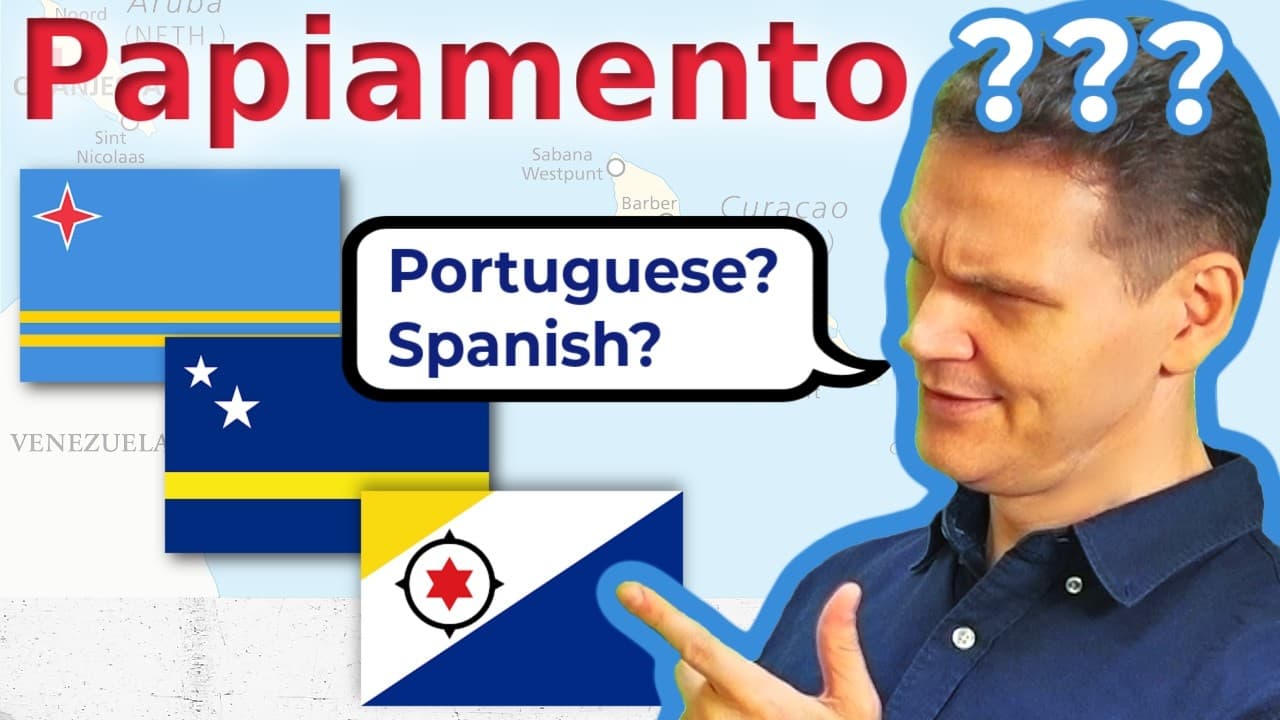
Papiamento is a Portuguese-based creole with diverse influences.
Transcript
every language is a product of its history and that's certainly the case when we look at creole languages new languages which arise as a result of contact between groups of people who share no common language one such creole is papiamento a portuguese-based creole spoken in the dutch caribbean papiamento is spoken by around 340 000 people mainly on... Read More
Key Insights
- Papiamento is a creole language spoken primarily on the ABC islands: Aruba, Bonaire, and Curaçao, part of the Kingdom of the Netherlands.
- Despite being Portuguese-based, Papiamento has significant influences from Spanish, Dutch, West African languages, and indigenous languages.
- The language developed through contact between Portuguese colonizers and African slaves, evolving from a pidgin to a stable creole.
- Papiamento's vocabulary is predominantly Iberian, with 80% of words derived from Spanish or Portuguese origins.
- The language's grammar is simplified compared to its lexifier languages, lacking gender and verb conjugations for person and number.
- Papiamento uses tense and aspect markers instead of verb conjugations, a common feature in creole languages.
- There are two spelling systems for Papiamento: one based on etymology in Aruba and a phonetic system in Curaçao and Bonaire.
- Papiamento retains influences from its history under Spanish and Dutch control, as well as from Sephardic Jewish communities.
Install to Summarize YouTube Videos and Get Transcripts
Explore YouTube Video Summarizer or Get YouTube Transcript Extractor
Questions & Answers
Q: What is the primary basis of Papiamento?
Papiamento is primarily based on Portuguese, specifically a Portuguese-based creole. It developed through historical interactions between Portuguese colonizers and African slaves. Despite its Portuguese roots, Papiamento has also absorbed significant influences from Spanish, Dutch, and West African languages, contributing to its unique linguistic characteristics.
Q: How did Papiamento evolve as a language?
Papiamento evolved from a pidgin language used for communication between Portuguese colonizers and African slaves. Over time, it became a stable creole as children began to speak it as their native language. The language's development was influenced by the transatlantic slave trade, Spanish and Dutch rule, and contact with Sephardic Jewish communities.
Q: What are the main influences on Papiamento's vocabulary?
Papiamento's vocabulary is predominantly Iberian, with approximately 80% of its words derived from Spanish or Portuguese. The language also includes influences from Dutch, due to historical control by the Netherlands, as well as words from West African languages and indigenous languages of the Caribbean.
Q: How does Papiamento handle verb conjugation?
Papiamento does not conjugate verbs for person and number, unlike its lexifier languages Portuguese and Spanish. Instead, it uses tense and aspect markers placed before verbs to indicate tense. This feature is common in creole languages and reflects Papiamento's simplified grammar compared to its source languages.
Q: What are the two spelling systems in Papiamento?
Papiamento has two spelling systems: one used in Aruba, which is based more closely on etymology, and another used in Curaçao and Bonaire, which is phonetic and based on how words sound. These systems reflect the language's diverse influences and the historical development of its written form.
Q: What role did the transatlantic slave trade play in Papiamento's development?
The transatlantic slave trade played a significant role in the development of Papiamento. Many enslaved Africans taken to the ABC islands spoke a Portuguese-based pidgin or creole, which formed the foundation of Papiamento. This historical context contributed to the language's Portuguese base and its subsequent evolution as a creole.
Q: How does Papiamento's grammar differ from Portuguese and Spanish?
Papiamento's grammar is simplified compared to Portuguese and Spanish. It lacks grammatical gender and does not conjugate verbs for person and number. Instead, it uses tense markers before verbs, reflecting its creole nature. This simplification makes the language more accessible and distinct from its lexifier languages.
Q: What historical influences shaped Papiamento?
Papiamento was shaped by several historical influences, including Portuguese colonization, the transatlantic slave trade, Spanish and Dutch rule, and the presence of Sephardic Jewish communities. These influences contributed to the language's diverse vocabulary, grammatical features, and its status as a unique creole language in the Caribbean.
Summary & Key Takeaways
-
Papiamento is a creole language with roots in Portuguese, spoken mainly on Aruba, Bonaire, and Curaçao. Despite its Portuguese base, it has absorbed influences from Spanish, Dutch, and West African languages due to historical trade and colonization.
-
The language emerged from the need for communication between Portuguese colonizers and African slaves, evolving from a pidgin to a creole. This evolution was influenced by the transatlantic slave trade, Spanish and Dutch rule, and contact with Sephardic Jews.
-
Papiamento's vocabulary is largely Iberian, with simplified grammar compared to Portuguese and Spanish. It utilizes tense markers instead of verb conjugations and has two spelling systems reflecting its diverse influences and historical development.
Read in Other Languages (beta)
Share This Summary 📚
Summarize YouTube Videos and Get Video Transcripts with 1-Click
Try YouTube Summary with ChatGPT & Claude or YouTube Transcript Generator
Explore More Summaries from Langfocus 📚




Summarize YouTube Videos and Get Video Transcripts with 1-Click
Try YouTube Summary with ChatGPT & Claude or YouTube Transcript Generator