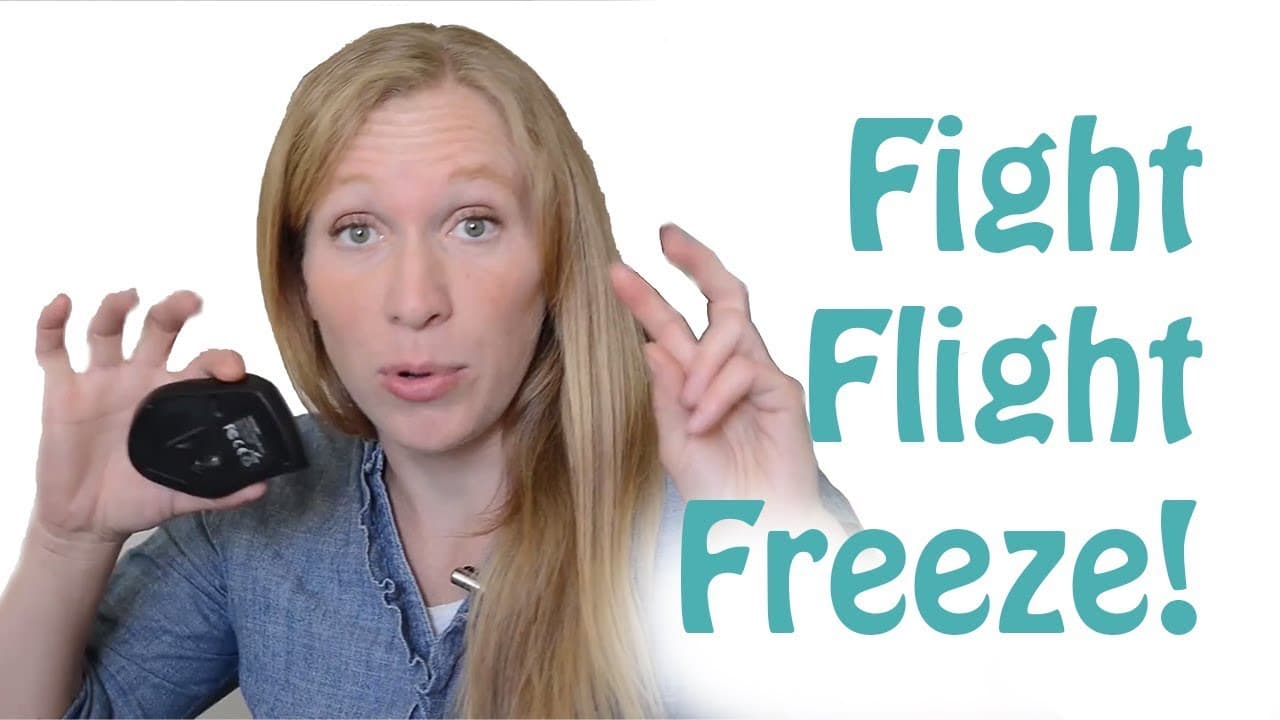
How Does the Fight, Flight, or Freeze Response Work?
TL;DR
The fight, flight, or freeze response automatically redirects the brain and body toward surviving a perceived threat. It can protect you during immediate danger, but repeated activation by situations such as public speaking or talking with a boss can contribute to exhaustion, insomnia, muscle tension, digestive problems, and frequent illness. Start managing it by noticing and labeling your response without judgment.
Transcript
Have you ever wondered why do my hands get all cold and sweaty when I'm nervous? or "Why does my stomach get all tight when I'm talking to my boss?" Well today we're going to talk about our body and brain's natural reaction to danger- it's called the "Fight Flight or Freeze" response. Now our bodies' have developed this amazing reaction to help kee... Read More
Key Insights
- The fight, flight, or freeze response is an automatic survival system that prepares a person to confront danger, run away, or become still. These reactions arise instinctively, so they can begin before a person has consciously considered what to do.
- The prefrontal cortex is the brain area associated with thinking, words, and planning, and its activity is mostly reduced during the threat response. At the same time, the reactive and instinctive part of the brain becomes more active, prioritizing rapid survival behavior.
- Blood flow is redirected toward the large muscles during a threat response and away from extremities such as the hands and feet. This shift can produce cold feet, while increased sweating can make the hands feel cold, sweaty, clammy, or otherwise uncomfortable.
- Adrenaline is released to provide a quick burst of energy for fighting or escaping. Although that energy can help during immediate danger, its later effects can include shaking, making the same survival mechanism unpleasant when the perceived threat is a speech or social interaction.
- Digestion is reduced because processing food is not a priority while escaping immediate danger. This change can contribute to decreased appetite, stomach tightness, dry mouth, diarrhea, or loss of bladder control, even when the triggering situation is not physically dangerous.
- Breathing becomes faster but shorter and shallower during fight, flight, or freeze, while heart rate rises and muscles tighten. Some senses also become more focused, with narrowed vision producing tunnel vision as the body concentrates its resources on the perceived threat.
- The immune system is temporarily reduced while the body prioritizes immediate survival. Short-term activation can be useful, but frequent or prolonged stress keeps this response active more often, which the transcript connects with people becoming sick frequently.
- The first anxiety skill is noticing and labeling the body’s response as it happens. A person might identify the experience by saying, "I’m having a fight response right now," creating awareness of the reaction before learning additional methods for returning the nervous system to calm.
Install to Summarize YouTube Videos and Get Transcripts
Explore YouTube Video Summarizer or Get YouTube Transcript Extractor
Questions & Answers
Q: What is the fight, flight, or freeze response?
The fight, flight, or freeze response is the brain and body’s instinctive reaction to real or perceived danger. It prepares a person to confront the threat, run away, or become still without requiring deliberate thought. The response developed to support survival, but it can also activate during modern situations such as public speaking, asking someone on a date, or talking with a boss.
Q: How does the fight, flight, or freeze response affect the brain?
The response mostly reduces activity in the prefrontal cortex, the front part of the brain responsible for thinking, words, and planning. It simultaneously increases activity in the brain’s reactive and instinctive areas. This shift supports fast action during immediate danger, but it can make it difficult to speak, plan, or think clearly during a speech, date, or stressful conversation.
Q: Why do hands become cold and sweaty during anxiety?
Hands can become cold because the body sends extra blood toward the large muscles and away from extremities such as the hands and feet. At the same time, the threat response increases sweating. Together, these changes can make the hands feel cold, sweaty, or clammy. The transcript also connects this reduced blood flow in the extremities with the phrase "cold feet."
Q: Why does anxiety cause stomach problems and dry mouth?
Anxiety can affect the stomach because the fight, flight, or freeze response reduces digestive activity while prioritizing survival. Digestion is less important when the body believes it must escape danger. This change can produce a tight stomach, decreased appetite, dry mouth, diarrhea, or loss of bladder control, even when the perceived threat is a conversation, performance, or another nonphysical situation.
Q: What physical changes occur during fight, flight, or freeze?
Fight, flight, or freeze redirects blood to large muscles, activates the adrenaline glands, increases sweating, tightens muscles, raises heart rate, and makes breathing faster but shallower. It can also narrow vision into tunnel vision, reduce digestion, and temporarily reduce immune activity. These changes concentrate the body’s resources on immediate survival rather than long-term maintenance, careful thinking, or ordinary bodily functions.
Q: How is the freeze response different from fighting or fleeing?
The freeze response can involve numbness, shrinking, hiding, or complying with the person or force that appears to hold power. Fighting prepares someone to confront danger, while fleeing prepares someone to escape it. Freezing instead limits movement or encourages submission. Like fight and flight, it is an instinctive protective reaction rather than a response that requires conscious planning.
Q: Why can chronic fight, flight, or freeze activation be harmful?
The response is intended to help during real, immediate danger and to operate in short bursts. When perceived threats activate it constantly, the body can remain trapped in an elevated state for a long period. According to the transcript, this prolonged activation can lead to exhaustion, insomnia, muscle tension, digestive problems, and frequent illnesses because normal restorative functions are repeatedly deprioritized.
Q: How can someone begin managing the fight, flight, or freeze response?
The recommended first step is to notice how the body reacts when fight, flight, or freeze begins. Pay attention to changes such as cold hands, sweating, muscle tension, shallow breathing, stomach discomfort, numbness, hiding, or difficulty speaking. Then give the experience a simple label, such as "I’m having a fight response right now," to recognize what is happening.
Summary & Key Takeaways
-
The fight, flight, or freeze response is an instinctive survival reaction that prepares the body to confront danger, escape it, or become still. It reduces activity in the thinking and planning areas of the brain while increasing reactive processes, which can make speaking and deliberate decision-making difficult during stressful situations.
-
The response redirects blood toward large muscles, releases adrenaline, tightens muscles, raises heart rate, and produces faster, shallower breathing. It can also cause sweating, cold hands and feet, tunnel vision, dry mouth, reduced appetite, stomach tightness, shaking, digestive disruption, numbness, hiding, shrinking, or complying with someone in power.
-
Fight, flight, or freeze is useful for real and immediate danger and is designed to operate in short bursts. Problems arise when perceived threats activate it repeatedly, leaving the body elevated for long periods. The suggested first step is noticing physical and behavioral changes and labeling the reaction as it occurs.
Read in Other Languages (beta)
Share This Summary 📚
Summarize YouTube Videos and Get Video Transcripts with 1-Click
Try YouTube Summary with ChatGPT & Claude or YouTube Transcript Generator
Explore More Summaries from Therapy in a Nutshell 📚




Summarize YouTube Videos and Get Video Transcripts with 1-Click
Try YouTube Summary with ChatGPT & Claude or YouTube Transcript Generator