How Did European Powers Colonize the Americas?
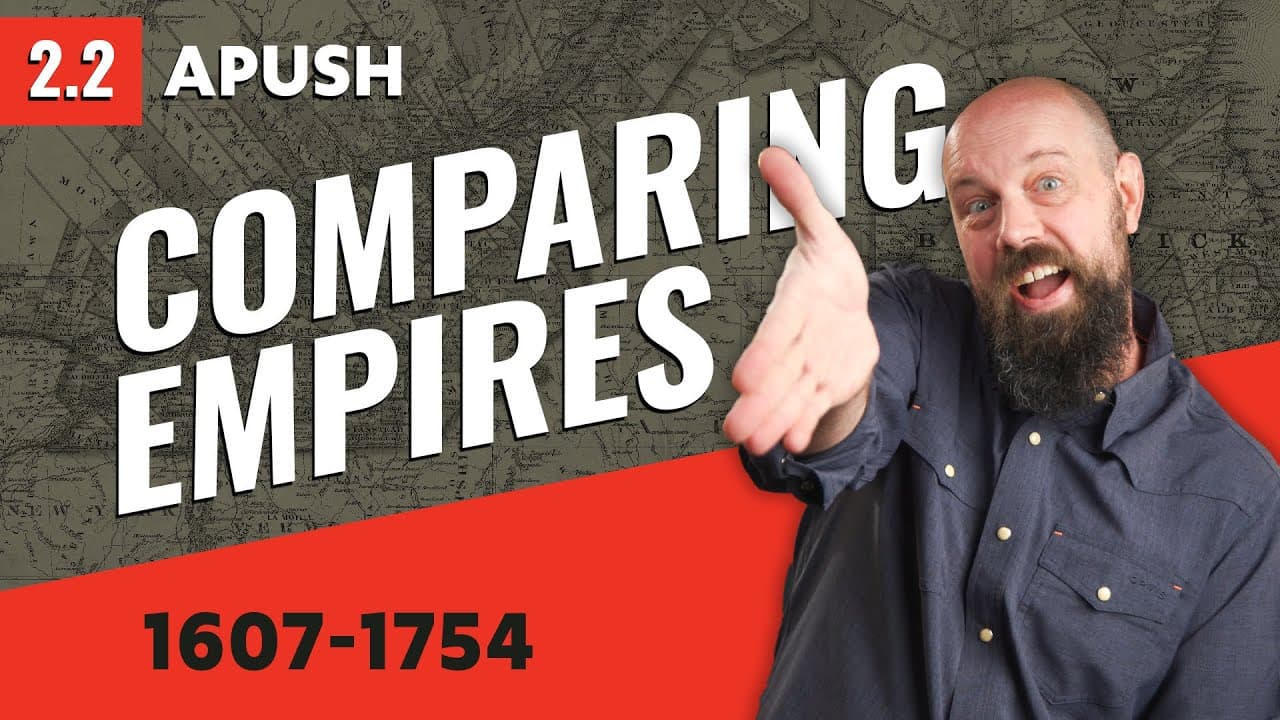
TL;DR
European powers pursued wealth in the Americas through sharply different colonial strategies. Spain relied on authoritarian control, coerced labor, religious conversion, and racial hierarchy, while France and the Netherlands emphasized trade partnerships with Indigenous peoples. British colonists arrived in larger numbers, often as whole families, and generally sought separation from Indigenous communities.
Transcript
Well, hey there and welcome to unit two of a push. Now, in this video, I reckon we ought to cinch up our comparison pants and consider how various European colonial empires developed. And we're going to consider the Spanish and the French and the Dutch and then finally the British. So, if you're ready to get them brain cows milked, let's get to it.... Read More
Key Insights
- Spain's colonial strategy was based on authoritarian power and control over Indigenous peoples. Spanish institutions extracted wealth through mineral production, cash crops, coerced labor, religious conversion, and a social hierarchy that ranked people according to the amount of Spanish ancestry they possessed.
- The encomienda system compelled Indigenous residents to mine or farm under an encomendero's authority. In exchange for their labor, the encomendero was formally responsible for protecting them and converting them to Christianity, but the system amounted to slavery and included the brutality associated with that institution.
- The New Laws of 1542 attempted to limit encomenderos' power and reduce the harsh treatment of Indigenous workers. Reformers, especially Bartolomé de las Casas, supported the change, and despite rebellions by resistant encomenderos, the laws contributed to the decline of encomienda slavery.
- The hacienda system was a landowning and debt-based labor arrangement that became Spain's main colonial labor system after the New Laws, although it overlapped with encomienda. Landowners possessed large estates, while Indigenous laborers were technically free but remained tied to the land through debt repayment.
- Spanish missionary activity sought to replace Indigenous religious practices rather than permit Christianity to be incorporated into existing beliefs. This cultural coercion contributed to the Pueblo Revolt of 1680, when Pueblo people killed hundreds of Spaniards, destroyed churches, and restored their customs.
- The Spanish caste system ranked colonial residents according to ancestry and the amount of white blood attributed to them. People of exclusively Spanish ancestry occupied the top, Indigenous and African people occupied the bottom, and roughly 40 classifications described populations of mixed ancestry.
- French colonization focused on trade partnerships rather than large permanent settlements. Samuel de Champlain established Quebec and negotiated an alliance with the Huron against their traditional enemies, while French fur trappers used Indigenous alliances and intermarriage to supply beaver fur demanded by the French elite.
- Dutch colonization emphasized commerce without seeking to remake Indigenous societies in a Dutch image. The Dutch formed alliances with the Iroquois, and New Amsterdam became a busy trading port that attracted merchants internationally, with more than a dozen languages reportedly spoken in its streets.
Install to Summarize YouTube Videos and Get Transcripts
Explore YouTube Video Summarizer or Get YouTube Transcript Extractor
Questions & Answers
Q: How did European powers colonize the Americas differently?
Spain, France, the Netherlands, and Britain all sought economic prosperity, but they used different methods. Spain emphasized power through Indigenous subjugation, coerced labor, conversion, and racial hierarchy. France and the Netherlands emphasized partnerships supporting trade. Britain sent substantially more settlers, including whole families, and generally pursued partition by separating its settlements from Indigenous communities.
Q: How did Spain extract wealth from its American colonies?
Spain initially pursued gold and silver and later exported cash crops produced through enslaved or coerced labor. Spanish authorities subordinated Indigenous populations through institutions such as encomienda and hacienda. They also used missionary activity to impose Christianity and established a caste system that reinforced Spanish dominance by assigning social status according to ancestry.
Q: What was the Spanish encomienda system?
The encomienda system allowed the Spanish crown to grant an encomendero authority over a valuable area and the Indigenous people living there. Those residents were forced to extract wealth through mining, farming, or both. The encomendero was expected to protect and Christianize them in return, but the arrangement amounted to slavery and involved severe brutality.
Q: How was the hacienda system different from encomienda?
Encomenderos exercised authority over land and compelled Indigenous people to work, but they did not own the land under encomienda. In the hacienda system, owners possessed large tracts of land. Indigenous laborers were not technically enslaved, but debt repayment tied them to those estates, making hacienda another form of coerced colonial labor.
Q: Why were the New Laws enacted in 1542?
The Spanish crown enacted the New Laws to curb the power of encomenderos and mitigate the harsh treatment of Indigenous workers. A growing reform movement, prominently represented by Bartolomé de las Casas, opposed encomienda. Although resistant encomenderos launched significant rebellions against the legislation, the New Laws helped drive the decline of that form of slavery.
Q: Why did the Pueblo Revolt happen in 1680?
The Pueblo Revolt followed Spanish military subjugation and missionary efforts to impose a rigid form of Christianity. Some Pueblo people initially added Christ to their existing pantheon, but Spanish priests rejected that adaptation and attempted to redefine Pueblo culture. Pueblo rebels killed hundreds of Spaniards, destroyed local churches, and restored their customs before Spain later returned.
Q: How did French colonization depend on Indigenous partnerships?
France had relatively few colonists and focused on wealth from trade instead of building a large settler population. Samuel de Champlain negotiated alliances with the Huron against their traditional enemies. French fur trappers also formed alliances and intermarried with Indigenous people, enabling them to participate in the beaver-fur trade and meet demand among French elites.
Q: How did Dutch colonization compare with French colonization?
Dutch colonization resembled the French approach because it emphasized trade and partnership rather than authoritarian control of Indigenous societies. The Dutch formed alliances with the Iroquois and did not primarily seek to remake Indigenous communities in their own image. New Amsterdam consequently became a busy international trading port where more than a dozen languages reportedly could be heard.
Summary & Key Takeaways
-
Spain built an extractive colonial empire by asserting power over Indigenous populations. The encomienda and hacienda systems supplied coerced labor for mining, farming, and cash-crop production. Missionaries sought religious conversion, while the caste system organized society according to ancestry and placed Spanish people above Indigenous and African populations.
-
French and Dutch colonization relied more heavily on commercial partnerships because comparatively few of their colonists settled in the Americas. French traders formed Indigenous alliances, participated in the beaver-fur trade, and sometimes intermarried. Dutch activity similarly prioritized commerce, helping New Amsterdam develop into a busy, multilingual international trading port.
-
British colonization differed because substantially more migrants, including entire families, came from Great Britain to settle in North America. Their general strategy was partition, meaning separation from Indigenous populations. Although the transcript identifies economic prosperity as one motivation for migration, its discussion of the remaining British motives is incomplete.
Read in Other Languages (beta)
Share This Summary 📚
Summarize YouTube Videos and Get Video Transcripts with 1-Click
Try YouTube Summary with ChatGPT & Claude or YouTube Transcript Generator
Explore More Summaries from Heimler's History 📚


Summarize YouTube Videos and Get Video Transcripts with 1-Click
Try YouTube Summary with ChatGPT & Claude or YouTube Transcript Generator