Why Is U.S. Manufacturing So Challenging?
TL;DR
Bringing manufacturing back to the U.S. faces hurdles such as high labor costs, lack of local supply chains, and competition from countries with cheaper labor. Companies like Guardian Bikes show it's possible with automation and local sourcing, but challenges remain. Tariffs and policy changes are debated as potential solutions.
Transcript
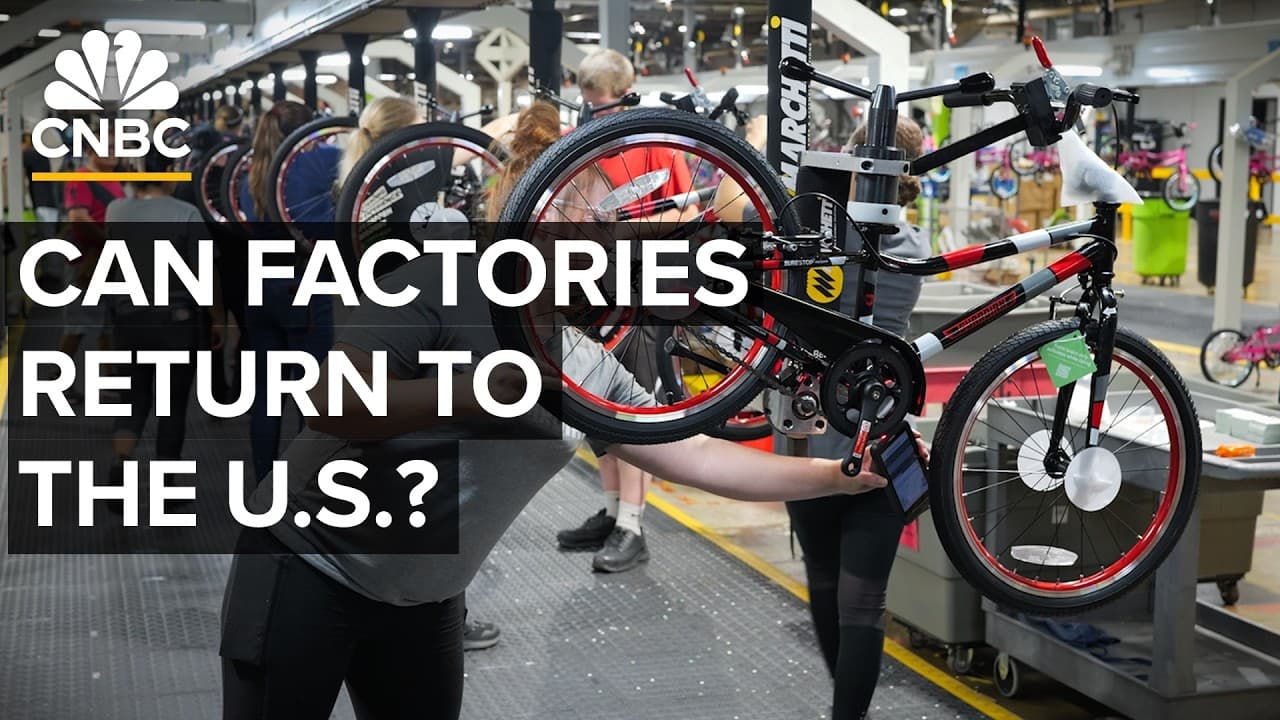
Sam Markel: So we produce on each assembly line about a thousand bikes a day, but that correlates into a bike every 30s. VO: Here in Seymour, Indiana, Guardian Bikes operates a 540 zero zero zero square foot plant that manufactures high end bicycles for kids. The company is pulling off a unique feat starting in 2022. It began shifting its manu... Read More
Key Insights
- Guardian Bikes shifted manufacturing from China to the U.S., highlighting the challenges of onshoring.
- U.S. manufacturing employment has declined from nearly 20 million in the 1970s to 12.7 million today.
- High labor costs and the lack of a local supply chain are major obstacles to U.S. manufacturing.
- Automation and local sourcing can mitigate some cost disadvantages of onshoring.
- Tariffs are a contentious tool; some argue they can help revive U.S. manufacturing, while others see them as a net negative.
- China dominates manufacturing due to its large base, lower wages, and significant investment in industrial policy.
- Environmental standards in the U.S. increase manufacturing costs compared to countries like China.
- The U.S. has shifted to a service-based economy, complicating efforts to revitalize manufacturing.
Install to Summarize YouTube Videos and Get Transcripts
Explore YouTube Video Summarizer or Get YouTube Transcript Extractor
Questions & Answers
Q: Why is U.S. manufacturing declining?
U.S. manufacturing has declined due to globalization, which led to cheaper labor abroad, and increased automation, which reduced the need for human labor. Trade agreements and China's entry into the World Trade Organization also contributed by making it more cost-effective for companies to manufacture overseas.
Q: What challenges do companies face when onshoring manufacturing to the U.S.?
Companies face high labor costs, a lack of local supply chains, and increased environmental regulations when onshoring manufacturing to the U.S. Additionally, they must compete with countries offering cheaper labor and better-developed manufacturing infrastructures, making it difficult to maintain cost competitiveness.
Q: How does automation help U.S. manufacturing?
Automation helps U.S. manufacturing by reducing labor costs and increasing production efficiency. It allows companies to produce goods with fewer workers, helping to offset the higher wages in the U.S. compared to countries like China and Vietnam, where labor is cheaper.
Q: What role do tariffs play in U.S. manufacturing?
Tariffs are used as a tool to protect domestic industries by making imported goods more expensive. While they can help certain businesses by reducing foreign competition, they are controversial as they can also lead to higher consumer prices and retaliatory measures from other countries.
Q: What are the environmental challenges for U.S. manufacturers?
U.S. manufacturers face strict environmental regulations designed to prevent pollution and protect natural resources. These regulations increase production costs compared to countries like China, where environmental standards are less stringent, allowing manufacturers there to operate at lower costs.
Q: How has China's industrial policy affected global manufacturing?
China's industrial policy, characterized by significant investment in manufacturing infrastructure and worker training, has made it a global manufacturing powerhouse. This has attracted companies worldwide seeking lower production costs, impacting manufacturing in countries with higher labor costs like the U.S.
Q: Why is it difficult to find skilled manufacturing workers in the U.S.?
The shift to a service-based economy has reduced the pool of skilled manufacturing workers in the U.S. Additionally, many potential workers prefer service sector jobs, which often offer better pay and working conditions compared to manufacturing positions.
Q: What are the advantages of onshoring manufacturing to the U.S.?
Onshoring manufacturing to the U.S. offers advantages such as shorter shipping times, better quality control, and increased supply chain agility. It can also reduce dependency on foreign suppliers and enhance a company's ability to respond quickly to market changes.
Summary & Key Takeaways
-
Guardian Bikes exemplifies the challenges of bringing manufacturing back to the U.S., such as high labor costs and the absence of a local supply chain. The company uses automation and local sourcing to remain competitive despite these hurdles. Policymakers debate the role of tariffs and other measures in supporting a manufacturing renaissance.
-
The decline in U.S. manufacturing is attributed to globalization, cheaper labor abroad, and increased automation. While some companies are attempting to onshore production, they face significant challenges, including finding skilled workers and managing environmental costs.
-
China's dominance in manufacturing stems from its low wages, large manufacturing base, and heavy investment in industrial policy. This presents a significant challenge for U.S. companies trying to compete, especially given the higher environmental and labor standards in the U.S.
Read in Other Languages (beta)
Share This Summary 📚
Summarize YouTube Videos and Get Video Transcripts with 1-Click
Try YouTube Summary with ChatGPT & Claude or YouTube Transcript Generator
Explore More Summaries from CNBC 📚





Summarize YouTube Videos and Get Video Transcripts with 1-Click
Try YouTube Summary with ChatGPT & Claude or YouTube Transcript Generator