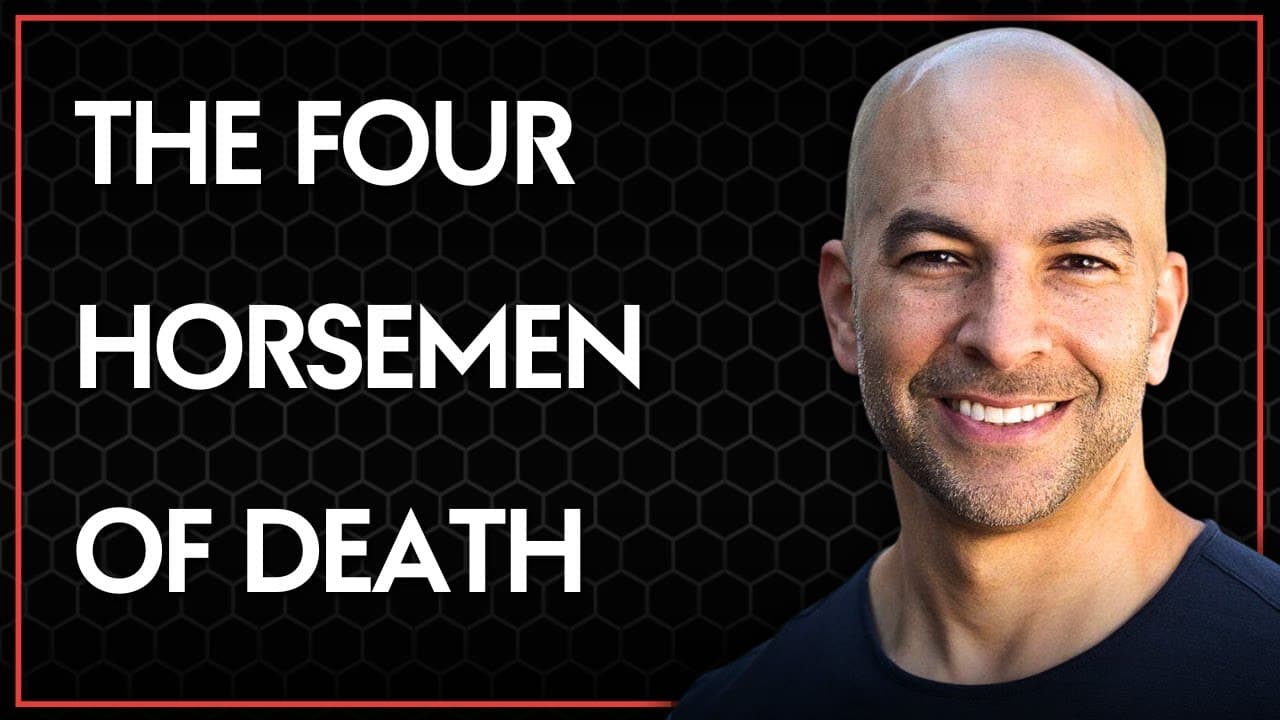
How to Prevent the Four Horsemen of Death
TL;DR
Atherosclerotic and metabolic diseases are the most preventable of the four horsemen because they have clear pathophysiologic drivers, not luck. Preventing heart disease means lowering apoB particles, protecting the endothelium (no smoking, controlled blood pressure, metabolic health), and reducing inflammation. Cancer is harder: its main levers are avoiding smoking and obesity, with much left to bad luck.
Transcript
to double click on the four horsemen just a little bit you mentioned what those four are but do you also want to talk a little bit about for each of them what we know in terms of prevention right so if medicine 3.0 prevention is really important you know how do you think about our knowledge of those diseases as it relates to someone who is trying t... Read More
Key Insights
- Atherosclerotic cardiovascular disease (ASCVD) and metabolic disease are the two horsemen we understand best, with the clearest pathophysiologic drivers and therefore the best insight into prevention.
- ASCVD has genetic and environmental components but almost no component of luck; stochastic mutation processes do not appear to play a role, unlike in cancer.
- Atherosclerosis requires three things: an apoB-containing lipoprotein entering the artery wall, a damaged or penetrable endothelium, and inflammation triggered by oxidation of the trapped cholesterol.
- Lowering apoB reduces ASCVD in a log-linear fashion, supported by all three layers of evidence: experimental clinical trials, Mendelian randomization, and clinical epidemiology, which all agree.
- Protecting the endothelium means addressing smoking, blood pressure, and metabolic conditions clustered with insulin resistance, since these weaken the lining and pose roughly equal cardiovascular risk to elevated apoB.
- Inflammation is the third pillar but is rarely treated directly with drugs; most reduction comes indirectly through nutrition, sleep, and exercise rather than pharmacology.
- Cancer differs from heart disease because most cases are polygenic and hard to trace genetically; even when cancer runs in families, the transmitting genes often cannot be identified.
- Stage four metastatic solid-organ cancer carries a far worse prognosis than advanced cardiovascular disease, making cancer's fewer effective treatment options a major obstacle.
Install to Summarize YouTube Videos and Get Transcripts
Explore YouTube Video Summarizer or Get YouTube Transcript Extractor
Questions & Answers
Q: What are the four horsemen of death?
The four horsemen are the atherosclerotic diseases, the metabolic diseases, neurodegenerative diseases, and cancers. In this discussion, atherosclerotic cardiovascular disease and metabolic disease are grouped as the two we understand best in terms of pathophysiologic drivers, while cancer and neurodegenerative diseases are addressed separately. Each represents a major category of chronic disease that shortens lifespan, and Medicine 3.0 focuses heavily on preventing them.
Q: How does atherosclerosis actually develop?
Atherosclerosis requires three things. First, a lipoprotein carrying cholesterol with an apoB protein on it enters the artery wall. Second, it does so more easily when the endothelium, the innermost lining of cells, is damaged. Third, once trapped, the cholesterol oxidizes, causing inflammation. The body reacts as if fighting an infection, initiating a devastating cascade that can damage the artery wall enough to rupture the plaque, block blood flow, and cause a heart attack.
Q: How can you prevent cardiovascular disease?
Prevention targets three pathways. First, reduce apoB particles, since fewer particles means fewer enter the endothelial space; the evidence shows a log-linear reduction in ASCVD as apoB drops. Second, protect the endothelium by not smoking, managing blood pressure, and maintaining metabolic health against insulin resistance and diabetes. Third, lower inflammation, mostly indirectly through nutrition, sleep, and exercise, since few drugs directly manage it.
Q: Why is apoB so important in heart disease prevention?
ApoB is the protein wrapping lipoproteins that carry cholesterol into the artery wall. The more apoB particles you have, the more of them enter the endothelial space and become trapped, oxidize, and trigger inflammation. Lowering apoB produces a log-linear reduction in atherosclerotic cardiovascular disease. This is supported by three independent layers of evidence: experimental clinical trials, Mendelian randomization, and clinical epidemiology, all of which point to the same conclusion.
Q: Why is cancer harder to prevent than heart disease?
Cancer is harder because it lacks the clear causality of heart disease. It appears highly polygenic, so even when it runs in families the responsible genes often cannot be identified. Beyond smoking and obesity, there is scant evidence that specific foods at equal calories drive cancer. A significant portion is attributed to bad luck from somatic mutations, and advanced cancer has fewer effective treatments than cardiovascular disease.
Q: What role does obesity play in cancer?
Obesity is clearly driving cancer, with about two-thirds of cancers having a strong tie to it. The mechanism is probably not excess fat itself but the growth factors that accompany obesity. Obesity brings more inflammation and more growth factors such as insulin and IGF, and these appear more likely to be the actual drivers of increased cancer risk rather than the adiposity per se.
Q: What causes the mutations that lead to cancer?
Every cancer begins with a mutation, and most are somatic mutations acquired in normally developed cells rather than inherited germline mutations. These fall into two categories: oncogenic mutations that promote tumors, and mutations in tumor suppressor genes that remove the body's ability to suppress cancer. While some are inherited and viruses can play a role, the best working hypothesis is that bad luck accounts for a large share of these acquired mutations.
Q: How does the prognosis for advanced cancer compare to advanced heart disease?
A person today with advanced cardiovascular disease has a much better prognosis than someone with very advanced cancer. Someone with stage four, metastatic solid-organ tumors, such as breast, lung, pancreas, prostate, or colon cancer that has spread from its original site to a distant site, faces far worse outcomes. Cancer treatment options are less effective, which is a major reason cancer remains so deadly compared to heart disease.
Summary & Key Takeaways
-
The four horsemen of death are discussed through the lens of Medicine 3.0 prevention. Atherosclerotic and metabolic diseases offer the most insight because their pathophysiologic drivers are known, giving clinicians both theoretical and practical means to prevent them rather than relying on chance.
-
Atherosclerosis develops when apoB-carrying lipoproteins enter the artery wall, get trapped in the endothelium, oxidize, and trigger inflammation. This cascade can rupture a plaque, block blood flow to the heart, and cause a heart attack that is fatal about 50% of the first time.
-
Cancer is driven clearly by smoking and obesity, with obesity linked to about two-thirds of cancers likely via growth factors like insulin and IGF. Beyond these, bad luck from somatic mutations plays a large role, and advanced cancer has fewer effective treatments than heart disease.
Read in Other Languages (beta)
Share This Summary 📚
Summarize YouTube Videos and Get Video Transcripts with 1-Click
Try YouTube Summary with ChatGPT & Claude or YouTube Transcript Generator
Explore More Summaries from Peter Attia MD 📚

Summarize YouTube Videos and Get Video Transcripts with 1-Click
Try YouTube Summary with ChatGPT & Claude or YouTube Transcript Generator