How to Structure and Audit Profitable Facebook Ads
TL;DR
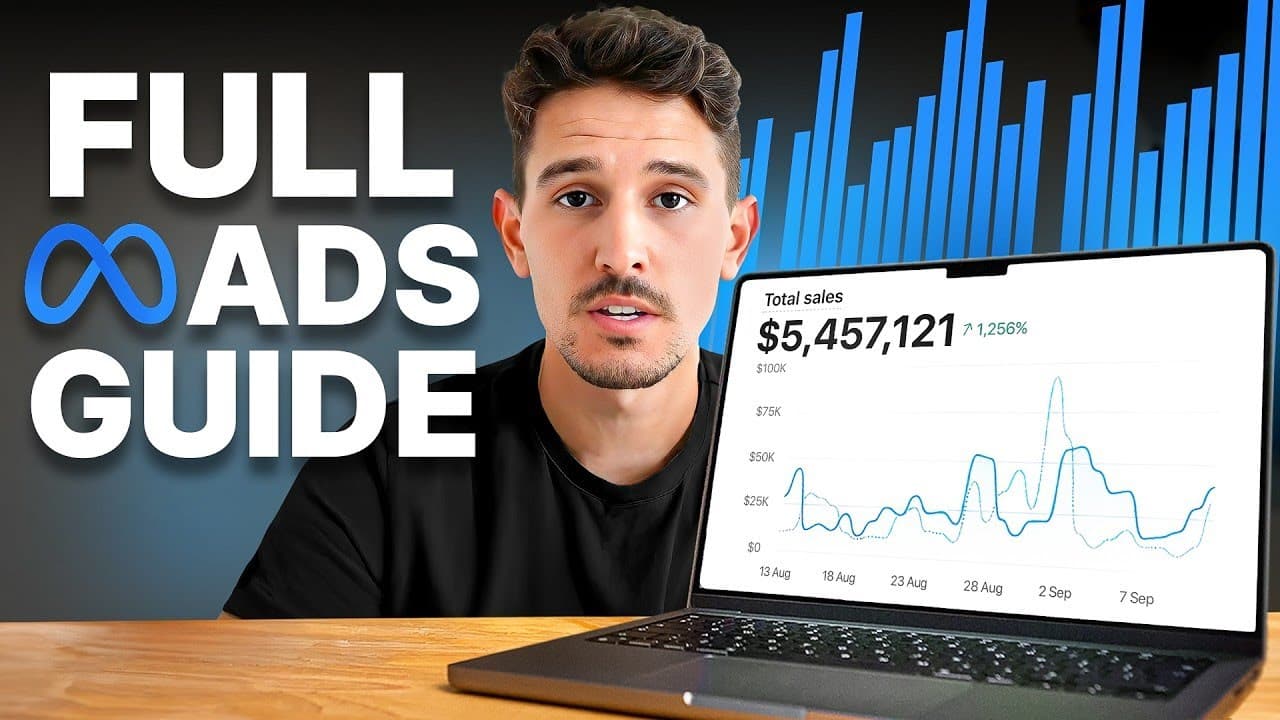
Start by validating purchase tracking, comparing browser events, server events, and Shopify orders, with discrepancies kept within roughly 10%. Then simplify excessive campaign structures, disable unproven Advantage Plus Creative tests, and build a reporting view that combines revenue, purchase efficiency, traffic, funnel, and frequency metrics for ongoing diagnosis.
Transcript
I'm willing to bet that you need to be running Facebook ads if you're serious about growing your business fast in 2025. Learning to run Facebook ads profitably, being able to throw a dollar in, make 2 4 6 8 $10 back, is one of the highest leveraged skills that you could possibly have as a business owner. And if you don't have the proper skill and y... Read More
Key Insights
- Purchase tracking is the most important event to validate because it anchors revenue and advertising-performance analysis. The recommended health check compares browser pixel events with server-side Conversion API events, then confirms both against actual Shopify orders from the identical reporting period.
- A tracking discrepancy of roughly 10% or less is treated as acceptable for purchase events. In the example, 3,000 browser events and 3,200 server events were considered close enough, while a comparison of 783 server purchases against 813 Shopify orders also passed the stated threshold.
- Visual trend comparison is a fast way to locate tracking failures before examining totals. Browser and server lines should generally move together, while isolated spikes or gaps can identify specific dates that deserve closer inspection across seven-day and monthly reporting windows.
- Purchase undercounting or overcounting is more consequential than variation in upper-funnel events. Initiated checkouts, add-to-cart events, content views, and page views should still be validated, but blocking and tracking restrictions can create greater differences in those measurements.
- Advantage Plus Creative settings are presented as avoidable account-level experiments. The recommendation is to disable every option because Meta may use a small share of impressions for tests, and even a 2% to 5% allocation could affect account performance.
- Campaign count is a structural diagnostic for budget fragmentation. An account spending nearly $150,000 over 30 days across 16 active campaigns, while promoting only two or three primary products, was identified as unnecessarily complex unless separate countries or regions justified that structure.
- Small efficiency improvements are financially meaningful in high-spend accounts. The transcript argues that gains of 3% to 10% can translate into thousands, or potentially hundreds of thousands of dollars over a year, making foundational audits worthwhile even for established advertisers.
- A useful Ads Manager column set is built around business outcomes and diagnostic metrics. It includes delivery, attribution, budget, spend, purchase value, purchase ROAS, purchases, cost per purchase, CPC, CTR, CPM, add-to-cart costs, checkout costs, and frequency.
Install to Summarize YouTube Videos and Get Transcripts
Explore YouTube Video Summarizer or Get YouTube Transcript Extractor
Questions & Answers
Q: How do you check whether Meta purchase tracking is accurate?
Open Events Manager, select Data Sources, choose the relevant pixel, and inspect the purchase event. First compare the browser and server lines for visible gaps. Next open the event details and compare total browser events with total server events. Finally, review Shopify orders for the same dates and compare that total with Meta's server-reported purchases.
Q: What discrepancy is acceptable between Meta and Shopify purchases?
The stated guideline is to keep purchase-event discrepancies within roughly 10%. One example compared 783 server purchases in Events Manager with 813 Shopify orders over the same seven-day period and treated the difference as acceptable. Slight undercounting was considered manageable, while significant overcounting or undercounting would indicate a tracking issue that needs investigation.
Q: Why should browser and server events be compared in Meta Events Manager?
Browser events show activity recorded by the pixel, while server events show activity recorded through the Conversion API. Their totals and trend lines should remain reasonably close. Comparing them reveals whether one tracking method is firing more or less often than the other, and visual gaps can help identify the dates on which a tracking discrepancy began.
Q: Which Meta events should an advertiser validate first?
The purchase event should be checked first because it is the most important event for evaluating revenue and ad performance. After that, the same validation process can be applied to initiated checkouts, add-to-cart activity, content views, and page views. Upper-funnel events may vary more because different forms of blocking can interfere with their tracking.
Q: Should Advantage Plus Creative settings be enabled?
The transcript recommends turning off all Advantage Plus Creative options in advertiser settings. The reason given is that Meta may direct a small portion of impressions toward its own creative tests. Even when that share is below 5%, the advertiser may prefer to retain those impressions for selected, proven advertisements instead of participating in experiments that were not intentionally designed.
Q: How many Facebook ad campaigns should an account run?
The appropriate number depends on factors such as products, countries, and regions, but 16 active campaigns were considered excessive for an account focused on only two or three primary products. The concern is that too many campaigns divide budgets and create structural breakage. Separate markets or regional requirements may justify additional campaigns, but complexity should have a clear purpose.
Q: Which columns should be included in a Facebook Ads Manager report?
The foundational column set should include delivery status, attribution setting, budget, amount spent, purchase conversion value, purchase ROAS, purchases, and cost per purchase. Secondary diagnostic fields should include CPC, CTR, CPM, add-to-cart activity, cost per add to cart, initiated checkouts, cost per initiated checkout, and frequency. Additional columns can be added for specific creative or audience analysis.
Q: How should a Facebook ad account audit begin?
Begin by pulling back and assessing the overall account structure before investigating individual campaigns or advertisements. Look for an excessive number of active campaigns, fragmented budgets, and settings that may be consuming impressions unnecessarily. Then verify tracking accuracy and standardize the reporting columns, creating a dependable foundation for identifying problems, testing changes, and improving the existing account over time.
Summary & Key Takeaways
-
A reliable Meta ads foundation begins in Events Manager. Review the purchase event first, compare browser and server activity visually, inspect their totals, and validate reported purchases against Shopify orders for the same period. A discrepancy of roughly 10% or less is presented as acceptable, while major overcounting or undercounting requires investigation.
-
Tracking checks should extend from purchases to initiated checkouts, add-to-cart activity, content views, and page views. Purchase reporting receives the highest priority because it directly affects revenue analysis. The account should also have Advantage Plus Creative settings disabled, preventing Meta from allocating a small percentage of impressions to creative tests that the advertiser did not select.
-
Account diagnosis starts with a broad structural review before examining individual campaigns. Sixteen active campaigns for only two or three primary products indicates likely budget fragmentation unless distinct countries or regions justify the separation. A useful reporting view includes delivery, attribution, budget, spend, revenue, ROAS, purchases, acquisition costs, traffic metrics, funnel events, and frequency.
Read in Other Languages (beta)
Share This Summary 📚
Summarize YouTube Videos and Get Video Transcripts with 1-Click
Try YouTube Summary with ChatGPT & Claude or YouTube Transcript Generator
Explore More Summaries from Sam Piliero 📚


Summarize YouTube Videos and Get Video Transcripts with 1-Click
Try YouTube Summary with ChatGPT & Claude or YouTube Transcript Generator