How Do Low Yields and Fed Policy Affect Markets?
TL;DR
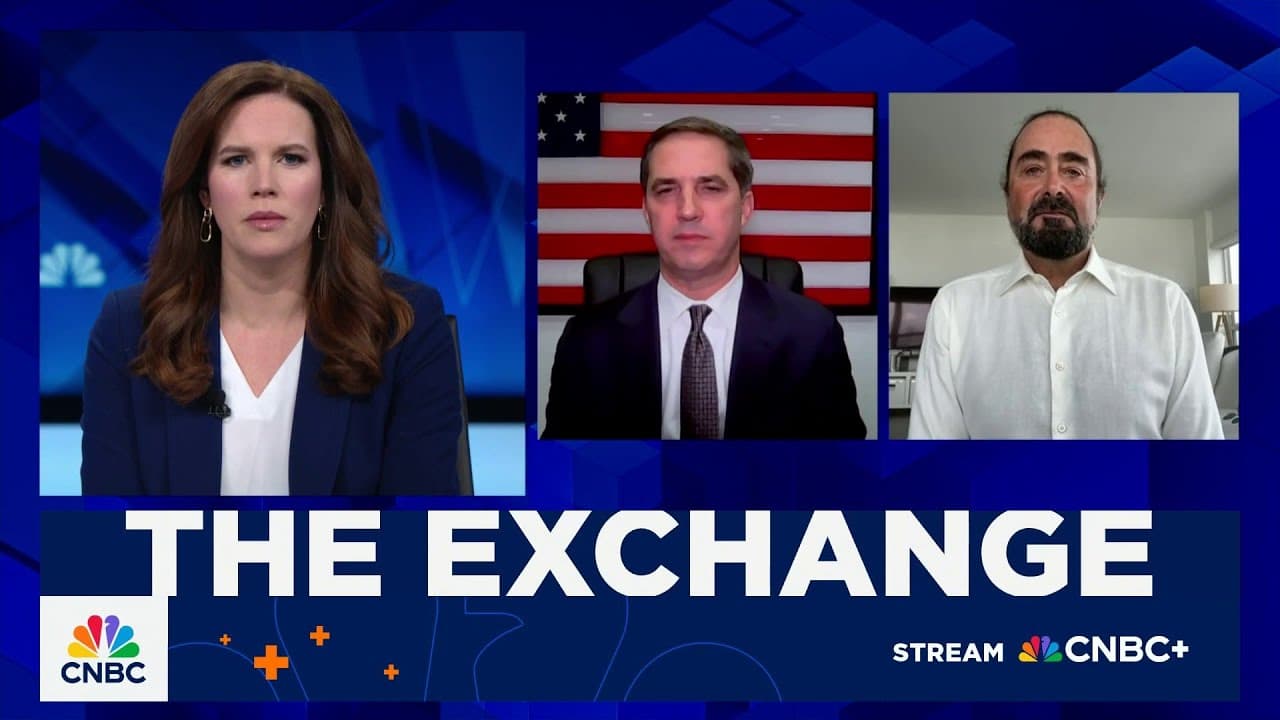
Low yields are seen as a bullish development for markets and the economy, with some guests arguing that a return to neutral policy and lower yields could be possible. They warn that December liquidity pressures may force the Fed to expand its balance sheet to prevent a disruption in bank reserves, while deficits and regulatory changes could influence bond and mortgage rates.
Transcript
WILL FALL ALONG WITH THAT. BECAUSE LOW YIELDS HAVE BEEN AN INCREDIBLY BULLISH DEVELOPMENT FOR THE MARKETS AND FOR THE ECONOMY. IT IS AS BIG A STORY AS AI, I THINK. BUT LET'S SEE WHAT MY NEXT GUESTS THINK ABOUT THIS AS WELL. JOINING ME DAN CLIFTON IS STRATEGIC RESEARCH PARTNERS HEAD OF POLICY. AND DAVE CERBOS IS JEFFREY'S CHIEF MARKET STRATEGIST, A ... Read More
Key Insights
- Low yields have been a bullish development for markets and for the economy, according to the speakers.
- Neutral policy is argued to be the pre covid state and could guide expectations for future yield movement.
- Converts at yield lows are more open to the idea that yields may head lower before steadying.
- Deficit improvement is mentioned as a factor shaping the macro backdrop and the narrative around dollar strength.
- Treasury liquidity tools and bank reserves are central to potential policy responses in December.
- There is concern about a December liquidity crunch and its potential impact on overnight rates.
- Financial deregulation and changes to bank capital rules are discussed as tools that could affect mortgage rates and bond yields.
- The FED balance sheet neutrality is described as a baseline reference point for normal market conditions.
- More videos from this channel:
- More from this channel: CNBC Television
Install to Summarize YouTube Videos and Get Transcripts
Explore YouTube Video Summarizer or Get YouTube Transcript Extractor
Questions & Answers
Q: What does the participants say about the relation between low yields and the market today?
The participants emphasize that low yields have been a very bullish development for both the markets and the economy. They note that this environment, with yields lower than earlier expectations, has shifted investor sentiment and trading dynamics, making it a central theme in conversations about monetary policy, deficits, and asset prices. They also mention that more investors are converging toward the view that yields could move lower before stabilizing, reflecting renewed openness to a lower-rate narrative.
Q: Why do they think the neutral rate is relevant after the covid period?
They argue that returning to the pre covid neutral state is a meaningful benchmark, suggesting that the original, unrestricted policy stance should guide expectations going forward. This view frames the discussion about how much room for rate cuts or rate holds exists and how the balance between growth, inflation, and unemployment could play out as the economy normalizes after covid disruptions.
Q: What is said about the deficit and dollar narrative in relation to markets?
The discussion points out that deficit improvements are affecting the macro narrative, including how the dollar is perceived. If deficits improve, the prior narrative of a dollar implosion or explosive fiscal pressure loses some momentum, which can influence asset prices, risk sentiment, and the attractiveness of crypto and other risk assets as investors reassess macro risks.
Q: What role do December liquidity conditions play in the outlook?
They highlight that December liquidity conditions could be tight due to factors like treasury settlements, bank reserve maintenance, and corporate tax payments. These pressures could force the Fed to take proactive steps, potentially expanding its balance sheet to prevent a destructive liquidity crunch that would push overnight rates higher and disrupt normal market functioning.
Q: What is the view on the Fed balance sheet neutrality?
One speaker describes balance sheet neutrality as a neutral, pre covid-like condition where the Fed maintains a sustainable scale of assets relative to GDP. This concept is used to argue that policy should focus on achieving maximum employment and price stability without allowing the balance sheet to become overbearing, which would influence rates across the curve.
Q: How might deregulation influence mortgage rates and yields?
The conversation suggests that upcoming financial deregulation, especially around bank capital rules, could unlock capital on bank balance sheets and enable lower mortgage rates and lower bond yields. This is framed as a potential mechanism to improve the financial environment by increasing liquidity and reducing the cost of capital for households and firms.
Q: What concerns are raised about the trajectory of yields and interest rates?
Concerns center on the possibility that yields could head quite a bit lower, but there is caution about whether this path is consistent with broader economic signals and policy responses. The participants stress the need to monitor liquidity, treasury settlements, and tax-related drains to avoid mispricing of risk and to calibrate expectations for policy actions.
Q: What is said about the difference between economy strength and policy responses?
The speakers acknowledge that the broader economy appears to be holding up with supportive conditions, yet they emphasize that policy responses must be carefully calibrated. They highlight the potential tension between economic resilience, inflation dynamics, and the risk that policy could become politically biased, underscoring the need for careful management of liquidity and capital rules to sustain growth.
Summary & Key Takeaways
-
Low yields have been a bullish development for markets and the economy, and debates focus on whether yields can head lower while policy returns to a pre covid neutral state.
-
A December liquidity crunch could compel the Fed to expand its balance sheet to maintain bank reserves and stabilize rates.
-
The discussion also covers the potential impact of a improving deficit, financial deregulation, and mortgage rate dynamics on overall financial conditions.
Read in Other Languages (beta)
Share This Summary 📚
Summarize YouTube Videos and Get Video Transcripts with 1-Click
Try YouTube Summary with ChatGPT & Claude or YouTube Transcript Generator
Explore More Summaries from CNBC Television 📚




Summarize YouTube Videos and Get Video Transcripts with 1-Click
Try YouTube Summary with ChatGPT & Claude or YouTube Transcript Generator