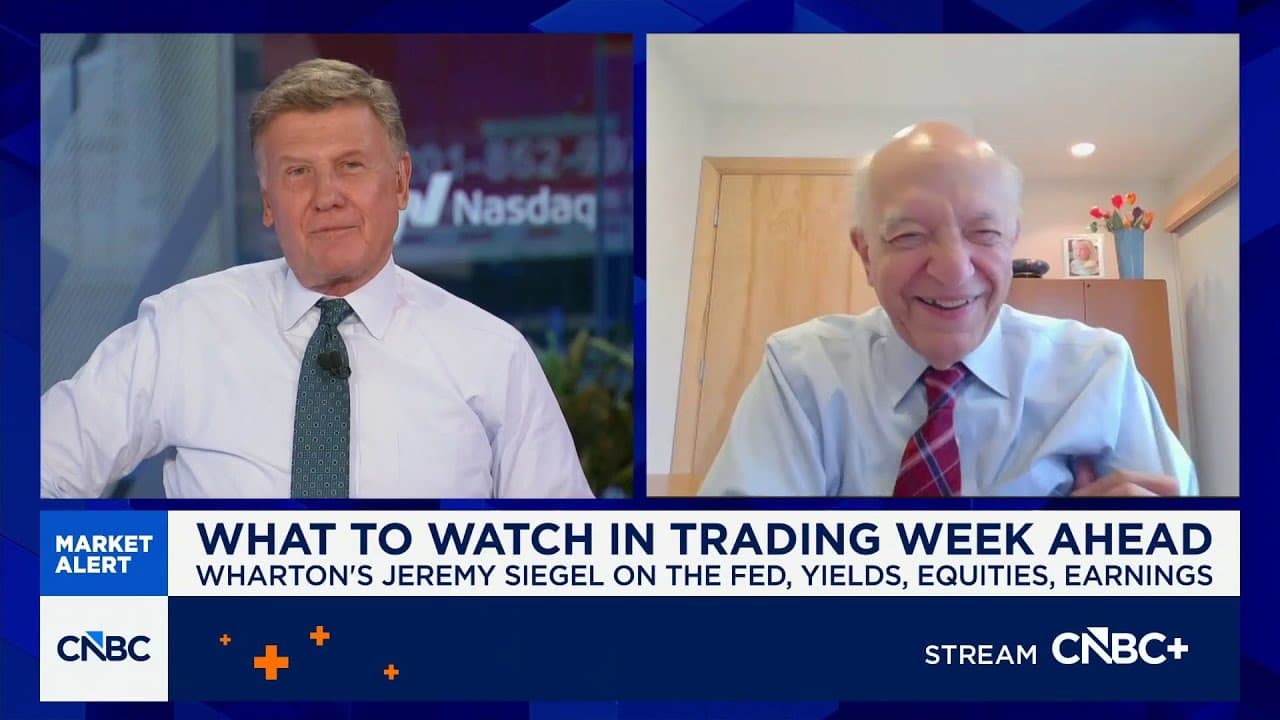
What to expect from the markets with Siegel on AI and Fed
TL;DR
Siegel argues the market is in early bull phase but cautions on CAPEX and credit growth. He expects a potential 10 percent S&P move on good news like pause in Iran tensions, AI breakthroughs, or Fed actions, while emphasizing selective investment in hyperscalers and efficiency gains. Inflation risk persists if credit keeps rising.
Transcript
FUTURES ARE SOLID, STRONG THIS MORNING, PUTTING THE S&P BACK ABOVE 7500. JOINING US NOW JEREMY SIEGEL, PROFESSOR EMERITUS OF FINANCE AT UNIVERSITY OF PENNSYLVANIA'S WHARTON SCHOOL OF BUSINESS AND A CHIEF ECONOMIST AT WISDOMTREE. I DON'T THINK, PROFESSOR, THAT THAT SENTIMENT IS YOUR IS YOUR FAVORITE GAUGE, BUT COULD YOU JUST COMMENT ON THE NOTION... Read More
Key Insights
- X is optimistic about the market despite short term trepidation, noting the bull market is in the early stages and hinges on policy and growth signals.
- The key to navigating the market, according to Siegel, is understanding credit growth and the money supply, which have the potential to keep inflation above target if they continue rising.
- CAPEX cycles matter because excessive investment historically reduces returns, implying selective spenders with better margins may outperform.
- Hyperscalers and providers that can deliver cost effective compute will likely see margin expansion as AI demand grows, driving stock performance.
- The rotation into nonUS tech stocks suggests broad-based strength beyond traditional US leaders, supported by efficiency gains and new technologies.
- AI breakthroughs are viewed as a revolution that could reshape value, with the potential to lower the cost of compute and enable new business models.
- Geopolitical events, such as Iran tensions and Middle East oil supply, are considered important near term catalysts that can trigger volatility or risk premia in markets.
- The discussion on the Fed indicates that a rate pause is possible this week, but continued credit growth could maintain inflation risks and influence future policy decisions
- More videos from this channel:
- More from this channel: CNBC Television
Install to Summarize YouTube Videos and Get Transcripts
Explore YouTube Video Summarizer or Get YouTube Transcript Extractor
Questions & Answers
Q: What signals does Siegel say would make the bull market resume stronger momentum
Siegel suggests that a combination of favorable policy actions, such as a pause in rate hikes, and clear progress on AI related productivity could rekindle strong market momentum. He notes that credit growth and money supply trends will influence inflation expectations, which in turn affect equity valuations. If hyperscalers demonstrate efficient capital expenditure and robust demand for compute, margins could expand, supporting higher stock prices. Positive geopolitical developments that stabilize energy markets could also unlock further upside by reducing risk premia and uncertainty, encouraging more investment across sectors.
Q: Why does Siegel think CAPEX has become a toxic term and how could that affect stocks
Siegel argues that excessive capital expenditure historically reduces returns for firms by overinvesting in capacity without corresponding demand growth. This dynamic damages stock performance for companies that overspend compared to those that marshal resources more efficiently. If hyperscalers or other tech firms optimize capex, reduce costs, and improve margins, investors may reward them with higher valuations. Conversely, persistent overinvestment could weigh on broad equity returns and keep valuation multiples under pressure until a clearer demand trajectory emerges.
Q: What role do AI breakthroughs play in Siegel’s market view
AI breakthroughs are seen as a potential driver of much higher efficiency and new profits for firms that can leverage compute at lower cost. Siegel emphasizes that the next wave of AI investment could come from firms that previously could not justify large capex but now can achieve significant margin expansion. The market would respond positively if compute supply improves and costs decline, enabling wide adoption and revenue growth across multiple sectors, thereby supporting higher equity prices.
Q: How does geopolitical risk influence the market according to the interview
Geopolitical risk, particularly tensions in the Middle East and the global oil supply, is viewed as a near term catalyst that can introduce volatility and alter risk premia. Positive resolution and stable energy markets could reduce uncertainty and unlock upside in equities, while renewed tensions or supply shocks could restrain growth and increase inflation pressures. Investors should watch for shifts in energy prices and shipping disruptions as indicators of potential risk on or risk off environments.
Q: What is Siegel’s take on the Fed and rate expectations this week
Siegel indicates a rate pause is possible this week, though he acknowledges potential dissent on higher rates. The key driver he cites is credit growth and the money supply, which if persistent, supports inflation above target. This underscores a cautious stance: the Fed may pause rates but will remain attentive to credit expansion and inflation signals, shaping expectations for future policy and market response.
Q: Why does Siegel believe nonUS tech stocks have held up, and what could change that
Siegel notes that nonUS tech stocks have shown resilience due to efficiency gains and strong AI related demand, which supports margins and earnings. However, if demand cools or if capex shifts away from aggressive investment, this performance could stall. A continued rotation toward efficient, high margin players could sustain strength, but any broad slowdown in global tech investment or a pullback in AI spending could alter the trajectory.
Q: What is the potential impact of oil supply on the market in the discussion
The discussion suggests that improved oil supply and stable energy markets could support equities by reducing energy price volatility and inflation concerns. If ships move through the Suez Canal and Middle East tensions ease, markets might see lower risk premia and a more favorable environment for investment. Conversely, ongoing supply constraints or renewed tensions could boost inflation expectations and dampen equity performance.
Q: How does Siegel describe the balance between optimism and risk in the near term
Siegel expresses cautious optimism, acknowledging that while the market has upside potential, there are significant risks from credit growth, CAPEX cycles, and geopolitical tensions. The balance lies in selective exposure to sectors with efficient capital use, AI enabled margins, and nonUS tech strength, while staying mindful of inflation dynamics and policy shifts that could alter the trajectory of asset prices.
Summary & Key Takeaways
-
Siegel notes that the bull market is in the early stages but faces headwinds from credit growth and CAPEX spending. He highlights the potential for a sharp market move on favorable news such as policy pauses or tech breakthroughs. The discussion centers on AI demand, efficiency gains, and sector rotation.
-
He emphasizes that hyperscalers and cost reductions could drive margins, while excessive CAPEX may depress returns. The conversation covers the influence of Middle East events and oil supply on markets. The Fed’s stance and credit expansion are identified as crucial drivers of inflation risk.
-
The interview frames a cautious optimism, arguing that a mix of geopolitical developments, AI advances, and balance sheet discipline will shape equity performance, with risk managed through selective exposure to tech and non-US equities.
Read in Other Languages (beta)
Share This Summary 📚
Summarize YouTube Videos and Get Video Transcripts with 1-Click
Try YouTube Summary with ChatGPT & Claude or YouTube Transcript Generator
Explore More Summaries from CNBC Television 📚
Summarize YouTube Videos and Get Video Transcripts with 1-Click
Try YouTube Summary with ChatGPT & Claude or YouTube Transcript Generator