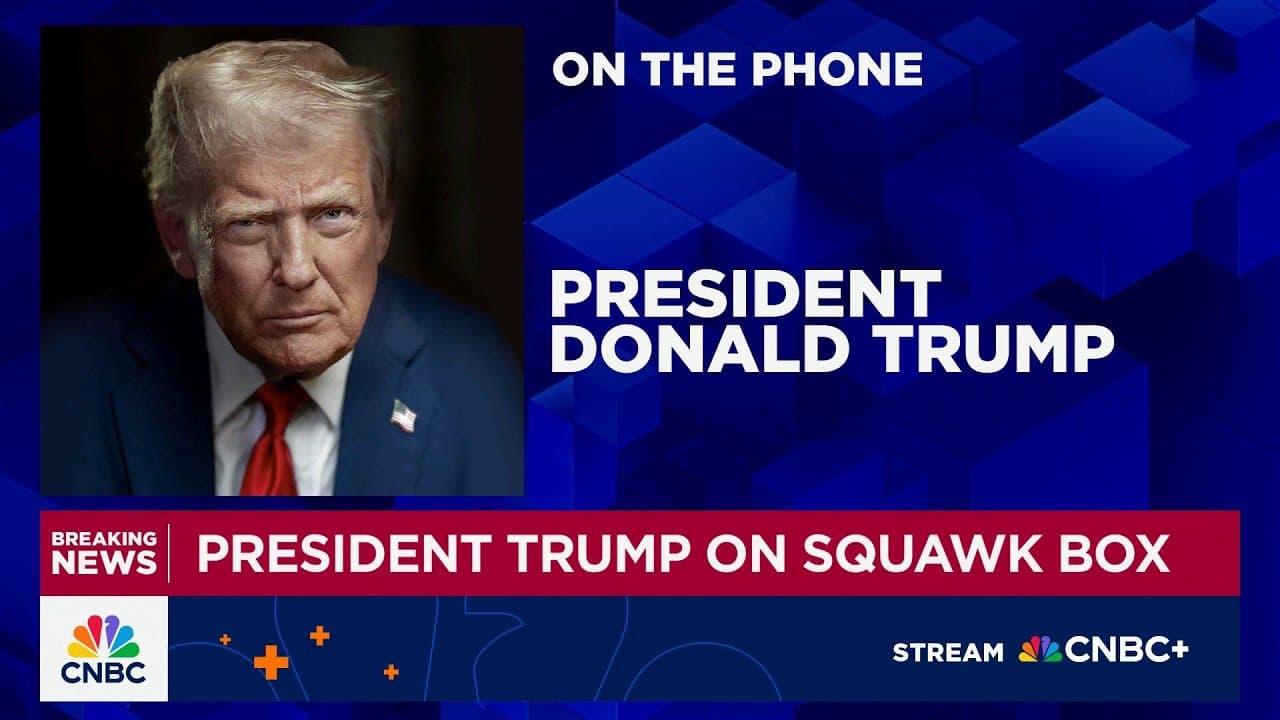
Why does Trump say BLS numbers are rigged in elections?
TL;DR
Trump argues that the BLS numbers are antiquated and politically manipulated, suggesting that revisions before elections distort the truth. He cites historical revisions, claims of phony numbers, and discusses potential replacements for the commissioner, framing the unemployment data as a political weapon rather than a neutral statistic.
Transcript
And you can see right now the ten year at 422, the two year at 370. >> And now to the gusts that we've been talking about all morning President Donald Trump. Mr. President welcome. Thanks for thanks for calling in. Wish you could be here in person, but we'll do this. >> Good morning Joe. >> We've been talking about the BLS and the employment number... Read More
Key Insights
- BLS response rate is described as increasingly low, stressing its importance for accurate data.
- The numbers are described as rigged and politically driven by the speaker, who argues they were manipulated around elections.
- The speaker asserts that revisions to unemployment figures occurred just before the election to influence perception.
- There is a claim that the government uses an antiquated, non-mandatory data collection method that invites manipulation.
- The speaker mentions a potential replacement for the BLS commissioner, citing political considerations.
- The dialogue links economic data quality to national political outcomes and public trust in statistics.
- The interview frames Jerome Powell as sometimes late and politically influenced in policy decisions.
- The discussion contrasts previous favorable economic narratives with post-election revisions, implying deliberate misreporting for political gain.
- More videos from this channel:
- More from this channel: CNBC Television
Install to Summarize YouTube Videos and Get Transcripts
Explore YouTube Video Summarizer or Get YouTube Transcript Extractor
Questions & Answers
Q: What is the main claim about the BLS numbers in the interview?
The main claim is that the BLS numbers are rigged and manipulated for political purposes, especially around elections. The speaker argues there have been revisions that change the unemployment picture to influence public perception, and he suggests the system is antiquated and subject to political influence rather than being a neutral statistic.
Q: How does the speaker describe the BLS data collection method?
The speaker describes the data collection as antiquated and not mandatory, with responses sometimes delayed or incomplete. He implies this setup leads to unreliable figures and argues that the method allows for manipulation and misrepresentation of employment data depending on political needs.
Q: What revisions to unemployment figures are discussed?
The conversation notes a large revision prior to the election, described as the biggest revision in history of almost 900,000 jobs. He says later revisions adjusted the numbers again, suggesting that initial reports were not fully accurate and could be used to shape political narratives.
Q: Who are potential replacements for the BLS commissioner mentioned?
The interview mentions several names in consideration for replacing the BLS commissioner, including Kevin Warsh, Jerome Powell, and other unnamed candidates. The host asks about possible picks, and Trump indicates there are four names being considered, with some preference expressed for qualified individuals who might align with political goals.
Q: What is said about Jerome Powell’s role and timing?
The speaker criticizes Powell as being too late in actions and describes him as a political figure who did not always act promptly on monetary policy. He contrasts Powell with other potential candidates and suggests that Powell’s timing affected the economic policy environment leading up to elections.
Q: How does the speaker frame the impact of data on policy decisions?
The speaker frames data integrity as crucial for credible policy decisions. He implies that manipulated or misrepresented statistics can distort economic understanding, influence the direction of monetary policy, and affect voters’ perceptions, underscoring the need for trustworthy data for sound decision-making.
Q: What context is provided about elections and economic performance?
The dialogue provides a context where economic performance and unemployment data are tightly tied to political outcomes. It references a period of strong economic messaging before the election and contrasts it with post-election revisions, suggesting that numbers were adjusted to align with or counter perceived political narratives.
Q: What is said about the public trust in statistical institutions?
The speaker argues that public trust is undermined when statistical processes appear political or manipulated. By alleging rigging and calling for leadership changes, the dialogue implies that confidence in institutions like the BLS hinges on transparency, integrity, and accountability in how unemployment and other economic data are collected and reported.
Summary & Key Takeaways
-
Trump argues the BLS system is antiquated and politically influenced, with numbers that can be revised before elections to favor certain outcomes.
-
He notes a large revision in employment figures around an election and claims it was used to mislead the public, calling for scrutiny of the process and potential changes in leadership.
-
The conversation touches on replacing key figures at the BLS and the broader impact of data integrity on economic policy and credibility.
Read in Other Languages (beta)
Share This Summary 📚
Summarize YouTube Videos and Get Video Transcripts with 1-Click
Try YouTube Summary with ChatGPT & Claude or YouTube Transcript Generator
Explore More Summaries from CNBC Television 📚




Summarize YouTube Videos and Get Video Transcripts with 1-Click
Try YouTube Summary with ChatGPT & Claude or YouTube Transcript Generator