How State AI Regulation Could Slow U.S. Tech
TL;DR
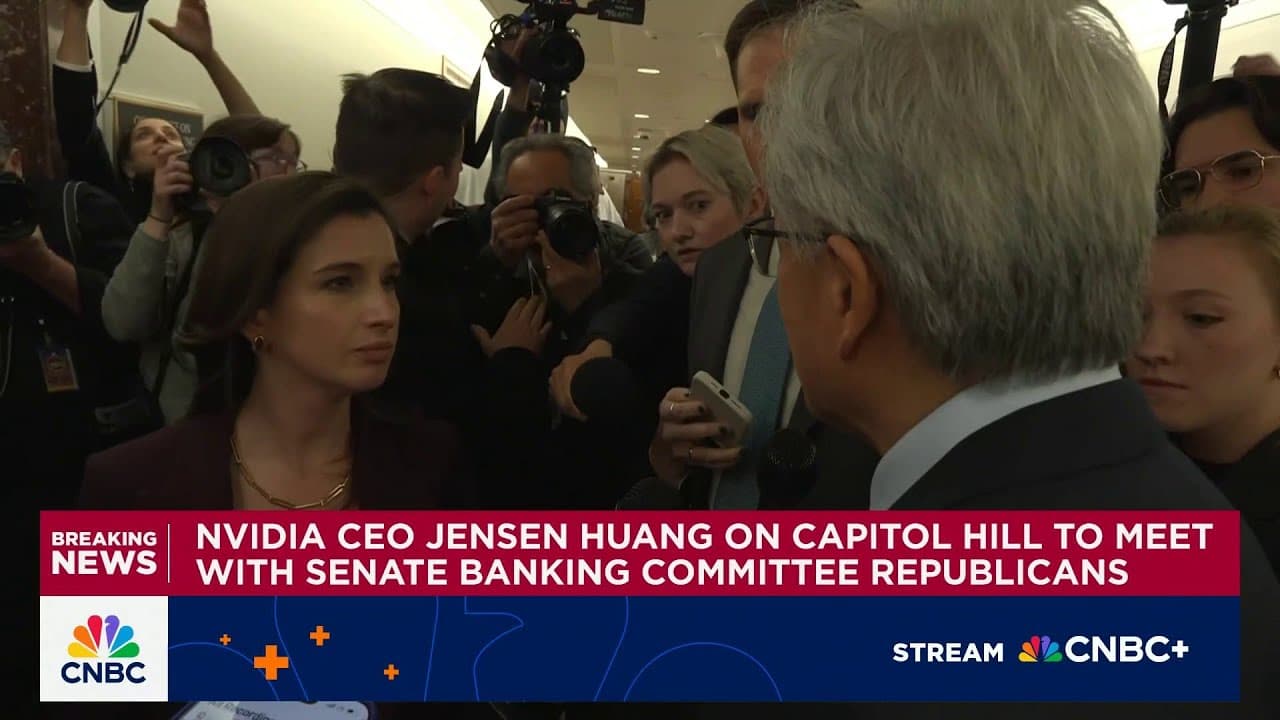
State by state AI regulation would slow the United States’ progress in AI technology, Huang argues, arguing for federal rules to ensure national security and maintain leadership. He emphasizes export controls, the need for US competitive chips, and avoiding a patchwork policy that hinders innovation while trying to protect security. The discussion also touches on China, international competition, and industry collaboration with US firms.
Transcript
A LANDSLIDE. IT'S KIND OF HARD TO COMPETE WITH THEM, BUT THERE'S A LOT OF ROOM FOR EVERYBODY TO WIN IN THIS ENVIRONMENT. >> GABRIELLE, WITH THE INFO. WE ALL NEED IT IN THE DENIM WARS TODAY. THANK YOU, THANK YOU. LET'S QUICKLY GET TO CAPITOL HILL. AND NVIDIA CEO JENSEN HUANG ABOUT TO MEET WITH SENATE BANKING COMMITTEE. >> LEADERSHIP IS REALLY IMPORT... Read More
Key Insights
- State by state AI regulation would drag the industry into a halt and create national security concerns by slowing AI development in the United States.
- Federal AI regulation is presented as the wisest path to ensure quick progress in AI technology while protecting national security and maintaining leadership across markets.
- Export controls are supported as a tool to keep American technology at the forefront and prevent leakage that could undermine security or competitive advantage.
- There is a clear emphasis on the United States needing the best technology at all times and on ensuring that US chips and AI capabilities remain superior in global markets.
- Huang points out that collaboration with American tech giants is natural and essential, underscoring the role of major firms in sustaining a national tech lead.
- The interview acknowledges competition from multiple sources, including global players, and argues for policies that allow US companies to compete globally without compromising security.
- There is a view that Obama style export control rationales extend into AI, suggesting a policy framework that preserves national security while facilitating innovation.
- Discussions around China illustrate a balancing act between export restrictions and keeping Chinese markets open for competitive yet secure US technologies
- More videos from this channel:
- More from this channel: CNBC Television
Install to Summarize YouTube Videos and Get Transcripts
Explore YouTube Video Summarizer or Get YouTube Transcript Extractor
Questions & Answers
Q: What is the risk of state by state AI regulation for the US tech industry?
State by state AI regulation could create a patchwork of rules that vary widely from state to state, increasing compliance costs and uncertainty for companies. This fragmentation would slow development, hinder cross state collaboration, and potentially delay deployment of critical AI technologies. Huang argues that national security and rapid innovation require consistent, federal guidelines that are well aligned with industry needs.
Q: Why does the speaker prefer federal over state AI regulation?
Federal regulation provides a unified framework that reduces compliance complexity and accelerates innovation. It helps ensure consistent security standards, export control enforcement, and technology leadership across the entire country. A single, coherent policy reduces regulatory delays and keeps the United States competitive on the global stage while still addressing national security concerns.
Q: How do export controls relate to national security according to the video?
Export controls are described as essential to maintaining the United States’ best technology at all times and preventing sensitive AI capabilities from easily flowing to adversaries. They serve to balance openness with protection, ensuring leading American firms can compete globally while keeping critical chips and software from being used in ways that could threaten security.
Q: What role do US chip leaders play in Huang’s message?
Huang emphasizes that the United States must deliver the best technology and maintain the leadership position in global markets. He notes that collaboration with major US technology companies is natural and vital for keeping the US at the forefront, and he cautions against policies that could degrade or restrict American chip exports unnecessarily.
Q: How is China’s position described in relation to AI and chips?
China is referenced as a competitor with its own chip production and military capabilities, highlighting the need for the US to sustain technology leadership to counterbalance that competition. The discussion suggests that American policy should enable strong export controls while still allowing access to competitive chips where appropriate to maintain market strength.
Q: What does Huang say about possible federal AI regulations versus industry preferences?
Huang indicates a preference for federal regulation that protects national security and promotes rapid AI advancement. He views federal limits as more predictable and robust than a myriad of state rules, which could undermine our ability to globally compete and threaten national security if not carefully designed and implemented.
Q: Does Huang address collaboration with administration on export controls?
Yes, he states ongoing engagement with the White House and administration officials about export controls, aiming to balance national security with maintaining American technology leadership. He emphasizes that the dialogue is continuous to identify the best policy approaches that support both security and innovation.
Q: What is the takeaway about AI leadership and security from the interview?
The central takeaway is that the United States must pursue federal AI regulation coupled with prudent export controls to protect national security without stifling innovation. This approach helps ensure the US remains the world leader in AI technology while managing risks related to global competition and the potential misuse of advanced AI capabilities.
Summary & Key Takeaways
-
Huang argues that state level AI regulation could hinder the US tech sector by creating a fragmented regulatory environment that slows progress and national security efforts. He advocates for federal regulation to streamline governance and maintain leadership in AI technology. The talk emphasizes export controls and economic security.
-
The interview highlights tensions between innovation and security, noting competition from China and other regions. Huang stresses the importance of maintaining premier American technology and collaborating with US tech giants to sustain leadership while addressing export controls and national security concerns.
-
A broad view of regulatory strategy is presented, balancing open global tech collaboration with protective measures that secure critical AI capabilities. The discussion suggests policy alignment across agencies and Congress to prevent regulatory bloat while preserving the US market’s competitive edge.
Read in Other Languages (beta)
Share This Summary 📚
Summarize YouTube Videos and Get Video Transcripts with 1-Click
Try YouTube Summary with ChatGPT & Claude or YouTube Transcript Generator
Explore More Summaries from CNBC Television 📚


Summarize YouTube Videos and Get Video Transcripts with 1-Click
Try YouTube Summary with ChatGPT & Claude or YouTube Transcript Generator