How should crypto regulation level the playing field for banks?
TL;DR
Armstrong argues for a level playing field between crypto and banks, endorses 100 percent reserve stablecoins, and envisions competitive rewards and lending models. He cites GENIUS Act progress, concerns over a Senate market structure draft, and ongoing talks with bank CEOs to seek a win win outcome that benefits consumers.
Transcript
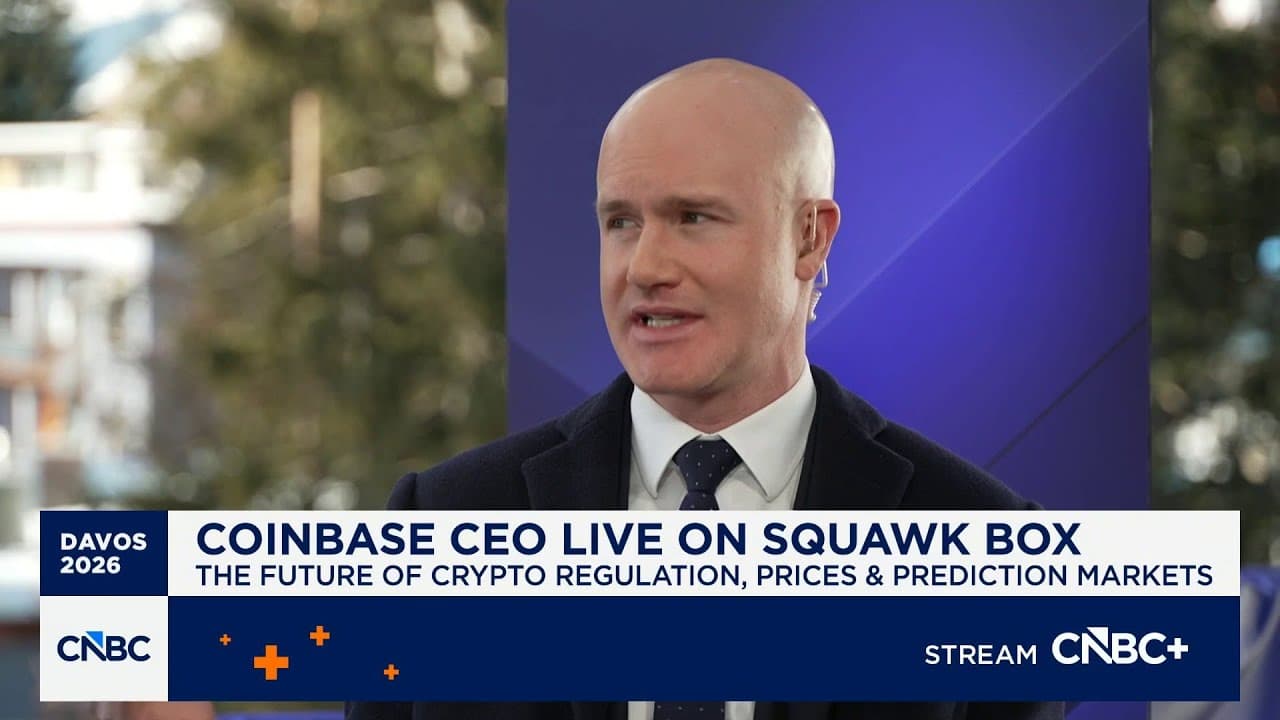
WELCOME BACK TO SQUAWK BOX. WE ARE HERE IN DAVOS, SWITZERLAND. ONE OF THE BIGGEST ISSUES ON CAPITOL HILL IS CRYPTO REGULATION. OUR NEXT GUEST FINDS HIMSELF AT THE VERY CENTER OF IT. AND JOINING US RIGHT NOW IS BRIAN ARMSTRONG. HE'S THE CO-FOUNDER AND CEO OF COINBASE, OF COURSE, THE LARGEST U.S. CRYPTO EXCHANGE AND A GLOBAL CRYPTO POWERHOUSE. YOU... Read More
Key Insights
- Genus Act progress has been made and is part of the regulatory backdrop.
- Stablecoins should be backed by 100 percent reserves using short term Treasuries.
- Banks and crypto should compete on a level playing field with clear rules.
- Crypto can provide rewards on stablecoins and DeFi lending as alternatives to bank products.
- Regulatory framing should avoid protectionism and ban on competition.
- Crypto firms are engaging with bank CEOs to find win win outcomes.
- Market structure discussions focus on customer rights and safeguards.
- Industry evolution is seen with traditional exchanges exploring tokenized platforms.
- More videos from this channel:
- More from this channel: CNBC Television
Install to Summarize YouTube Videos and Get Transcripts
Explore YouTube Video Summarizer or Get YouTube Transcript Extractor
Questions & Answers
Q: A real search query question about the video (e.g. 'How to...', 'What is...', 'Why does...', 'When should...'). Question 1
What is the main regulatory issue Armstrong identifies in the draft market structure bill and why does he say it matters for consumers and banks? The central concern is how rewards on stablecoins are treated and whether there is a level playing field for banks to compete with crypto offerings. He argues that policy should maximize consumer choice while preventing protectionism and hidden advantages for incumbents, enabling clear, predictable rules that support innovation and financial resilience.
Q: Question 2
Why does Armstrong advocate 100 percent reserve stablecoins and how does that differ from total reliance on fractional reserve banking, according to him? He explains that 100 percent reserve stablecoins must hold the assets backing them in short term U.S. Treasuries, reducing risk for users. In contrast, fractional reserve lending involves lending customer deposits with less than full backing, which crypto regulators and consumers see as riskier. This distinction informs his call for a level playing field and transparent reserve practices.
Q: Question 3
How does Armstrong describe the role of DeFi lending and traditional banking within a regulated framework? He suggests that DeFi lending can be a legitimate alternative alongside traditional lending, provided customers opt in and are informed about risk. The idea is to create competitive options with clear guardrails so consumers can choose where to place their money based on risk and reward.
Q: Question 4
What does Armstrong say about the GENIUS Act and its significance for crypto regulation? He notes that GENIUS Act passed last year and serves as a reference point for how stablecoins and crypto assets should be integrated into the financial system. Its existence frames ongoing discussion on a comprehensive regulatory structure and the need to refine text through collaboration with lawmakers and industry.
Q: Question 5
Why has Armstrong been meeting with bank CEOs and what outcome is he seeking? He is engaging with bank leaders to understand what would create a win win outcome that benefits customers and preserves competition. He emphasizes that Coinbase provides infrastructure for several banks and wants policymakers to embrace competition rather than ban crypto innovation.
Q: Question 6
What is Armstrong’s view on competition versus protectionism in crypto regulation? He argues that Americans should be able to earn higher returns and that banks should compete on a level playing field. He opposes protectionist provisions that shield banks from crypto competition and supports transparent rules that empower customers to choose the best option.
Q: Question 7
How does Armstrong frame the possible impact of a level playing field on the broader financial system? He contends that a level field can drive innovation while preserving stability, enabling crypto and banks to offer diverse products. He also notes that major institutions are exploring tokenized platforms, which signals continued evolution of financial markets.
Q: Question 8
What ongoing developments does Armstrong mention regarding the crypto industry and regulation? He points to draft texts, legislative markup delays, and the need for stakeholder input to fix issues. He also references the broader move toward more structured regulation, collaboration with policymakers, and industry players adopting new platforms and services to modernize capital markets.
Summary & Key Takeaways
-
Armstrong highlights GENIUS Act progress and the need for a thoughtful market structure that accommodates crypto while protecting consumers. He argues that stablecoins should offer higher rewards and that banks must compete fairly, not be shielded from competition. The discussion emphasizes practical collaboration with banks to reach a mutually beneficial framework.
-
The interview emphasizes that 100 percent reserve stablecoins reduce risk by backing assets with short term Treasuries. It also outlines how DeFi lending and traditional lending could coexist under clear rules, enabling customers to choose the best return for their risk level.
-
The broader theme is regulatory clarity and industry collaboration. Armstrong proposes a level playing field, emphasizes customer choice and trust, and points to ongoing engagement with banks and policymakers as essential to shaping a workable regulation that modernizes financial markets without stifling innovation.
Read in Other Languages (beta)
Share This Summary 📚
Summarize YouTube Videos and Get Video Transcripts with 1-Click
Try YouTube Summary with ChatGPT & Claude or YouTube Transcript Generator
Explore More Summaries from CNBC Television 📚





Summarize YouTube Videos and Get Video Transcripts with 1-Click
Try YouTube Summary with ChatGPT & Claude or YouTube Transcript Generator