What were the top selling cars by decade in America?
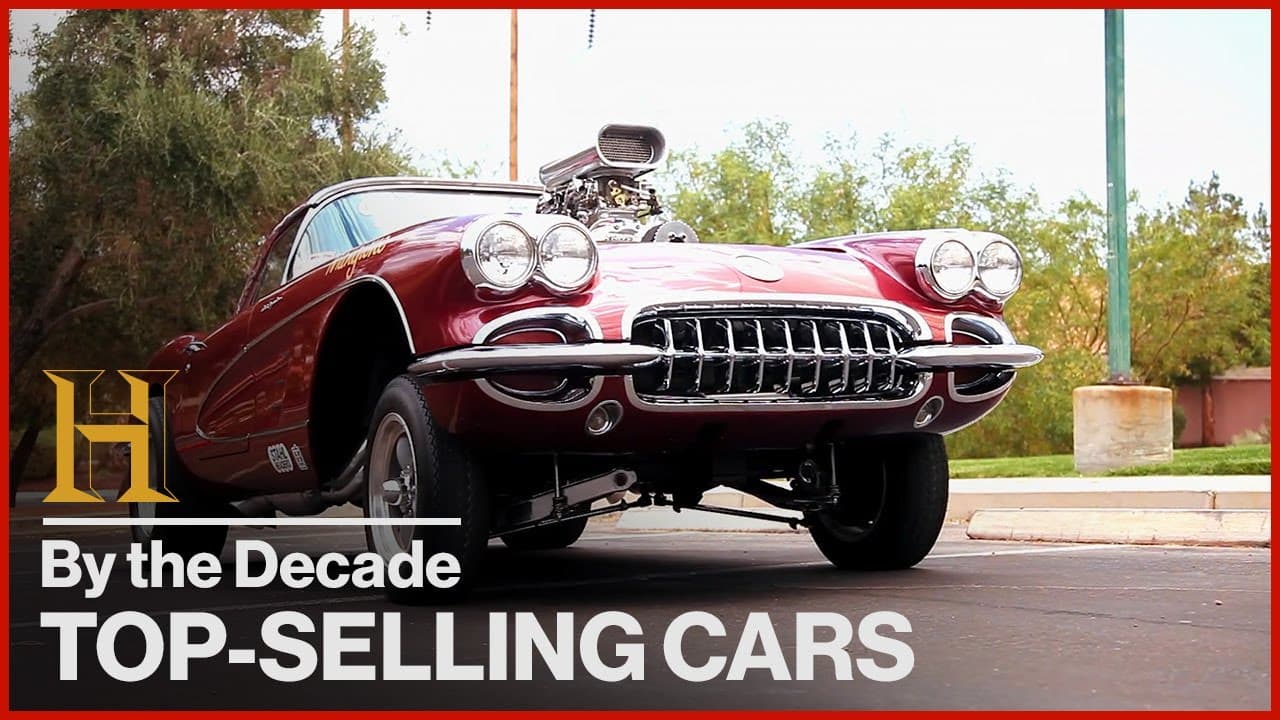
TL;DR
The video highlights the most popular cars by decade from the 1920s to the 2020s, showing how mass production and affordability gave way to iconic models like the Model T, Beetle, Corvette, Prius, and Model S. It also notes shifts to minivans, SUVs, and electric vehicles shaping the modern market.
Transcript
[dramatic music] - Is it a bird? Is it a plane? Is that a--flying car? It's the automobile, one of modern history's greatest inventions. ♪ ♪ This transformative mode of transportation is truly an expression of identity. Cars have become one of the most important signifiers of every generation, and driving for the first time is an American ri... Read More
Key Insights
- The Model T defined mass production and affordability in the 1920s, driving a mass adoption of automobiles.
- The 1930s featured notable models like the Buick Series 40 and Ford V8 Cabriolet, illustrating engineering advances and luxury for the era.
- World War II redirected auto production toward the war effort and reshaped industry priorities.
- The Corvette debuted in 1953 as the first mass-produced fiberglass sports car, signaling a shift to performance and style.
- The Volkswagen Beetle became a global icon and symbol of usability and longevity across decades.
- The 1970s raised awareness of fuel efficiency with compact cars such as the Honda Civic, reshaping consumer choices.
- The 1980s popularized minivans with models like the Dodge Caravan and Plymouth Voyager, changing family commuting patterns.
- The 1990s introduced a rise in SUVs and performance sports cars, expanding the mainstream appeal of varied vehicle types.
- More videos from this channel:
- More from this channel: HISTORY
Install to Summarize YouTube Videos and Get Transcripts
Explore YouTube Video Summarizer or Get YouTube Transcript Extractor
Questions & Answers
Q: What car defined mass production in the 1920s and how did it change ownership?
The Model T defined mass production in the 1920s, enabling Ford to make affordable cars for a broad public. Its assembly line method revolutionized manufacturing, lowering costs and making ownership accessible to more people. This shift established the standard for how cars were produced and sold in America.
Q: Which 1950s car demonstrated GM innovation and fiberglass construction?
The 1953 Corvette introduced fiberglass construction and represented a milestone for mass-produced American sports cars. It combined lighter materials with performance-focused design, signaling a move toward new materials and performance aspirations in the postwar era. Its influence endured in American sports car culture.
Q: What impact did the WWII era have on the American auto industry?
During World War II, the U.S. auto industry retooled to support the war effort, consolidating resources and shifting production away from civilian vehicles to military needs. This period redefined manufacturing priorities, later influencing postwar designs and the release of models optimized for peacetime consumer markets.
Q: How did the Beetle influence American car culture in the 1960s?
The Volkswagen Beetle became a symbol of mobility, reliability, and affordability during the 1960s. Its distinctive design and mass appeal helped popularize compact cars in America, contributing to shifting preferences away from large finned cars toward practical, economical transportation.
Q: Why did the Honda Civic gain popularity in the 1970s?
The Honda Civic gained popularity in the 1970s due to rising fuel costs and a growing demand for fuel-efficient, reliable cars. As a compact model, it offered practicality and efficiency at a lower operating cost, shaping consumer preferences toward smaller, economic vehicles during that decade.
Q: What change did minivans bring in the 1980s?
In the 1980s, minivans like the Dodge Caravan and Plymouth Voyager became popular as family-oriented vehicles. They offered practical seating, cargo space, and family-friendly features, redefining the personal vehicle category and influencing vehicle design toward multifunctional family transportation.
Q: What characterizes the shift toward electric and hybrid cars in the 2000s and 2010s?
The 2000s and 2010s saw hybrids and electrics rise in prominence, with models like the Toyota Prius and the Tesla Model S and Model 3 leading the charge. These vehicles emphasized fuel efficiency, emissions reduction, and advanced electric powertrains, signaling a major shift in technology and consumer expectations.
Q: What is the current market trend for the vehicle mix in the decade described?
The current trend highlighted in the video shows trucks, SUVs, and crossovers accounting for a large share of new vehicle sales, indicating a continued preference for larger, versatile vehicles. This shift reflects evolving consumer needs, lifestyle choices, and ongoing diversification in the auto market.
Summary & Key Takeaways
-
The video traces decade by decade which cars defined American driving culture, starting with the Model T and moving through the Corvette, Beetle, and Honda Civic, among others, to modern electrics like the Model S and Model 3, illustrating changing consumer preferences.
-
It emphasizes how external factors such as fuel economy, innovation in materials, and consumer demand steered design and popularity across eras, from mass market to specialty and electric vehicles.
-
It concludes by noting a current dominance of trucks, SUVs, and crossovers in the auto market, signaling ongoing evolution in response to market dynamics and technology.
Read in Other Languages (beta)
Share This Summary 📚
Summarize YouTube Videos and Get Video Transcripts with 1-Click
Try YouTube Summary with ChatGPT & Claude or YouTube Transcript Generator
Explore More Summaries from HISTORY 📚






Summarize YouTube Videos and Get Video Transcripts with 1-Click
Try YouTube Summary with ChatGPT & Claude or YouTube Transcript Generator