How to 10x Claude results with compete mode?
TL;DR
Using Angela's compete mode, Claude creates three sub-agents to generate options and a judge picks the best result. A comparison against a control one-shot prompt shows the tournament can yield a stronger landing page design, an interactive demo, and clearer messaging, though it requires more tokens and time. The approach ranks differently from other AI strategies but can outperform single-instance prompts in suitable tasks.
Transcript
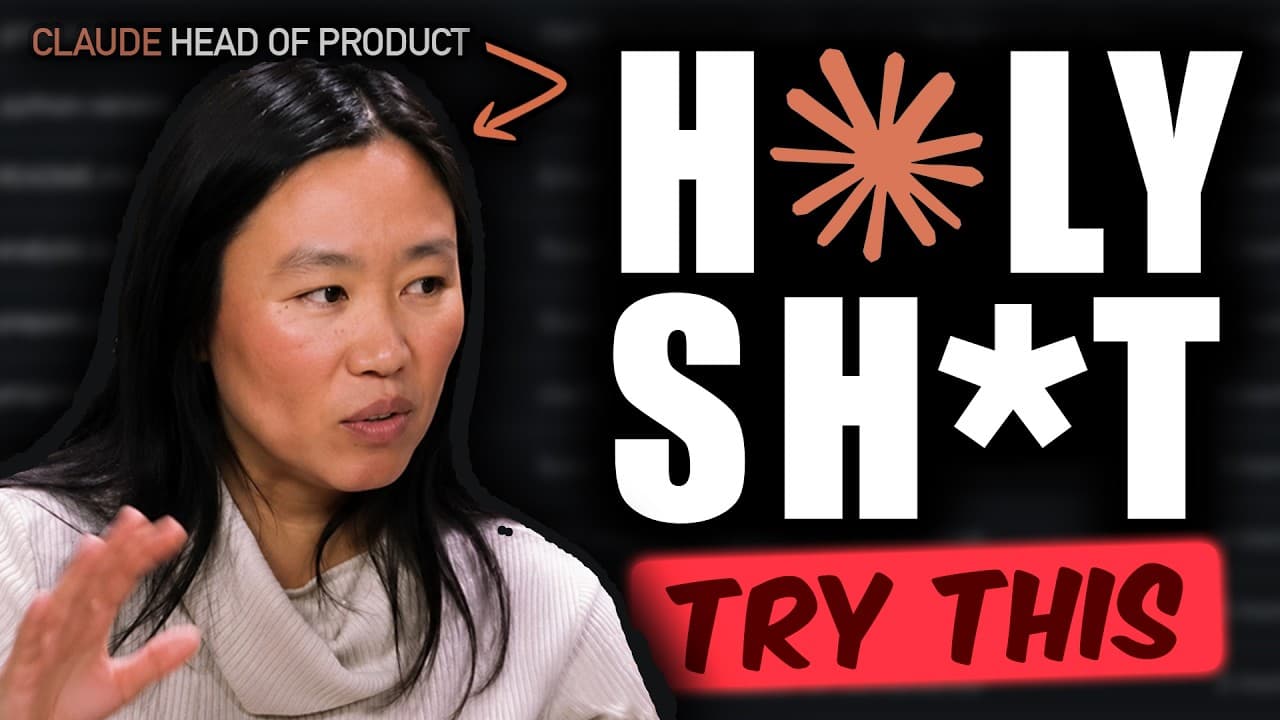
So, this is Anthropic's latest round table where the top AI engineers in the world sit down to tell us how we can get 10 times better results out of our own personal Claude's. And this is Angela Jain, head of product at Anthropic, who shared in this round table a simple but powerful tip that she believes could be a game changer. Because Angela has ... Read More
Key Insights
- Compete mode creates three parallel sub-agents to solve the task and a judge to select the best result.
- A control prompt runs solo without competitors, serving as a baseline for comparison against the tournament approach.
- Three contestants are defined as Operator, Strategist, and Skeptic to diversify perspectives and outputs.
- Judging is blind, with a separate evaluation of each contestant’s output to determine the winner.
- The winning page includes a more polished design, interactive elements, and clearer messaging compared to the control.
- The experiment measures both quality and design aspects like visuals, text clarity, and scheduling options.
- Token usage and time increase with the tournament approach, affecting practicality for quick tasks.
- Overall ranking places tournament strategy behind some other methods but ahead of basic prompting in certain scenarios.
Install to Summarize YouTube Videos and Get Transcripts
Explore YouTube Video Summarizer or Get YouTube Transcript Extractor
Questions & Answers
Q: What is Angela's compete mode and how does it work?
Angela's compete mode prompts Claude to generate multiple sub-agents in parallel, each working independently on the same task. A judge evaluates the separate outputs and selects the best result to return as the final product. This setup aims to increase quality by leveraging diverse approaches and avoiding a single point of failure, though it requires more resources and coordination.
Q: How was the experiment structured to compare control versus tournament?
The experiment used two independent Claude code sessions. One session acted as the control with a standard one-shot prompt, while the other ran Angela's tournament strategy with three sub-agents and a blind judge. Outputs from both sessions were compared to see which produced a better landing page for Night Owl and to quantify differences in quality and polish.
Q: Who are the three contestants in the tournament and what roles do they play?
The three contestants are Operator, Strategist, and Skeptic. Operator focuses on practical implementation, Strategist develops higher level planning and structure, and Skeptic questions assumptions and tests edge cases. This diversified setup helps generate a wider range of ideas and tests the robustness of proposed solutions.
Q: What criteria did the blind judge use to score the contestants?
The blind judge used criteria aligned with landing page quality and user experience, including clarity of messaging, visual design, interactivity, and how well the page addresses the target audience. The judge compared the three outputs without knowing which contestant produced which, assigning scores to determine a winner and provide actionable feedback.
Q: How did the winning page differ from the control page?
The winning page featured a more refined color scheme, clearer calls to action, and interactive elements like a demo and booking integration. It also presented a concise value proposition, better visual cues, and a more polished footer. These improvements contributed to a higher perceived quality compared to the control page.
Q: What are the tradeoffs of using compete mode in Claude?
Tradeoffs include higher token usage and longer turnaround times due to running multiple sub-agents and a judge. While output quality may improve, the method may not be practical for quick tasks or tight budgets. Users should weigh the potential gains against resource constraints and task importance.
Q: Where does this strategy rank compared to other AI approaches mentioned in the video?
The strategy is ranked fourth among several tested approaches, including loops, context, and omnipresent AI. It can outperform a single-prompt approach in certain scenarios, especially for design-heavy tasks requiring synthesis and comparison, but it is not universally superior and depends on the problem type and resource availability.
Q: What practical guidelines emerge for applying this technique to real projects?
Use compete mode for tasks where multiple viable solutions exist and the final product benefits from cross-validated ideas, such as complex design or optimization problems. Start with a control baseline, run a tournament when resources permit, and use blind judging to minimize bias. Consider post-processing to merge strengths from different outputs to maximize value.
Summary & Key Takeaways
-
This summary explains how Angela Jiang's compete mode prompts Claude to generate three parallel sub-agents and a blind judge to select the best page, providing a stronger design and clearer value proposition while highlighting tradeoffs in resource use.
-
The study compares a control one-shot prompt to a tournament setup and documents the judge scores, showing the strategist page winning by a small margin and offering guidance on when to apply this technique for meaningful outcomes.
-
The overall takeaway is that competition among AI agents can improve output quality for specific tasks, but the method may be slower and more token-intensive than traditional prompting, requiring careful consideration of use cases.
Read in Other Languages (beta)
Share This Summary 📚
Summarize YouTube Videos and Get Video Transcripts with 1-Click
Try YouTube Summary with ChatGPT & Claude or YouTube Transcript Generator
Explore More Summaries from Dream Labs AI 📚

Summarize YouTube Videos and Get Video Transcripts with 1-Click
Try YouTube Summary with ChatGPT & Claude or YouTube Transcript Generator