How to Negotiate Low Offers Without Desperation
TL;DR
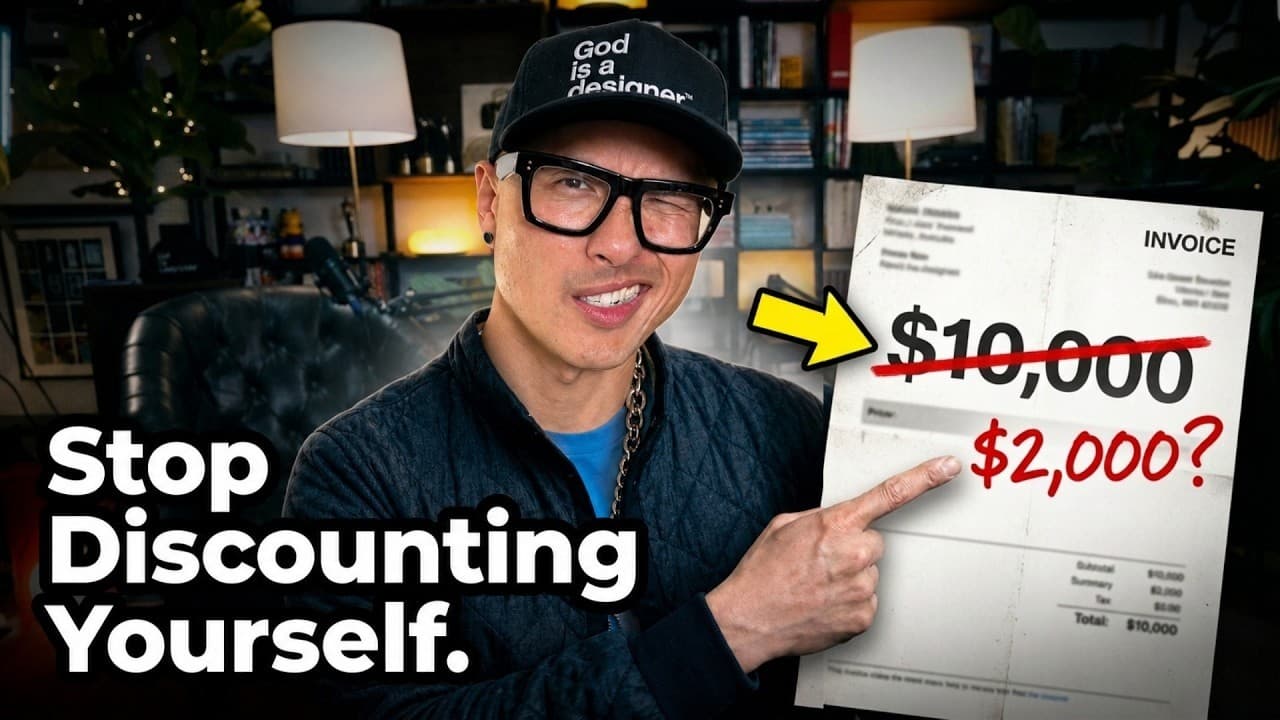
Treat negotiation as a two-way test of value and fit, not a chase for approval. When a client cannot meet your rate, state the gap clearly, invite creative funding options, and remain willing to walk away, while recognizing that repeated pressure can break rapport and make the other person feel unsafe.
Transcript
I never feel like I'm losing you cuz you're not the prize. I'm the prize. And I'm trying to get creative people to change their mind around this because otherwise the other person has an ally in the negotiation against us. >> Even though at the end of the conversation, you guys technically agreed to do this thing together. It did not feel like ther... Read More
Key Insights
- Negotiation is a two-way assessment of value and compatibility. The service provider is not required to chase approval or accept every condition, and the prospective client must also demonstrate that they recognize the provider’s value and can participate constructively in finding an agreement.
- A $1,000 ceiling cannot be treated as a small adjustment to a $15,000 speaking fee. Naming the distance directly helps both sides recognize that ordinary bargaining is unlikely to solve the problem and that a different event structure or funding source may be necessary.
- Creative compensation can come from sources beyond the client’s existing budget. The role play considers bulk book purchases, donor dinners, paid attendance, an annual fundraiser, and a dedicated GoFundMe campaign as possible mechanisms for financing the speaking engagement.
- Choice architecture works by giving the other party meaningful paths to either proceed or decline. The speaker invites the organizer to design a way to pay the rate or conclude that the engagement will not work, allowing a clear answer without automatically casting either side as the bad actor.
- A fundraising threshold can turn an uncertain negotiation into a defined experiment. The participants suggest raising money specifically for the engagement, establishing a minimum amount, refunding contributors if necessary, or directing the funds to the shelter when the speaking arrangement cannot proceed.
- Payment reflects how an organization values labor. When the organizer argues that resources should serve the animals, the speaker compares his compensation with the paid executive director and adoption fees, challenging the assumption that supporting a mission requires an outside professional to work without pay.
- Persistent negotiation can damage attunement even when it produces a tentative agreement. The organizer says her body is tensing, and an observer notes that repeatedly making her generate ideas places too much work on her and weakens the connection between the parties.
- Walking away is a legitimate response to a poor fit. The speaker says he likely would have left after the offer to buy two books, because business requires evidence that the client sees the value, while personal friendship can be considered separately from the commercial decision.
- More videos from this channel:
- More from this channel: The Futur
Install to Summarize YouTube Videos and Get Transcripts
Explore YouTube Video Summarizer or Get YouTube Transcript Extractor
Questions & Answers
Q: How do you respond to a client who offers far below your rate?
State your normal rate and acknowledge the size of the gap without pretending it is a minor difference. In the role play, the speaker contrasts a $15,000 fee with an offer that may reach $1,000. He then asks whether both parties can create a win-win arrangement through another funding source, while remaining prepared to accept that the engagement may not work.
Q: How can a nonprofit fund a speaker when its budget is too small?
The nonprofit can explore structures that generate money beyond its current operating budget. Options raised in the conversation include selling admission, featuring the speaker at an annual fundraising event, organizing a dedicated GoFundMe campaign, and purchasing more books. The parties can also decide beforehand what happens if fundraising misses the target, including refunds or directing proceeds to the shelter.
Q: What does a win-win negotiation mean in this role play?
A win-win arrangement allows the speaker to receive meaningful compensation while the nonprofit gains a useful talk, greater awareness, or additional funds for its mission. One proposal is to charge attendees so the money does not have to come directly from the organization. Another is to let a fundraising campaign support the shelter if the speaking threshold is not reached.
Q: Why should a negotiator avoid saying no too quickly?
Keeping the discussion open can give the other party an opportunity to invent a workable structure that was not obvious at the start. The speaker asks the organizer to become more creative and offers choices rather than closing the conversation himself. However, the role play also shows that this approach should stop when repeated requests create excessive pressure or weaken the relationship.
Q: When does choice architecture become counterproductive?
Choice architecture becomes counterproductive when the other person carries too much responsibility for generating solutions and begins to feel disconnected or unsafe. An observer says the first invitation to consider options remained attuned, but continued demands for more ideas caused a loss of connection. The organizer confirms this effect by describing bodily tension and discomfort after the exchange.
Q: How can you maintain self-worth during a negotiation?
Treat yourself and your work as valuable rather than acting as though the other party is the only prize. The speaker emphasizes that negotiation is a two-way street and that he is evaluating the client’s fit just as the client evaluates him. This mindset supports firm boundaries, reduces chasing, and makes walking away from an unreasonable arrangement a valid outcome.
Q: Why does the speaker compare his fee with the executive director’s pay?
The comparison challenges the claim that paying him would conflict with the nonprofit’s mission. The organizer accepts that the executive director deserves compensation because of the time and labor devoted to saving animals. The speaker uses that reasoning to ask whether his own preparation and labor also deserve payment, exposing an inconsistent expectation that an outside professional should contribute for free.
Q: When should you walk away from a low-paying opportunity?
Walking away makes sense when the financial gap remains extreme, the client does not appear to recognize the value offered, or the parties’ values seem misaligned. The speaker says he probably would have left after the proposal to purchase only two books. He distinguishes the business decision from friendship and focuses on whether the prospective client can support a fair working relationship.
Summary & Key Takeaways
-
A speaker normally charging $15,000 receives a nonprofit offer that may reach only $1,000. Rather than immediately accepting or rejecting it, the negotiators explore book purchases, donor events, a keynote at the annual fundraiser, audience admission fees, and a dedicated GoFundMe campaign as possible ways to close the financial gap.
-
The negotiation approach aims to let the potential client choose between finding a path to the full rate and deciding the arrangement cannot work. Clear acknowledgment of the large price gap reduces vague bartering, while creative funding can transform a low-budget request into a possible agreement that benefits the speaker and organization.
-
The role play also exposes the cost of pushing too hard. The organizer reports physical tension and discomfort, while observers identify a loss of attunement as she is repeatedly asked to generate solutions. Effective negotiation therefore requires boundaries and confidence, but also awareness of connection, workload, safety, and relational repair.
Read in Other Languages (beta)
Share This Summary 📚
Summarize YouTube Videos and Get Video Transcripts with 1-Click
Try YouTube Summary with ChatGPT & Claude or YouTube Transcript Generator
Explore More Summaries from The Futur 📚


Summarize YouTube Videos and Get Video Transcripts with 1-Click
Try YouTube Summary with ChatGPT & Claude or YouTube Transcript Generator