How Can Hypnosis Improve Health and Performance?
TL;DR
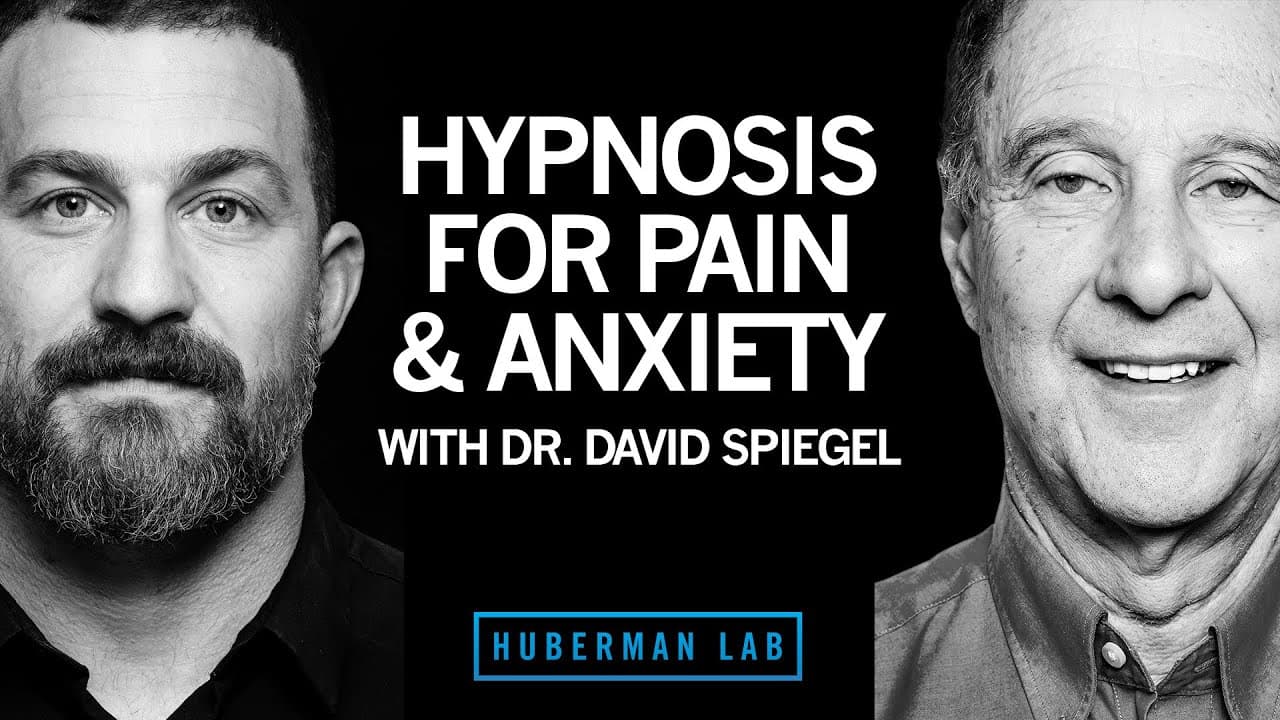
Hypnosis enhances neuroplasticity, allowing individuals to effectively alter their mental and physical states, benefiting conditions like stress, anxiety, and chronic pain. Unlike stage hypnosis, clinical hypnosis serves as a therapeutic tool in psychiatry. The degree of an individual's hypnotizability can be assessed through a simple test developed by Dr. David Spiegel.
Transcript
- Welcome to the Huberman Lab Podcast, [upbeat music] where we discuss science, and science based tools for everyday life. I'm Andrew Huberman, and I'm a professor of neurobiology and ophthalmology, at Stanford School of Medicine. Today, my guest is Dr. David Spiegel. Dr. Spiegel is the associate chair of psychiatry, and behavioral neurosciences, a... Read More
Key Insights
- 🧠 Hypnosis is a brain state in which neuroplasticity is heightened, allowing individuals to make adjustments in their brain and body.
- 🔨 Clinical hypnosis is different from stage hypnosis and is used as a therapeutic tool to improve symptoms of various mental and physical conditions.
- 👨🎨 Hypnosis can be used to treat stress, anxiety, chronic pain, trauma, and phobias.
- 🧠 The brain regions involved in hypnosis include the dorsal anterior cingulate cortex, dorsolateral prefrontal cortex, and posterior cingulate cortex.
- 🎙️ More videos with David Spiegel:
Install to Summarize YouTube Videos and Get Transcripts
Explore YouTube Video Summarizer or Get YouTube Transcript Extractor
Questions & Answers
Q: What is hypnosis, and how does it differ from stage hypnosis?
Hypnosis is a state of highly focused attention that allows individuals to change their brain state and use it as a portal to make adjustments in their brain and body. Stage hypnosis, on the other hand, is about hypnotists getting people to do things they would not otherwise do for entertainment purposes.
Q: How is hypnosis used to treat trauma and phobias?
Hypnosis can help individuals with trauma and phobias by dissociating from the traumatic experience or phobia and creating a new network of positive associations and experiences. It allows individuals to approach the problem from a different point of view and restructure their understanding of the traumatic event.
Q: Is hypnosis effective for long-term relief?
Hypnosis can provide long-term relief for various conditions. Studies have shown that the effects of hypnosis can be lasting, and individuals can learn self-hypnosis techniques to continue managing their symptoms independently.
Q: Can self-hypnosis be used to treat obsessive thoughts?
Self-hypnosis can be helpful for managing obsessive thoughts, but it may not be effective for individuals who are highly controlling of their thoughts. Some individuals may not be highly hypnotizable and may require professional guidance.
Summary & Key Takeaways
-
Hypnosis is a unique brain state that enhances neuroplasticity and allows individuals to make adjustments in their brain and body.
-
Clinical hypnosis is different from stage hypnosis and is focused on using hypnosis as a therapeutic tool for various ailments of the mind and body.
-
Hypnosis has been shown to improve symptoms of stress, chronic anxiety, chronic pain, and psychiatric illnesses.
-
Individuals can determine their degree of hypnotizability through a simple test developed by Dr. David Spiegel.
Read in Other Languages (beta)
Share This Summary 📚
Summarize YouTube Videos and Get Video Transcripts with 1-Click
Try YouTube Summary with ChatGPT & Claude or YouTube Transcript Generator
Explore More Summaries from Andrew Huberman 📚



Summarize YouTube Videos and Get Video Transcripts with 1-Click
Try YouTube Summary with ChatGPT & Claude or YouTube Transcript Generator