What Lives in the Deepest Parts of the Ocean?
TL;DR
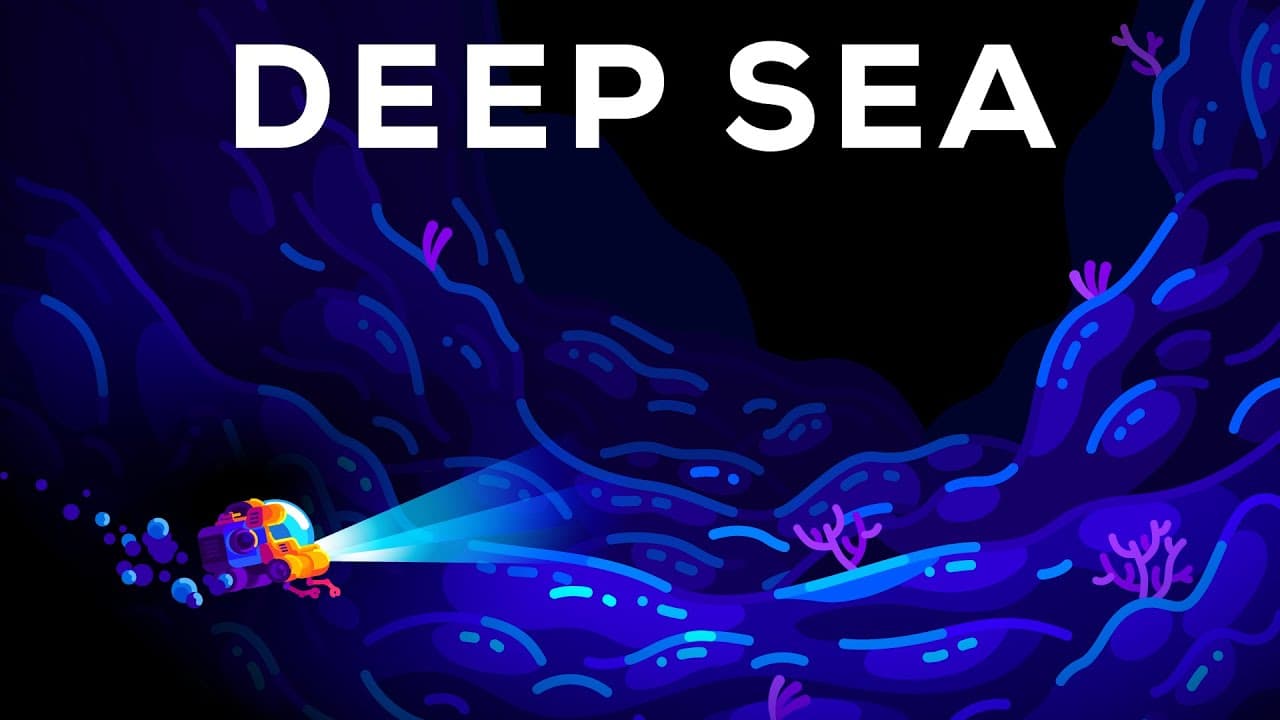
The deepest parts of the ocean, known as the hadal zone, host extremophiles like the ethereal snailfish that thrive under immense pressure. Despite the extreme darkness and nutrient scarcity, unique adaptations such as bioluminescence and reliance on marine snow enable life to persist. Even at the Challenger Deep, pollution has been found, highlighting the urgent need for ocean preservation.
Transcript
Sometimes the world feels...hmm, boring. We've visited all the remote islands, conquered the Arctic, and penetrated the deepest jungles. But there is still one place to explore. It's a wet and deadly desert inhabited by mysterious creatures living in total darkness. The deep sea. Let's dive down. [♫ Catchy Intro Jingle ♫] When we look at the sheer ... Read More
Key Insights
- 🤒 The majority of marine life resides in the top 200 meters of the ocean, where sunlight supports photosynthesis and diverse ecosystems.
- 🌊 Deep-sea creatures rely on adaptations like bioluminescence, teamwork, and energy-efficient feeding mechanisms to thrive in the darkness of the ocean depths.
- 🤢 Marine snow plays a vital role in the deep-sea ecosystem, providing essential nutrients for survival in the nutrient-poor environment.
- 🌊 Deep-sea predators like the viperfish and frilled shark have evolved specialized teeth for capturing and consuming prey in the darkness of the ocean depths.
- 🛟 Extremophiles inhabit the hadal zone, the deepest part of the ocean, showcasing the resilience of life in extreme environments.
- 🥳 Plastic pollution has even reached the deepest parts of the ocean, highlighting the impact of human activity on marine ecosystems.
- 🌊 The oceans hold vast unexplored mysteries and wondrous creatures, underscoring the need for preservation and exploration of deep-sea environments.
Install to Summarize YouTube Videos and Get Transcripts
Explore YouTube Video Summarizer or Get YouTube Transcript Extractor
Questions & Answers
Q: What percentage of biomass lives in the Earth's oceans?
Less than 2% of all biomass on Earth lives in the oceans, with around 90% of marine life located close to the surface in the top 200 meters.
Q: How do deep sea creatures adapt to the darkness in the ocean depths?
Deep sea creatures use bioluminescence to create light for camouflage, to attract mates, or to hunt, showcasing unique survival strategies in the dark environment.
Q: How do deep-sea predators like the viperfish and frilled shark catch their prey?
Deep-sea predators have evolved with long and deadly teeth to trap and consume prey, showcasing adaptations for hunting in the low-light conditions of the deep sea.
Q: What is the significance of marine snow in the deep sea ecosystem?
Marine snow consists of dead plant or animal matter that sinks from the surface to the ocean floor, providing a crucial food source for deep-sea creatures to survive in the harsh environment.
Summary & Key Takeaways
-
The oceans contain a vast ecosystem, with most life concentrated in the top 200 meters where sunlight reaches, supporting a diverse range of sea creatures.
-
As we delve deeper into the ocean, the environment transitions into darkness, with unique adaptations like bioluminescence and reliance on marine snow for survival.
-
At the deepest point, the Challenger Deep, life still thrives, showcasing the resilience of creatures in the most extreme conditions.
Read in Other Languages (beta)
Share This Summary 📚
Summarize YouTube Videos and Get Video Transcripts with 1-Click
Try YouTube Summary with ChatGPT & Claude or YouTube Transcript Generator
Explore More Summaries from Kurzgesagt – In a Nutshell 📚



Summarize YouTube Videos and Get Video Transcripts with 1-Click
Try YouTube Summary with ChatGPT & Claude or YouTube Transcript Generator