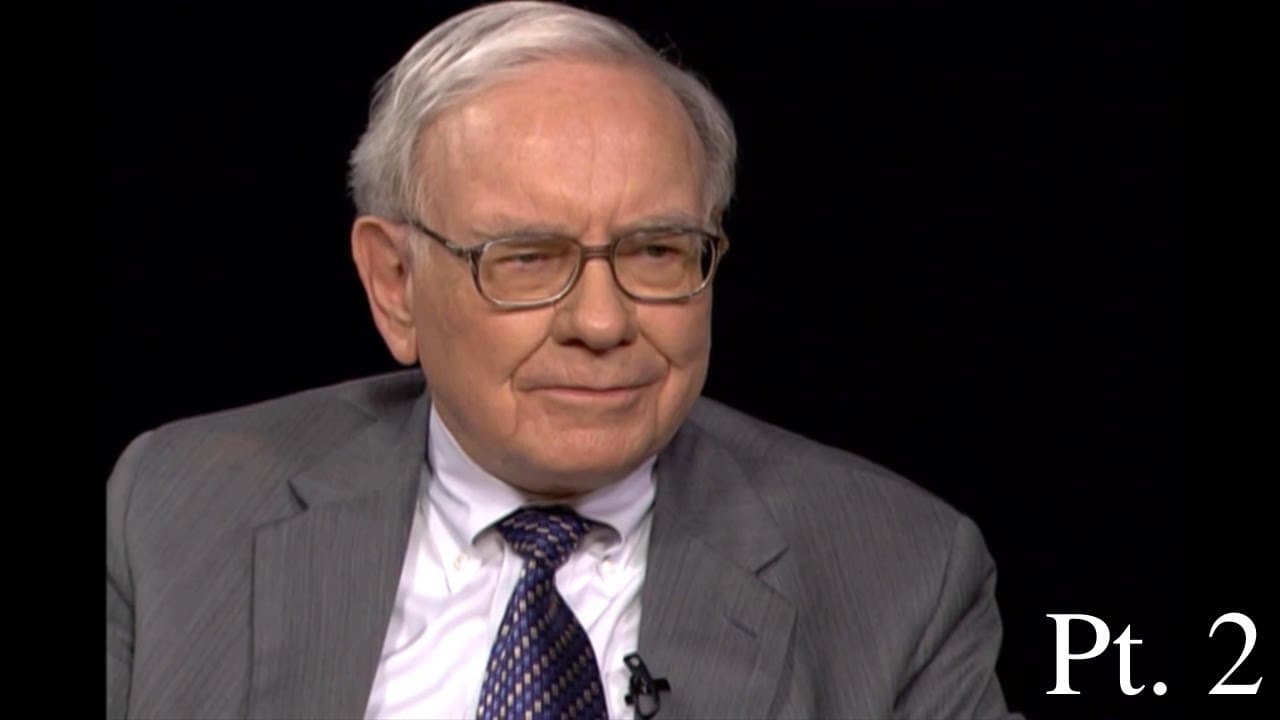
Warren Buffett | Charlie Rose | Pt. 2 | July 11, 2006
TL;DR
Berkshire Hathaway grew by moving beyond a struggling textile operation and using insurance-generated funds to invest in securities and acquire entire businesses. Warren Buffett credits disciplined capital allocation, capable directors, and Charlie Munger’s judgment, while acknowledging that early success in textiles reflected favorable industry conditions rather than his own expertise.
Transcript
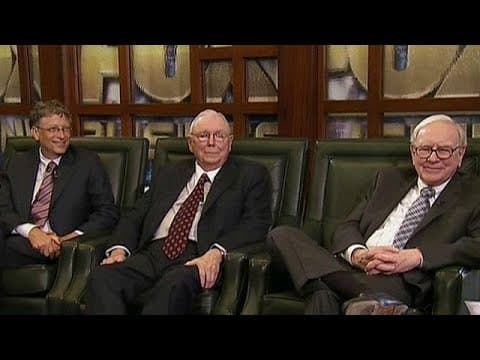
this is the berkshire hathaway annual meeting 20 000 people come from all over the world to omaha nebraska for a weekend of fun shopping and to see their hero in person is [Applause] they even get to see a movie about him it all began with a key strategic alliance a merger 100 years ago between microsoft walmart and starbucks micro wall box however... Read More
Key Insights
- Berkshire Hathaway’s annual meeting is built around unfiltered shareholder questions. Buffett says this approach lets management discover what owners genuinely want to discuss, rather than limiting the conversation to subjects emphasized by the press or selected in advance.
- Berkshire’s board is composed of substantial owners whose compensation for serving is minor compared with their investments. Buffett values their business judgment, character, and willingness to protect the company’s long-term interests more than compliance with standardized governance checklists.
- Director independence requires a willingness to leave the position when necessary. Buffett and Munger argue that people who depend heavily on board compensation may struggle to challenge management, while directors with strong identities and careers outside the boardroom can make tougher decisions.
- Charlie Munger is Buffett’s trusted partner because he understands both Buffett and Berkshire. Although Munger has other interests and does not spend every day focused on the company, Buffett says he is available for important questions, responds quickly, and is usually right.
- Buffett’s investment partnership began without a sweeping ambition to create Berkshire Hathaway. Family members asked him to manage their investments collectively, and the arrangement expanded after other investors heard about his work through professional relationships and a public legal notice.
- Temporary industry strength can disguise weak management understanding. Buffett compares his early textile success to a duck rising on a pond during rain, showing that favorable conditions lifted the business even though he initially credited his own effort and supposed expertise.
- Insurance supports investment growth by providing money that can be invested when underwriting is performed competently. Buffett says Berkshire used insurance-generated funds both to purchase marketable securities and to acquire businesses outright, making insurance a major force behind the company’s expansion.
- Berkshire’s textile operation was a long-term financial drag despite appearing cheap when purchased. Buffett realized the underlying business was poor and began adding other operations, later observing that acquiring those businesses outside Berkshire could have produced a better purely financial result.
Install to Summarize YouTube Videos and Get Transcripts
Explore YouTube Video Summarizer or Get YouTube Transcript Extractor
Questions & Answers
Q: How did Warren Buffett begin managing an investment partnership?
Buffett says he returned to Omaha after working with Ben Graham without a detailed plan for his career. Several family members asked him to manage their investments, and he combined their funds into a partnership because he did not want to handle each account separately or repeatedly explain individual decisions. Other investors later joined after hearing about him through Graham, acquaintances, and a public legal notice.
Q: Why did Warren Buffett buy Berkshire Hathaway stock?
Buffett’s partnership was purchasing stocks that appeared cheap, and Berkshire Hathaway fit that approach. He initially believed he could understand and improve the textile operation, but he soon recognized that it was a poor business. A short period of favorable textile conditions made his early results look better, yet the improvement came from the industry environment rather than superior operating expertise.
Q: Why was Berkshire Hathaway’s textile business a mistake?
The textile operation was a poor business that continued to burden Berkshire financially. Buffett admits that he initially thought he had useful textile expertise, then discovered that favorable market conditions had temporarily lifted the company. He did not immediately leave the business, but he redirected available resources toward adding other operations. In retrospect, he says the textile business remained a drag while Berkshire’s other investments prospered.
Q: Why was the insurance business attractive to Berkshire Hathaway?
Insurance was attractive because it controlled money that Berkshire could invest, provided the insurance operation maintained competent underwriting. Buffett explains that these funds gave Berkshire the capacity to buy marketable securities and acquire entire businesses. Insurance therefore did more than contribute operating revenue. It supplied investable resources that propelled Berkshire’s growth and supported its expansion beyond the weak textile operation.
Q: What does Warren Buffett value in corporate directors?
Buffett values directors who are meaningful owners, possess strong business judgment, demonstrate personal quality, and can make decisions independently. He considers willingness to leave a board position especially important because a director who needs the compensation may hesitate to oppose management. Berkshire’s directors have investments that matter far more to them than their board pay, aligning their interests with the company’s owners.
Q: Why does Warren Buffett criticize corporate governance checklists?
Buffett argues that governance checklists can miss the qualities that make a board genuinely effective. Measures involving formal independence or prescribed composition may not reveal whether directors are smart, honest, invested alongside shareholders, or willing to challenge questionable decisions. He prefers a board selected for ownership, business ability, and character, especially because those directors would oversee Berkshire’s future after his death.
Q: How does Charlie Munger contribute to Berkshire Hathaway?
Munger serves as Buffett’s trusted source of judgment on important matters. Buffett says Munger understands him, understands Berkshire, and can quickly analyze difficult questions even though he lives elsewhere and maintains several other interests. Their partnership does not require constant daily collaboration. Its value comes from Munger being available when needed, offering clear answers, and consistently exercising judgment that Buffett considers correct.
Q: What makes Berkshire Hathaway’s annual meeting distinctive?
The annual meeting gives shareholders extended access to Buffett and Munger through unfiltered questions. Rather than assuming which issues matter most, they allow owners to shape the conversation, covering investments, governance, public policy, and company operations. Munger describes the gathering as an event without a close precedent among capitalist enterprises, one that developed unexpectedly into a large occasion enjoyed by shareholders.
Summary
This video is a compilation of interviews with Warren Buffett from various years. He discusses a wide range of topics, including his annual shareholders meeting, his views on various companies, his investments in Coca-Cola and Geico, and his approach to finding new investments.
Questions & Answers
Q: What do people most want to hear at the annual Berkshire Hathaway shareholders meeting?
Buffett mentions that people want to hear about governance issues, but ultimately he will be talking about what shareholders want to discuss. The meeting serves as a kind of weather vane to gauge shareholders' concerns.
Q: What is Warren Buffett's view on PetroChina?
Buffett commends PetroChina as having a smart and high-quality board of directors. He values their expertise and considers them the best board in the country. Buffett also expresses his trust in them as decision-makers to handle the management of his foundation after his passing.
Q: How does Warren Buffett evaluate the independence of board members?
Buffett believes that true independence goes beyond just receiving income from board memberships. He questions whether those who heavily rely on board fees can truly be independent in their decision-making. In his opinion, it is the quality and business acumen of board members that matter the most.
Q: What is the correct system for selecting corporate directors?
According to Buffett, the right criteria for selecting corporate directors is their willingness to make tough decisions and their readiness to leave the office at any time. He believes that true independence comes from having an identity outside of the corporate directorship and not being solely reliant on the government's salary or board fees.
Q: How does Warren Buffett feel about the deficit in Social Security?
Buffett finds it nonsensical that people worry about the deficit in Social Security 25 years from now when there is a much larger deficit in the present. He views it as putting unnecessary emphasis on a future problem while ignoring the current issues.
Q: Does Warren Buffett believe Republicans are in agreement about Social Security?
Buffett explains that within Berkshire Hathaway, the Republican chairman feels even more strongly than Buffett does that Republicans are making a mistake by focusing on the Social Security issue. He points out that even within the same party, there can be disagreement.
Q: How did Warren Buffett get started with Berkshire Hathaway?
Buffett initially wanted to continue managing his partnership, but due to market conditions, he realized he was better off incorporating his investments into a separate entity like Berkshire Hathaway. He stumbled onto this partnership through family members who wanted him to handle their investments.
Q: What was Warren Buffett's ambition when he returned to Omaha after working with Ben Graham?
When Buffett returned to Omaha, he didn't have a specific ambition in mind. He had a modest outlook, thinking that he could earn 10% on his $150,000 investment and live comfortably on the returns. He considered going to law school and was interested in reading and gaining knowledge.
Q: How did Warren Buffett's involvement with textiles shape his investment decisions?
Buffett initially believed he was a textile expert, but he quickly realized the limitations of the industry. He then shifted his focus to buying other businesses and diversifying his investments. He acknowledges that staying in the textile business for 20 years was a financial mistake and wishes he had focused on other opportunities sooner.
Q: Why did Warren Buffett buy The Washington Post in 1973?
Buffett bought shares of The Washington Post because he believed in the value of the company's assets. He saw the potential in the newspaper, newsweek, and the network television stations it owned, all of which he thought had significant value. He recognized the disconnect between the company's assets and its stock price, and he took advantage of the opportunity.
Q: What was Warren Buffett's reasoning behind buying Coca-Cola?
Buffett bought Coca-Cola shares because he believed the company had a durable competitive advantage and a strong management team. He recognized the potential for long-term growth and saw that Coca-Cola had a dominant position in the industry. He was not influenced by his views on the economy but rather focused on the qualities of the business.
Q: How does Warren Buffett approach finding new investments?
Buffett does not actively search for companies to invest in. He lets his interest be known but waits for companies to approach him when they are ready to sell. He looks for businesses that have consistent earnings, simple operations, and trustworthy management. He emphasizes the importance of understanding the business and seeking out enduring competitive advantages.
Summary & Key Takeaways
-
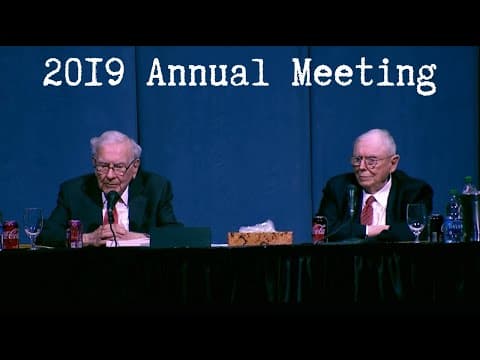
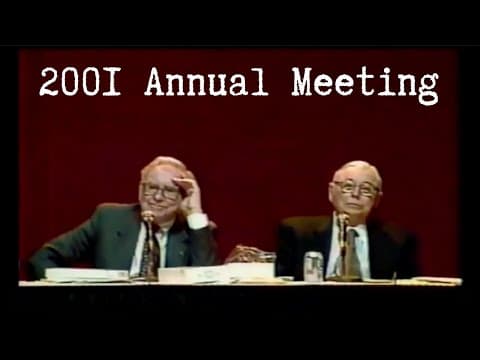
Buffett describes Berkshire Hathaway’s annual meeting as an unusually open shareholder event where he and Charlie Munger take unfiltered questions. The format reveals what shareholders actually care about, ranging from investments and governance to public policy, while humor and direct exchanges reinforce the distinctive culture surrounding Berkshire and its owners.
-
Buffett returned to Omaha after working with Ben Graham without a grand plan for building a conglomerate. A family investment partnership expanded when additional investors sought his management. The partnership bought apparently cheap stocks, including Berkshire Hathaway, but Buffett eventually recognized that its textile operation was a poor business despite temporary favorable conditions.
-
Berkshire’s growth accelerated after it acquired insurance operations. Buffett says insurance controls money that can be invested when underwriting is handled competently. Those funds supported purchases of marketable securities and entire businesses, allowing Berkshire to diversify beyond textiles, which remained a financial burden even as the broader enterprise ultimately prospered.
Read in Other Languages (beta)
Share This Summary 📚
Summarize YouTube Videos and Get Video Transcripts with 1-Click
Try YouTube Summary with ChatGPT & Claude or YouTube Transcript Generator
Explore More Summaries from Investor Archive 📚
Summarize YouTube Videos and Get Video Transcripts with 1-Click
Try YouTube Summary with ChatGPT & Claude or YouTube Transcript Generator