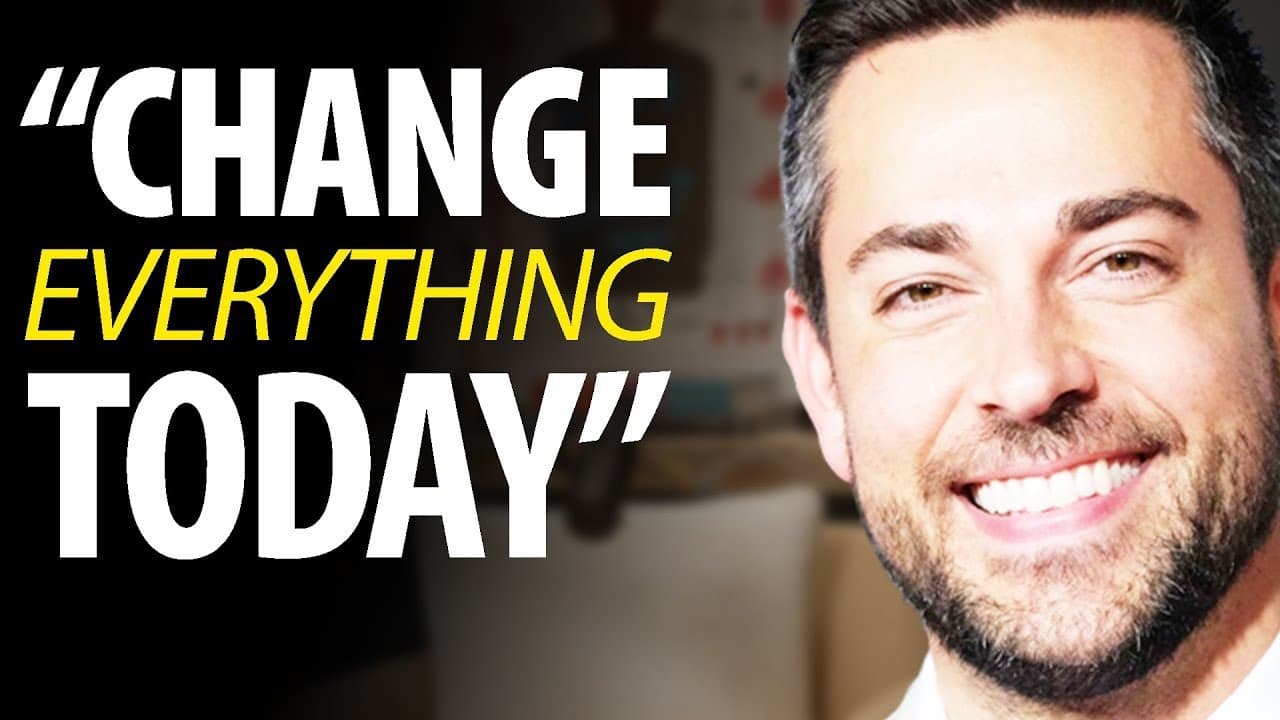
In Order To Change Your Life, YOU NEED TO LEARN THIS FIRST! | Zachary Levi & Jay Shetty
TL;DR
You can change your life by recognizing that your self-talk often echoes your parents, then replacing inherited patterns with self-acceptance, forgiveness, and radical love. Zachary Levi defines radical love as valuing people across political, racial, religious, and social divisions, even amid anger or disagreement, without excusing harmful conduct. Read on to explore how empathy, accountability, and honest discussion of painful experiences can support healthier responses.
Transcript
the majority of the way that you talk to yourself is the way your parents talk to you so if you don't first recognize that you're gonna have a really hard time understanding how to get out of whatever you're in now if you had great parents that were super patient and loving and kind and empathetic and didn't you know jump at you but held firm bound... Read More
Key Insights
- Adult self-talk is often shaped by parental language and behavior. Recognizing this connection helps explain why some people naturally possess patient, healthy inner dialogue while others struggle with criticism, shame, or emotional patterns inherited from childhood.
- Radical love is the practice of valuing people beyond warm feelings or agreement. It becomes most meaningful when directed toward someone who causes anger, holds opposing beliefs, or behaves in ways that are difficult to understand.
- Empathy is compatible with accountability. Understanding the abuse, deprivation, fear, or learned survival patterns behind harmful behavior can explain how that behavior developed without denying its consequences or declaring the behavior acceptable.
- Self-forgiveness begins with recognizing personal conditioning. People are products of their parenting and wider environments, and they generally act using the emotional and practical tools available to them at that stage of life.
- Social division grows when disagreement becomes proof that another person is evil or irredeemably broken. Radical love offers a different response by challenging harmful ideas while continuing to recognize the person holding them as human.
- Healing starts with speaking about painful experiences. When the past remains entangled with the present, discussing the underlying problem can expose how trauma continues to limit a person mentally, socially, and emotionally.
- Every person can be viewed as a unique and improbable life. This perspective does not require a particular spiritual belief, because the rarity and uniqueness of human existence can support a sense of value and responsibility.
- Redemption requires refusing to reduce a person to their worst action. Even when consequences are justified, recognizing the wounded child and environmental influences within an offender preserves the possibility of inner change without minimizing the harm caused.
Install to Summarize YouTube Videos and Get Transcripts
Explore YouTube Video Summarizer or Get YouTube Transcript Extractor
Questions & Answers
Q: How can changing your self-talk help change your life?
Much of the way you talk to yourself may reflect how your parents talked to you. Recognizing that origin can help you understand your current struggles and begin replacing inherited criticism, fear, or shame with healthier, more deliberate responses.
Q: What does Zachary Levi mean by radical love?
Zachary Levi describes radical love as recognizing the value of another human being regardless of warm feelings, agreement, or shared identity. It means extending love even toward people who provoke anger, disagree with you, or treat you as an enemy.
Q: How do parents shape a person’s inner voice?
Patient, loving, kind, and empathetic parenting with firm boundaries can contribute to healthy self-talk. Other childhood environments can leave people with critical or harmful inner patterns that remain difficult to understand until their origins are recognized.
Q: Why is accepting your conditioning important for self-forgiveness?
People are shaped by their parenting and wider environments, so their struggles are not simply personal failures. Levi says self-forgiveness requires recognizing that people generally do the best they can with the tools available to them at that point in their lives.
Q: Can radical love include disagreement and accountability?
Yes. A person can strongly challenge a belief or action as harmful while continuing to recognize the humanity of the person behind it. Understanding how parenting, environment, or painful experiences shaped someone does not excuse harmful conduct or erase its consequences.
Q: How can people love someone with opposing political or social beliefs?
They can separate disagreement with a position from condemnation of the person holding it. Radical love allows someone to say that another person’s views are problematic while refusing to label that person as inherently evil or irredeemably broken.
Q: Why is talking about painful experiences important for healing?
Discussing painful experiences helps reveal how the past remains connected to present thoughts, emotions, and reactions. Honest examination can expose inherited beliefs and survival patterns, creating room for understanding, forgiveness, and healthier choices.
Q: Why should a person not be reduced to their worst action?
Reducing someone to a harmful act ignores the parenting, environment, wounds, and limited tools that may have influenced the behavior. Radical love preserves accountability while still viewing that person as human and capable of inner change.
Summary
In this video, Jay Shetty interviews actor Zachary Levi about his new book "Radical Love: Learning to Accept Yourself and Others". They discuss the concept of radical love, recognizing the role of parents in developing self-talk, the importance of empathy and understanding, and the journey towards self-acceptance. Zach emphasizes the need to acknowledge personal struggles, seek professional help, and engage in honest conversations to foster healing and growth.
Questions & Answers
Q: What is radical love, and why is it a radical concept?
In Zach's perspective, love itself is radical when it is practiced authentically and empathetically. He believes that true love goes beyond warm feelings and encompasses recognizing the divinity in others, even those with different beliefs or backgrounds.
Q: How does self-talk and the way our parents talk to us affect our ability to love ourselves?
Zach explains that the majority of our self-talk is influenced by how our parents spoke to us. If we had loving and patient parents with healthy boundaries, our self-talk is likely to be positive. However, if our parents' communication was negative or critical, our self-talk may mirror that. Recognizing this dynamic is crucial to understanding ourselves and developing healthy self-love.
Q: Why is it important to recognize that everyone is a product of their environment?
Zach emphasizes the significance of empathy and understanding. By acknowledging that every individual is influenced by their upbringing and experiences, we can approach others with compassion and love. It is not about excusing harmful actions, but about seeking to understand the underlying factors that contribute to them.
Q: How can we apply radical love on a personal and global scale?
Zach believes that radical love starts with accepting ourselves. By recognizing our struggles and seeking professional help, we can embark on a journey of self-discovery and healing. On a broader scale, radical love involves seeing the humanity in others, even those with differing opinions or who have committed harmful acts. It emphasizes the importance of accountability, change, and redemption.
Q: How can we find our worth and identity without running from pain or seeking external validation?
Zach shares his personal experience of constantly seeking validation and running from pain. He suggests the first step is recognizing the issue and talking about it with trusted individuals. Seeking professional therapy can provide guidance and support in the healing process. Ultimately, finding worth and identity comes from understanding that we are all miracles simply by existing.
Q: What is the significance of acknowledging our struggles and seeking professional help?
Zach stresses the importance of acknowledging personal struggles and seeking professional therapy. Discussing challenges with a licensed therapist provides an opportunity to explore the root causes of our struggles and develop healthier coping mechanisms. Talking allows us to gain insights and guidance tailored to our specific experiences and traumas.
Q: How can we bring empathy into our relationships and help others shift their behavior?
Zach highlights the need to empathize with others and understand the factors that contributed to their behavior. Instead of vilifying or dehumanizing individuals, approaching them with love and grace can facilitate the change and redemption process. He also emphasizes the value of patience and connection in helping others transform their actions.
Q: How can we balance holding others accountable while still practicing radical love?
Zach explains that radical love involves separating the action from the individual. It is possible to hold others accountable without resorting to hatred or condemnation. By recognizing the potential for change and understanding the underlying reasons for someone's actions, we can approach them with love, while still emphasizing the need for accountability.
Q: As we embark on the journey of radical love, what steps can we take to ensure our approach is authentic?
Zach emphasizes the importance of authenticity. Inauthentic love or pretending to practice radical love can be detrimental. Being honest with ourselves and acknowledging our struggles is crucial. Seeking professional help, engaging in open conversations, and embracing vulnerability can help ensure that our approach to radical love is genuine.
Q: How can we overcome the fear and shame associated with seeking help and addressing our struggles?
Zach reassures that everyone faces struggles, stress, anxiety, and depression in some form. Breaking the stigma surrounding mental health is essential. Recognizing that seeking help is a sign of strength and courage can help overcome fear and shame. Opening up to trusted friends, family, and professionals allows us to share our burdens and find the support we need.
Takeaways
Radical love, as explained by Zachary Levi, is a transformative concept that encompasses empathetic and authentic love. It involves recognizing the humanity and divinity in oneself and others. By acknowledging our struggles, seeking professional help, engaging in open conversations, and embracing vulnerability, we can embark on a journey of self-acceptance and foster healing and growth. This radical love can extend beyond personal boundaries, enabling us to approach relationships with empathy, understanding, and accountability. Ultimately, practicing radical love can lead to a more compassionate and connected world.
Summary & Key Takeaways
-
Radical love means recognizing the humanity and value of people even when their beliefs or actions provoke disagreement or anger. It asks people to accept, forgive, and love across political, racial, religious, and social divisions. This empathy does not excuse harmful conduct, but seeks to understand how a person became capable of it.
-
Childhood experiences shape adult self-talk, emotional patterns, and perspectives. People raised by patient, loving, empathetic parents with firm boundaries may develop healthier inner dialogue. Those raised differently can struggle without understanding why. Recognizing that inherited conditioning is not their fault creates a foundation for self-forgiveness, healing, and deliberate personal change.
-
Healing begins when people stop running from painful experiences and talk honestly about the underlying problem. Understanding personal history helps separate explanation from excuse and reveals the tools a person had at a particular moment. By seeing themselves and others as unique human lives, people can replace condemnation with accountability, empathy, and hope.
Read in Other Languages (beta)
Share This Summary 📚
Summarize YouTube Videos and Get Video Transcripts with 1-Click
Try YouTube Summary with ChatGPT & Claude or YouTube Transcript Generator
Explore More Summaries from Celebrities 📚




Summarize YouTube Videos and Get Video Transcripts with 1-Click
Try YouTube Summary with ChatGPT & Claude or YouTube Transcript Generator