How Are Tariffs Reshaping Global Trade?
TL;DR
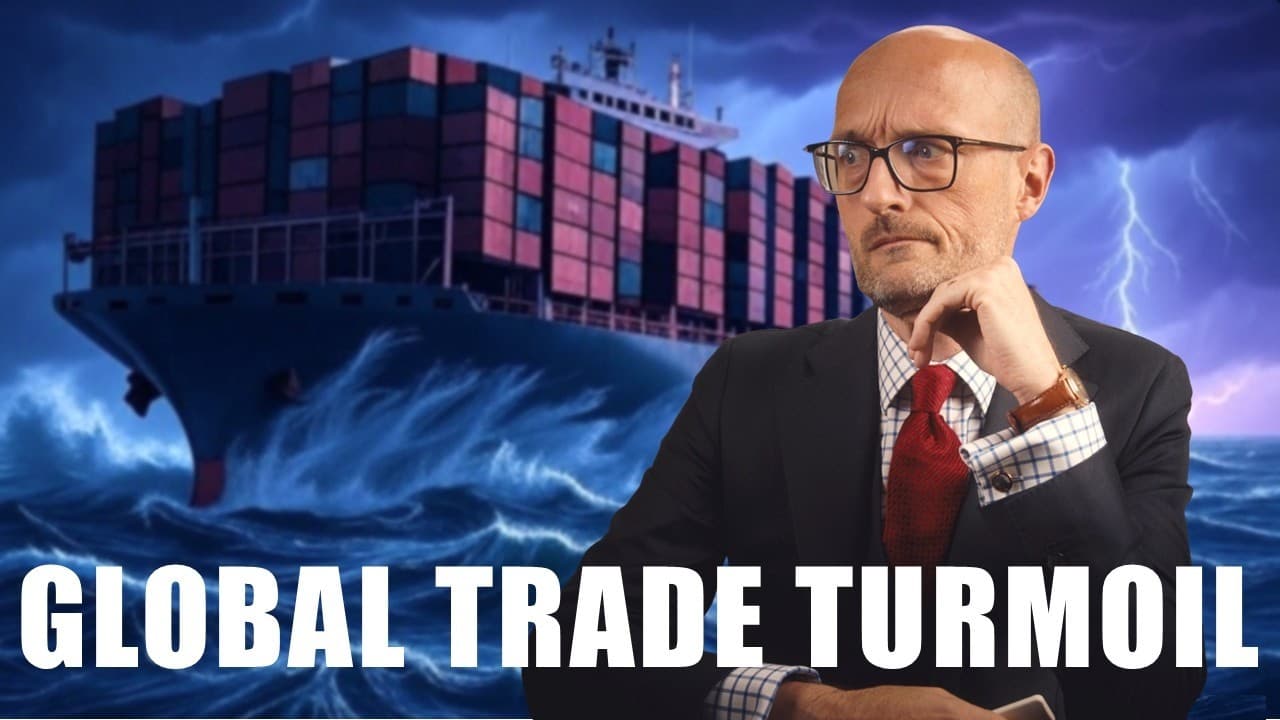
U.S. tariffs are reshaping global trade by combining import taxes with strategic pressure over supply chains, particularly those connected to China. New duties range from 10% to 50%, while the U.S.-UK deal retains a 10% tariff on most British imports and ties some relief to supply-chain security. Consumers, companies, and trading partners must now navigate higher costs and geopolitical conditions. Read on for the specific rates, agreements, and responses.
Transcript
Markets were on edge this week as Donald Trump’s August 1st deadline for trade negotiations on US tariffs finally ran out. Trump has already announced tariffs on goods imported from many of America’s largest trading partners, as trade negotiators rushed to strike last-minute deals or extensions before time ran out. The deadline came more than 12... Read More
Key Insights
- U.S. tariff policy is increasingly serving geopolitical objectives as well as industrial protection. Conditions attached to tariff relief can reward countries that satisfy American supply-chain security demands and potentially penalize businesses or governments maintaining significant economic connections with China.
- The August 1 deadline produced duties ranging from 10% to 50% for affected imports, alongside additional industry-specific tariffs. Taiwan received a 20% rate, Canada 35%, India 25%, and Switzerland 39%, while higher tariffs on Mexico were delayed by 90 days.
- American consumers face an estimated effective tariff rate of 18.2%, the highest since 1934, according to Yale University’s Budget Lab. Its analysis projected $2,400 in additional 2025 costs for the average household, before later announcements concerning India and Mexico.
- The U.S.-UK agreement preserves a 10% tariff on most British goods rather than restoring tariff-free trade. British cars receive the 10% rate only for the first 100,000 vehicles annually, while additional vehicles face a 25% tariff that discourages sales growth.
- Supply-chain security conditions are a central source of Chinese concern about the U.S.-UK deal. Tariff relief for steel and cars requires the UK to meet American demands concerning steel and aluminum supply chains, potentially limiting Chinese participation in British firms exporting to America.
- China’s response combines greater self-sufficiency with continued international engagement. Beijing is removing foreign components from domestic supply chains, supporting domestic consumption and technology through dual circulation, and pursuing trade and investment relationships in Southeast Asia, the Global South, and BRICS.
- The EU accepted a 15% tariff on roughly 70% of its U.S.-bound exports while promising $750 billion in American energy purchases and $600 billion in U.S. industrial investment. It also accepted quotas on steel and aluminum, with excess volumes facing 50% tariffs.
- European negotiating weakness is linked to fragmented interests and institutional reluctance to retaliate. France resisted agricultural concessions, Germany prioritized its car industry, and Eastern European states emphasized American security guarantees, leaving Brussels unwilling to press its economic leverage against Washington.
Install to Summarize YouTube Videos and Get Transcripts
Explore YouTube Video Summarizer or Get YouTube Transcript Extractor
Questions & Answers
Q: How are U.S. tariffs reshaping global trade?
U.S. tariffs now combine import taxes with conditions that influence trading partners’ supply chains and relationships with China. The U.S.-UK agreement ties relief for steel and cars to American supply-chain security demands, while new duties on countries without agreements range from 10% to 50%. This approach is increasing costs and making market access more dependent on U.S. strategic priorities.
Q: What tariffs followed the August 1 trade deadline?
U.S. Customs and Border Protection began charging new duties ranging from 10% to 50%, with additional tariffs on industries such as pharmaceutical products, copper, steel, and aluminum for most countries. Taiwan received a 20% tariff, Canada 35%, India 25%, and Switzerland 39%. Higher tariffs on Mexico were delayed by 90 days.
Q: How much could the tariffs cost U.S. households?
Yale University’s Budget Lab estimated an effective U.S. tariff rate of 18.2%, the highest since 1934. It projected that the average household would face $2,400 in additional costs during 2025. That analysis preceded the additional tariff announcement for India and the delay involving Mexico.
Q: How many trade deals were completed before the deadline?
The administration completed eight deals in 120 days, including one with the 27-member European Union. That was far below Trump’s earlier claim of having done more than 200 deals and trade adviser Peter Navarro’s suggestion that 90 deals in 90 days was possible.
Q: What are the main terms of the U.S.-UK trade deal?
The agreement keeps a 10% tariff on most goods imported from the UK. British cars receive that rate for the first 100,000 vehicles imported annually, approximately the existing sales volume, while vehicles above the quota face a 25% tariff. Relief for cars, steel, and aluminum also includes supply-chain security conditions.
Q: Why did China object to the U.S.-UK trade agreement?
China was concerned that the deal’s supply-chain security conditions could exclude Chinese suppliers from British firms selling steel, aluminum products, or cars to the United States. China’s Foreign Ministry said agreements between countries should not target other nations. The British government denied that the deal gave the United States a veto over Chinese investment.
Q: How do the UK car tariffs limit sales growth?
The 10% tariff applies only to the first 100,000 British cars imported into the United States each year. That quota is approximately equal to the number Americans already buy from Britain. Every vehicle above it faces a 25% tariff, discouraging an increase in sales.
Q: Why was the U.S.-EU trade agreement considered one-sided?
The EU accepted a 15% tariff on roughly 70% of its exports to the United States and pledged $750 billion in American energy purchases plus $600 billion in U.S. industrial investment. It also accepted steel and aluminum quotas, with excess volumes facing 50% tariffs, while imposing no tariffs on American goods. Fragmented national interests and security concerns weakened the EU’s willingness to confront Washington.
Summary & Key Takeaways
-
The Trump administration imposed duties ranging from 10% to 50% after its August 1 deadline, while granting selected extensions and negotiating separate terms with major partners. Yale University’s Budget Lab estimated an effective U.S. tariff rate of 18.2%, potentially adding $2,400 to an average household’s 2025 costs.
-
The U.S.-UK agreement retained a 10% tariff on most British imports and offered limited relief for cars, steel, and aluminum. Its supply-chain security conditions raised Chinese concerns that U.S. trade agreements could exclude Chinese suppliers from industries serving the American market, despite the British government denying any veto on Chinese investment.
-
The EU accepted a 15% tariff on roughly 70% of its exports, pledged major U.S. energy purchases and investments, and imposed no tariffs on American goods. The account attributes this asymmetry to the EU’s free-trade philosophy, fragmented decision-making, competing national interests, and security concerns that limited its willingness to confront Washington.
Read in Other Languages (beta)
Share This Summary 📚
Summarize YouTube Videos and Get Video Transcripts with 1-Click
Try YouTube Summary with ChatGPT & Claude or YouTube Transcript Generator
Explore More Summaries from Patrick Boyle 📚






Summarize YouTube Videos and Get Video Transcripts with 1-Click
Try YouTube Summary with ChatGPT & Claude or YouTube Transcript Generator