How to use AI as a coding collaborator effectively
TL;DR
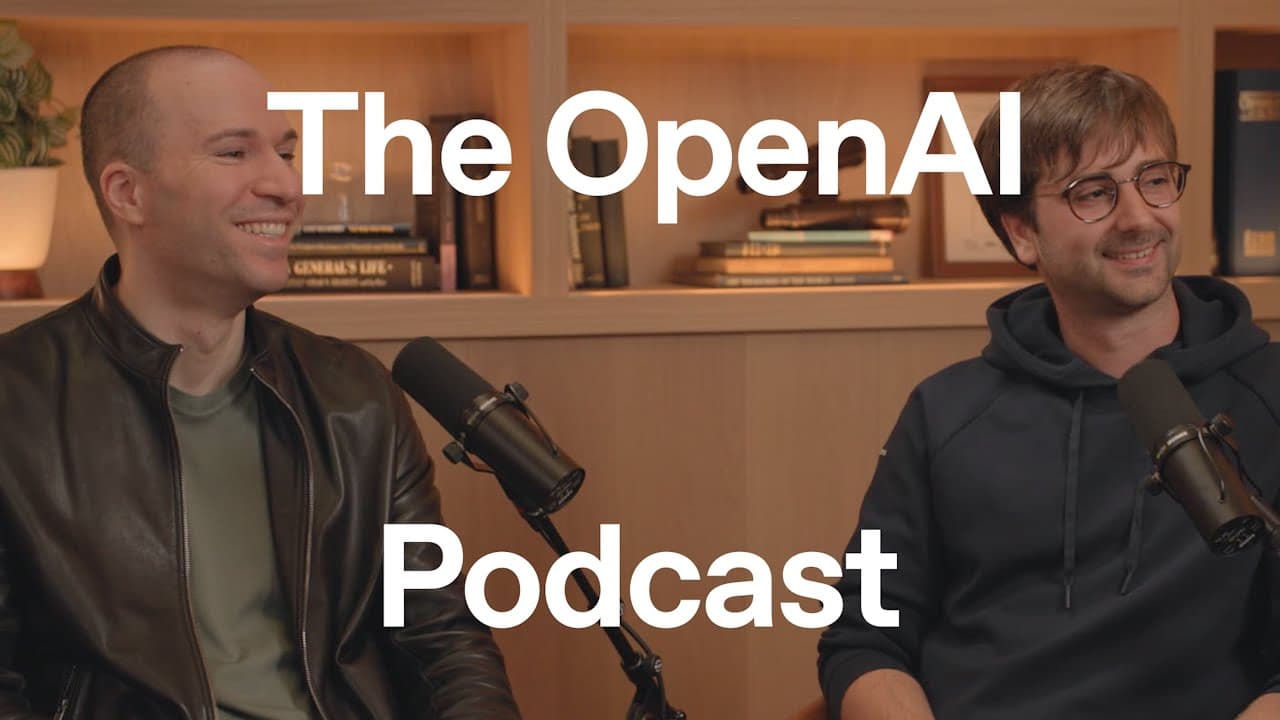
AI acts as a long running coding partner through harnesses and agentic workflows, enabling hours long refactorings and complex tasks. The conversation covers how Codex evolved from GPT-3 to GPT-5 Codex, why a harness and interfaces matter, and how tools like CLI and IDE plugins enable practical coding with AI.
Transcript
Andrew Mayne: Hello, I'm Andrew Mayne, and this is the OpenAI Podcast. In this episode, we're going to speak Andrew Mayne: with OpenAI co-founder and president, Greg Brockman, and Codex engineering lead, Thibault Sottiaux. And we're going to talk about Agenda coding, GPT-5 codex, and where things might be heading in 2030. Greg Brockman: Just bet th... Read More
Key Insights
- AI can act as a long running coding collaborator through a harness that connects the model to tools and environments, enabling complex tasks. This harness makes the model useful beyond simple completions and is essential for agentic coding.
- A harness is the interface between the AI model and its environment, allowing input, output, and tool execution to form an integrated agent loop. This combination is how AI can execute code and perform actions on behalf of a developer.
- Latency and interface design are both product decisions. The most capable model may be slowed by latency, so optimizing the harness and workflow is as important as model accuracy.
- Codex and GPT-4 were trained with a focus on code metrics and diverse environments. The goal was to improve real world coding performance, not just benchmark scores, by aligning model behavior with developer needs.
- Tooling and modalities matter. CLI, IDE plugins, and web deployments expand how developers interact with AI, making it practical to use AI across different parts of the workflow.
- The first generation of AI coding showed the need for a subtler interface than simple completions. A successful system supports context, orchestration, and feedback loops that keep the AI aligned with user intent.
- Latency constraints became a product feature after Copilot demonstrated the importance of responsiveness. The right balance between model power and harness efficiency drives user adoption.
- Future AI coding emphasizes safety and alignment, with a focus on controlling agents, ensuring correct outputs, and aligning with human goals, while also expanding enterprise grade use cases and long term compute considerations.
- More videos from this channel:
- More from this channel: OpenAI
Install to Summarize YouTube Videos and Get Transcripts
Explore YouTube Video Summarizer or Get YouTube Transcript Extractor
Questions & Answers
Q: What is a harness in AI coding and why does it matter?
A harness in AI coding is the set of tools, interfaces, and pipelines that connect the model to real world environments so it can act on its output. It enables the model to execute code, access files, run commands, and interact with external systems, creating an agent like loop rather than a passive text generator. This makes AI capable of performing ongoing tasks, solving problems, and collaborating with humans in practical software projects.
Q: How did GitHub Copilot influence later AI coding systems?
GitHub Copilot introduced the idea of an AI in the middle of a developer’s workflow and highlighted the importance of latency as a product feature. It showed that speed mattered as much as intelligence, driving decisions to optimize interfaces and harnesses so the AI could provide timely, contextually relevant code suggestions. Those lessons shaped later generations of Codex and GPT-5 based workflows.
Q: Why is latency considered a product feature for AI coding tools?
Latency determines how quickly a completion or action appears in the editor, which affects developer concentration and productivity. If responses are slow, users disengage regardless of model quality. Therefore teams optimize the harness, pipelines, and interface to balance speed and capability, ensuring the AI feels responsive and useful within a developer’s workflow.
Q: What role do terminals, IDEs, and async agents play in AI coding?
Terminals, IDEs, and async agents provide practical entry points for developers to interact with AI coding capabilities. They enable real time or near real time collaboration, support context sharing, and allow the AI to perform actions in a familiar environment. This multi modality approach accelerates adoption and expands the AI’s usefulness across tools developers already rely on.
Q: How does the concept of agentic software engineers relate to future software development?
Agentic software engineers refer to AI systems that operate as collaborative agents, capable of executing tasks, proposing changes, and learning from feedback in the software development lifecycle. This concept anticipates a future where AI handles complex refactoring, code review, and orchestration tasks, while humans guide goals, safety, and strategic decisions.
Q: What is GPT-5 Codex and how does it differ from earlier versions?
GPT-5 Codex represents a progression from earlier code focused models to improved capabilities that can run for hours on complex tasks like refactoring and large scale changes. It emphasizes sustained collaboration, better harness integration, and longer running sessions, expanding the range of tasks AI can handle within software projects.
Q: What safety concerns are discussed regarding autonomous coding agents?
Safety concerns center on aligning agents with human intent, preventing harmful or incorrect outputs, and ensuring proper oversight of automated actions. The discussion highlights the need for monitoring, governance, and safeguards when using long running AI agents to perform coding tasks, as well as the importance of testing and validation.
Q: What is the vision for coding and compute by 2030 according to the podcast?
The speakers discuss a future where AI aided coding and compute evolve significantly, with agents capable of sustained collaboration on complex tasks. They emphasize the need for responsible deployment, alignment with human goals, and continued learning, while recognizing that advances should be balanced with safety and practical enterprise use cases.
Summary & Key Takeaways
-
Codex evolved from early code writing to sustained, agentic coding with GPT-5 and advanced harnessing that lets AI run long tasks. The discussion explains why integrating AI with tools and environments is essential for practical coding. It also explores future directions like safety, alignment, and enterprise use cases.
-
The speakers emphasize latency, interface design, and the harness as a critical part of making AI coding useful in real workflows. They describe how GitHub Copilot lessons shaped later systems and how terminals, IDEs, and async agents expand accessibility.
-
The episode closes with visions of 2030 and the importance of learning to code today, highlighting the ongoing balance between greater intelligence and responsible deployment, along with practical advice for developers looking to adopt AI aided coding.
Read in Other Languages (beta)
Share This Summary 📚
Summarize YouTube Videos and Get Video Transcripts with 1-Click
Try YouTube Summary with ChatGPT & Claude or YouTube Transcript Generator
Explore More Summaries from OpenAI 📚




Summarize YouTube Videos and Get Video Transcripts with 1-Click
Try YouTube Summary with ChatGPT & Claude or YouTube Transcript Generator