Can Trump Follow Gag Order in Hush Money Trial?
TL;DR
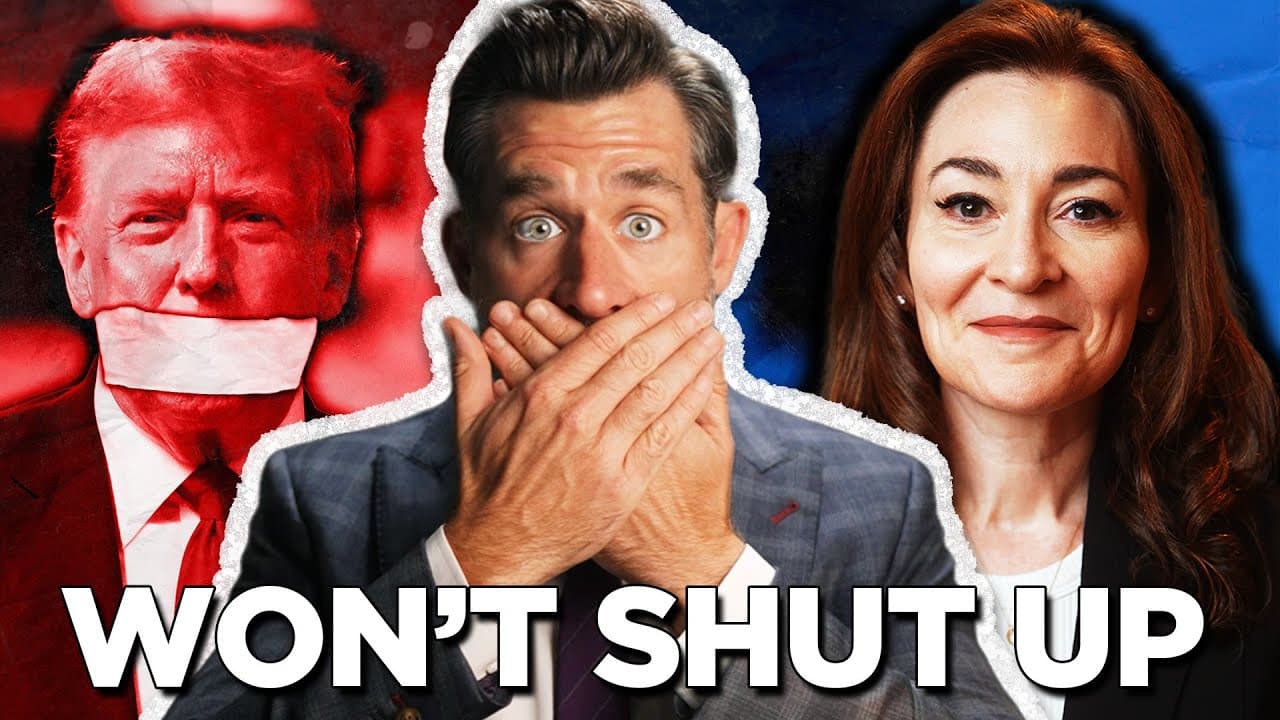
Donald Trump is under a gag order in his New York criminal trial, which prohibits him from publicly attacking witnesses and court officials. Despite the order, Trump has continued to make inflammatory statements, prompting motions for sanctions. The trial is set to begin soon, and the court is considering further restrictions on Trump's speech to maintain the trial's integrity.
Transcript
- Wait, we're calling this video what now? I guess that's one way to put it. Yes, the first criminal trial of a former president in history is now underway, and, you know, you don't usually have to tell defendants not to go online and attack the judge's family, but in the case of Donald Trump, apparently you do. Yes, in his ongoing hush money trial... Read More
Key Insights
- Donald Trump is facing a gag order in his New York criminal trial related to hush money payments.
- The gag order prohibits Trump from attacking witnesses and court officials publicly.
- Trump has a history of making inflammatory statements that could influence judicial proceedings.
- The court is considering sanctions for Trump's continued violations of the gag order.
- Trump's legal team argues that the gag order infringes on his First Amendment rights.
- The prosecution highlights the potential for Trump's statements to incite threats against trial participants.
- The trial is set to begin on April 15, with Trump facing 34 counts of falsifying business records.
- The case is one of several legal challenges Trump is currently facing, though jail time is unlikely in this instance.
Install to Summarize YouTube Videos and Get Transcripts
Explore YouTube Video Summarizer or Get YouTube Transcript Extractor
Questions & Answers
Q: What is the gag order in Trump's New York trial?
The gag order in Trump's New York trial prohibits him from making public statements that attack or intimidate witnesses, jurors, or court officials involved in the case. It aims to maintain the integrity of the trial by preventing potential threats and undue influence on the proceedings.
Q: Why was a gag order imposed on Trump?
A gag order was imposed on Trump to prevent him from making inflammatory public statements that could intimidate witnesses, jurors, or court officials, thereby influencing the trial's outcome. His history of such statements in legal proceedings prompted the court to act to preserve the trial's integrity.
Q: How has Trump responded to the gag order?
Despite the gag order, Trump has continued to make public statements attacking witnesses and court officials, leading to motions for sanctions. His legal team argues that the order infringes on his First Amendment rights, while the court considers further restrictions to ensure a fair trial.
Q: What are the potential consequences for violating the gag order?
Violating the gag order could result in sanctions against Trump, including fines or further restrictions on his speech. The court aims to prevent any undue influence on the trial and protect participants from threats or harassment arising from Trump's statements.
Q: What is the significance of Trump's New York trial?
Trump's New York trial is significant as it marks the first criminal trial of a former U.S. president. He faces 34 counts of falsifying business records related to hush money payments. While jail time is unlikely, the trial holds political and legal implications for Trump.
Q: How does the gag order impact Trump's First Amendment rights?
Trump's legal team argues that the gag order infringes on his First Amendment rights by restricting his ability to speak publicly about the trial. However, the court maintains that the order is necessary to prevent threats and maintain the trial's integrity, balancing free speech with judicial fairness.
Q: What legal challenges is Trump currently facing?
In addition to the New York trial, Trump faces several legal challenges, including cases related to election interference and civil fraud. These cases vary in severity, with the New York trial considered the least dangerous in terms of potential jail time, but all carry significant legal and political consequences.
Q: What are the key issues in Trump's New York trial?
The key issues in Trump's New York trial include the 34 counts of falsifying business records to conceal hush money payments. The trial also examines the impact of Trump's public statements on the judicial process, with the court seeking to prevent any undue influence on witnesses and jurors.
Summary & Key Takeaways
-
Donald Trump is under a gag order in his New York trial, restricting him from making public attacks on witnesses and court officials. Despite this, he has continued to make inflammatory statements, leading to potential sanctions. The trial, set to begin soon, will examine 34 counts of falsifying business records related to hush money payments.
-
The gag order was imposed by Justice Juan Merchan to prevent Trump from influencing the trial through public statements. Trump's legal team argues that this infringes on his First Amendment rights, while the prosecution emphasizes the risk of threats against trial participants arising from Trump's rhetoric.
-
Trump's trial is part of multiple legal challenges he faces, though this case is considered the least dangerous in terms of potential jail time. The court is prepared to impose further restrictions to protect the trial's integrity if Trump continues to violate the gag order.
Read in Other Languages (beta)
Share This Summary 📚
Summarize YouTube Videos and Get Video Transcripts with 1-Click
Try YouTube Summary with ChatGPT & Claude or YouTube Transcript Generator
Explore More Summaries from LegalEagle 📚




Summarize YouTube Videos and Get Video Transcripts with 1-Click
Try YouTube Summary with ChatGPT & Claude or YouTube Transcript Generator