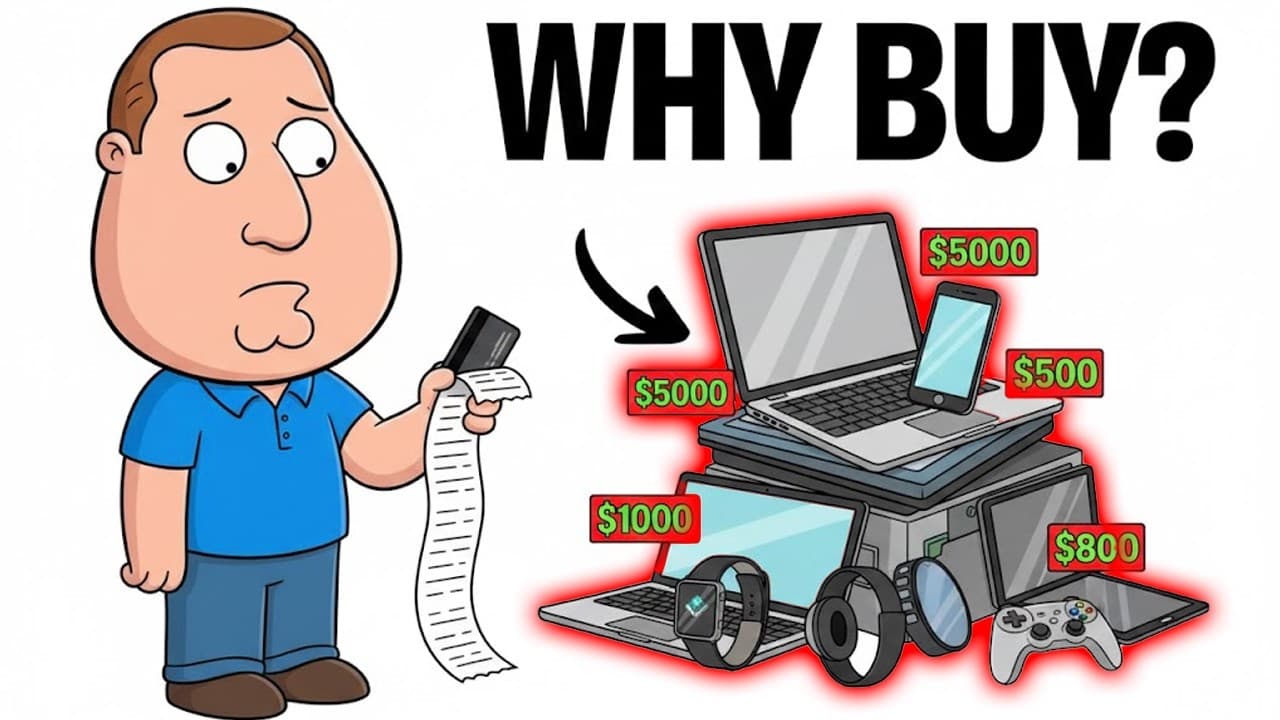
How Our Brains Make Us Buy Unnecessary Things
TL;DR
Dopamine fuels wanting, not liking, so impulse buys feel good before the purchase but fade after delivery. Pricing tricks, scarcity, and payment methods numb the pain of spending, driving more purchases. If you cut small daily spendings and watch recurring subscriptions, you can protect long term wealth and reduce wasted shopping.
Transcript
You're lying in bed at 11 p.m. scrolling through your phone, not even particularly awake, and suddenly you're adding a garlic press to your cart. You already have a garlic press. It's sitting in that kitchen drawer you haven't opened since 2023. You know, the drawer, the one where kitchen gadgets go to die next to the melon baller you bought becaus... Read More
Key Insights
- Dopamine is described as the wanting chemical that fuels anticipation before purchase, not the pleasure after obtaining the item.
- The left digit effect explains why small price differences like 79.99 versus 80 can strongly influence perception and sales.
- The word free can dramatically shift demand even when price gaps stay the same.
- Scarcity cues such as last items in stock or countdown timers trigger loss aversion and impulse buying.
- Buy now pay later turns larger costs into smaller payments that feel affordable, increasing order values and late payments.
- Payment technology evolution is designed to numb the pain of paying, reducing perceived cost of spending.
- Social shopping and influencer driven purchases dominate the new shopping landscape, with many purchases unplanned.
- Nearly half of impulse buyers regret purchases, indicating a misalignment between wanting and lasting satisfaction.
- More videos from this channel:
- More from this channel: Nick Invests
Install to Summarize YouTube Videos and Get Transcripts
Explore YouTube Video Summarizer or Get YouTube Transcript Extractor
Questions & Answers
Q: How can understanding dopamine help curb impulse buying
Dopamine drives the wanting phase of purchasing, meaning the anticipation of owning something activates a reward pathway that makes you feel excited even before the item is acquired. Recognizing this can help you pause when you feel the urge to add items to a cart, especially after scrolling late at night. By focusing on the eventual satisfaction rather than anticipation, you can reduce unnecessary purchases and redirect funds toward meaningful goals.
Q: What role does pricing strategy play in driving sales
Pricing strategies exploit brain processing, such as left digit effects where prices ending in .99 are perceived as cheaper, and the word free which can shift demand dramatically regardless of total cost. Being aware of these tricks allows shoppers to reframe prices mentally, compare total costs, and resist quick wins in favor of long term value and budget health.
Q: Why does seeing a price hurt, and how do payment methods change that
Spending money is processed as pain in a brain region linked to physical pain. Abstraction from payment methods reduces that pain, making it easier to spend. Cash hurts most, cards less so, and BNPL reduces the perceived immediacy of the cost. Understanding this can help you choose payment methods that keep spending aligned with financial goals.
Q: How do scarcity and urgency influence buying decisions
Scarcity and urgency create loss aversion, where the fear of missing out strengthens the desire to buy now. Tactics like countdown timers and low stock alerts prime the brain to act quickly to avoid regret, often bypassing rational cost-benefit analyses. Recognizing these cues helps you slow down and evaluate purchases more deliberately.
Q: What is the impact of social media shopping on spending
Social platforms drive purchases through seamless scrolling, influencer recommendations, and endless product discovery. A large share of users buy things they stumble upon without planning, increasing the frequency of non-essential spending. Being intentional about follow lists and setting shopping boundaries can reduce unplanned buys.
Q: How do subscriptions contribute to everyday spending
Subscriptions can quietly inflate monthly expenses far beyond awareness, with many people underestimating total costs. The transcript notes that people think they spend far less per month than they actually do, and many forget about active subscriptions. Tracking all recurring charges helps protect long term savings and avoid subscription debt.
Q: What financial impact can small daily savings have over time
If someone cuts just $20 per day in unnecessary spending and reallocates that into investments, it can dramatically alter long term wealth, potentially turning $20 daily into millions by retirement. This highlights the power of small disciplined changes and the compounding effect of investing over decades.
Q: Why do people regret social shopping purchases, and how to mitigate it
More than half of social shoppers regret purchases, indicating a mismatch between impulsive buying and lasting satisfaction. To mitigate this, set a strict post-purchase review period, implement a cooling-off rule before finalizing cart additions, and create a personal spending budget that prioritizes essential needs and long term goals.
Summary & Key Takeaways
-
The video explains that dopamine is a wanting chemical, not a pleasure one, which drives impulse purchasing and leads to a cycle of buying and disappointment.
-
Pricing tactics like left digit effects, the word free, and scarcity create a strong urge to buy, even when the item isn’t needed.
-
Payment methods are engineered to numb the pain of spending, with cash being the most painful and BNPL increasing average order values and long term debt.
Read in Other Languages (beta)
Share This Summary 📚
Summarize YouTube Videos and Get Video Transcripts with 1-Click
Try YouTube Summary with ChatGPT & Claude or YouTube Transcript Generator
Explore More Summaries from Nick Invests 📚

Summarize YouTube Videos and Get Video Transcripts with 1-Click
Try YouTube Summary with ChatGPT & Claude or YouTube Transcript Generator