What Happened at the Jurassic Watering Hole?
TL;DR
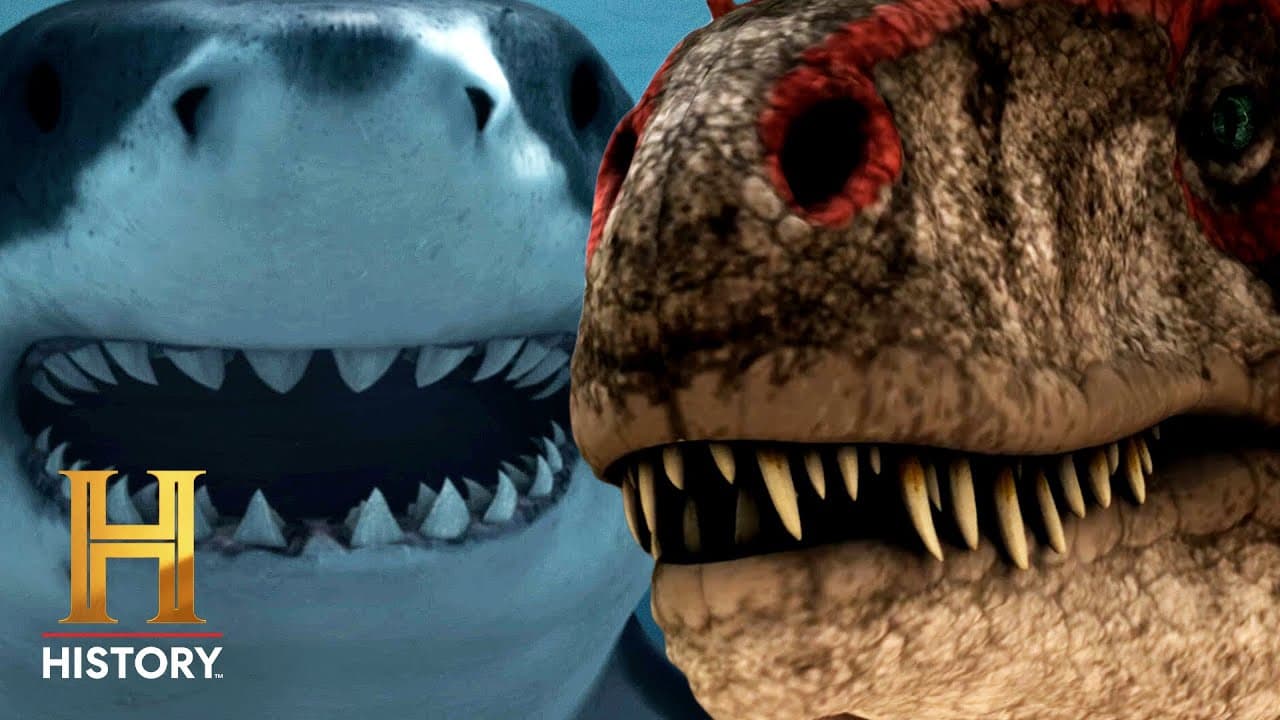
Drought drove dinosaurs to a shrinking freshwater lake where many became stuck and were preyed upon or muscled apart. Tephonomy helps scientists reconstruct the death sequence by examining bones, damage, and context at the Cleveland Lloyd Quarry. The site contains Stegosaurus, Camarasaurus, and other prehistoric inhabitants that died in a single deadly event.
Transcript
It's a colossal death trap. A prehistoric watering hole that's the scene of an ultimate fight on a battlefield like no other. Multiple species, predators, and prey. Engaged in a mass fight to the death, science helps to piece together the carnage step by step. It's every dinosaur for itself in the bloodiest battle of the Jurassic era. [Applause] Th... Read More
Key Insights
- The crisis began as a freshwater lake bed during a severe drought, drawing multiple dinosaur species to drink and increasing the risk of getting stuck.
- Tephonomy is used to trace the death and burial process from time of death to fossilization, providing clues about the environment and events.
- Stegosaurus had tail spikes and a distinctive body plan that influenced how it could defend itself at the waterhole.
- Camarasaurus was a giant long-neck herbivore whose mass made it vulnerable to getting stuck, influencing bone distribution at the site.
- The discovery of a baby Stegosaurus alongside adults indicates that multiple individuals were trapped and died in the same event.
- The site also revealed another large dinosaur group, Camarasaurus, suggesting complex dynamics among sauropods during drought conditions.
- Predatory damage on herbivore bones suggests that predators attacked victims as they were trapped at the lake bed.
- The Cleveland Lloyd Quarry contains thousands of bones, indicating a highly productive but deadly gathering ground for Jurassic fauna.
- More videos from this channel:
- More from this channel: HISTORY
Install to Summarize YouTube Videos and Get Transcripts
Explore YouTube Video Summarizer or Get YouTube Transcript Extractor
Questions & Answers
Q: What is tephonomy and how does it help explain the death at the lake bed?
Tephonomy is the study of what happened to a fossil from the time of death until burial and fossilization. In the Cleveland Lloyd Quarry, tephonomy helps researchers infer drought conditions, how animals fell into the mud, and what sequence of events led to the mass die-off. By examining bone damage, positions, and the surrounding sediment, scientists can reconstruct the death scenario and burial process.
Q: Why is the Cleveland Lloyd Quarry significant for Jurassic fossils?
The Cleveland Lloyd Quarry is significant because it yielded thousands of bones from multiple dinosaur species in a relatively small area, suggesting a mass gathering and catastrophic death in one location. The site provides crucial evidence about how drought, lake dynamics, and predator interactions shaped Jurassic ecosystems, making it a landmark for paleontological study.
Q: Which dinosaurs were identified at the site and what roles did they play?
Stegosaurus and Camarasaurus were identified at the site. Stegosaurus, a smaller herbivore with tail spikes, faced predation and used its weapons for defense, while Camarasaurus was a large long-neck herbivore whose mass made it susceptible to getting stuck but able to deter predators through size. A baby Stegosaurus indicates the event affected multiple age groups.
Q: How did drought contribute to the deaths at the waterhole?
During extreme droughts, lake water levels shrink and the upper mud dries while the underneath remains wet. Animals crossing to drink would crack through the crust and become stuck, unable to free themselves. This created a deadly trapping ground where predators could attack, leading to multiple bones showing bite marks and injuries.
Q: What does the evidence say about predator-prey interactions at the site?
The bones show deep gashes and bite marks on herbivore remains, indicating predators attacked animals while they were trapped at the waterhole. The concentration of injuries and the presence of multiple species suggest a high-tension feeding ground where predators exploited the vulnerable, stuck dinosaurs.
Q: What do the Stegosaurus plates and tail spikes tell us about its defense?
Stegosaurus plates, although their exact function remains debated, along with tail spikes, served as a visual and physical deterrent. The spikes could penetrate bone and flesh, making it difficult for predators to attack successfully. This combination of armor and weaponry reflects a defense strategy suited to a dangerous watering hole environment.
Q: Why were there fewer Camarasaurus bones compared to other species at the site?
Camarasaurus was extremely large and heavy, making it less likely to venture into the danger zone near the water during droughts. If it did approach, its mass could deter predators, but the energy cost and higher risk of getting stuck would reduce their likelihood of being found in great numbers at the lake bed.
Q: What broader insights does this site offer about Jurassic ecosystems?
The site reveals how drought-driven animal movements shape death assemblages, how mass mortality events reveal species interactions, and how diverse herbivores could share habitats under stress. It demonstrates the power of combining fossil evidence with sedimentary context to reconstruct ancient ecological dynamics and predator–prey relationships.
Summary & Key Takeaways
-
A mass death at a Jurassic waterhole is explored through fossil evidence and tephonomy to reveal death dynamics and site conditions.
-
Stegosaurus and Camarasaurus remains, including a baby Stegosaurus, illuminate predator interactions and herd behavior.
-
The Cleveland Lloyd Quarry serves as a key fossil site showing how drought and crowding led to a multi-species die-off.
Read in Other Languages (beta)
Share This Summary 📚
Summarize YouTube Videos and Get Video Transcripts with 1-Click
Try YouTube Summary with ChatGPT & Claude or YouTube Transcript Generator
Explore More Summaries from HISTORY 📚
Summarize YouTube Videos and Get Video Transcripts with 1-Click
Try YouTube Summary with ChatGPT & Claude or YouTube Transcript Generator