How AI Is Changing My Investment Strategy
TL;DR
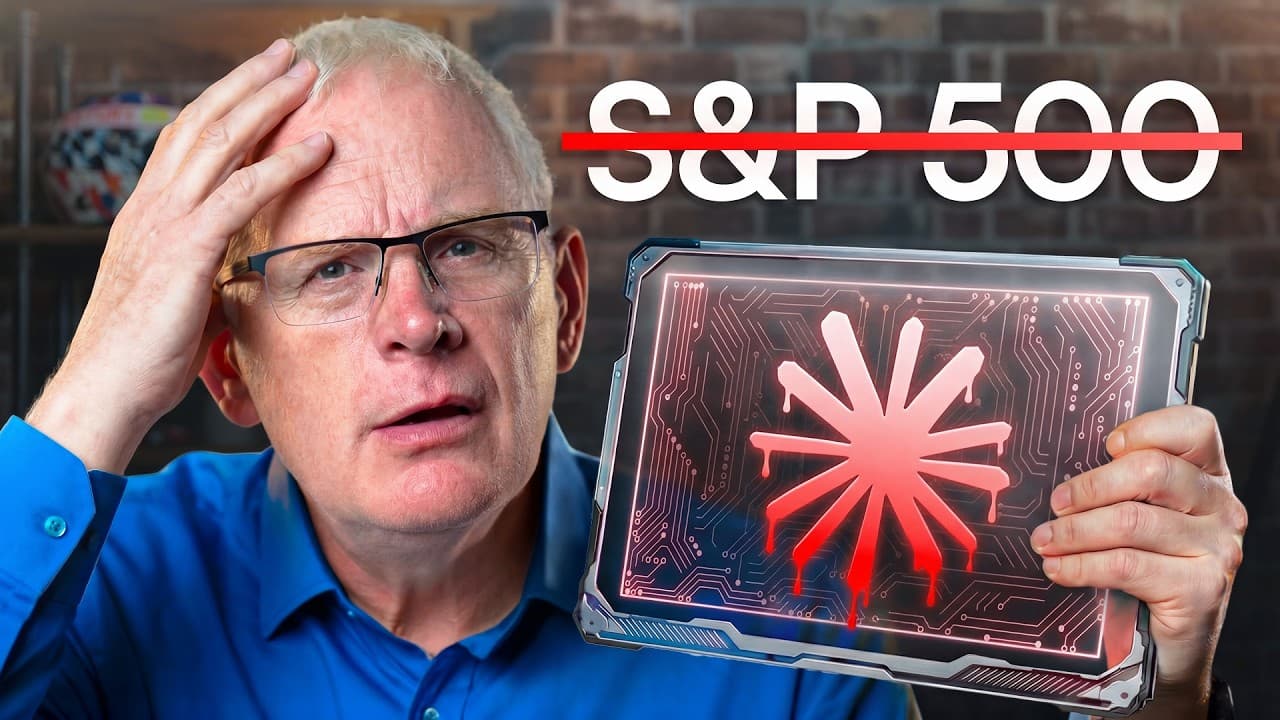
AI is reshaping investment strategies by highlighting concentration risks within the S&P 500 and the potential for an AI bubble. Diversifying into global markets, small and mid-cap stocks, gold, and maintaining cash reserves can mitigate risks. Emphasizing the importance of adaptability, the video suggests that no market remains dominant forever and highlights the potential opportunities in overlooked zones.
Transcript
AI is forcing me to change how I manage my money. You see, I've made millions from investing over the past 35 years, and most of that success has come from one simple strategy. - An S&P 500 low-cost index fund. - [News Reporter] S&P 500 index fund. - The S&P, American. - The S&P 500. - The S&P 500- - Has returned an average of over 10% per year. - ... Read More
Key Insights
- AI is causing concentration in the S&P 500, with top companies heavily investing in AI.
- An AI bubble could form as companies are valued on future expectations rather than current assets.
- Equal-weighted index funds offer diversification but have higher trading costs.
- Global markets have historically shifted in dominance, suggesting the need for international diversification.
- Small and mid-cap companies may offer opportunities by applying AI cost-effectively.
- Gold is increasingly seen as a stable reserve asset, with central banks increasing their holdings.
- Cash reserves are crucial for flexibility during market downturns and to seize investment opportunities.
- Adapting investment strategies to both benefit from AI advancements and protect against potential bubbles is essential.
Install to Summarize YouTube Videos and Get Transcripts
Explore YouTube Video Summarizer or Get YouTube Transcript Extractor
Questions & Answers
Q: How is AI affecting investment strategies?
AI is influencing investment strategies by concentrating investments in major tech companies within the S&P 500, which are heavily investing in AI. This concentration raises concerns about an AI bubble, as these companies are valued based on future expectations rather than current assets. Diversification into global markets and smaller companies can help mitigate these risks.
Q: What is an equal-weighted S&P 500 index fund?
An equal-weighted S&P 500 index fund allocates the same percentage of investment to each company in the index, unlike traditional market-cap-weighted funds that allocate more to larger companies. This approach reduces exposure to large-cap concentration risks but involves higher trading costs due to frequent rebalancing, which may impact overall returns.
Q: Why should investors consider global diversification?
Global diversification is important because historical shifts in market dominance show that no single country's market remains dominant forever. By investing in a global index fund, investors can gain exposure to emerging markets and international companies, reducing reliance on a single market and potentially capturing growth opportunities in diverse regions.
Q: What opportunities exist in small and mid-cap stocks?
Small and mid-cap stocks offer opportunities by effectively leveraging AI technology without the high costs and debt associated with large-cap companies. These companies can apply AI to solve real-world problems at a lower cost, potentially achieving significant growth. Investing in these stocks can provide exposure to innovative solutions and diversification away from crowded markets.
Q: Why is gold becoming more attractive to investors?
Gold is becoming more attractive as it has been reclassified as a Basel III Tier 1 asset, allowing it to be treated as cash on balance sheets. Central banks are increasing their gold reserves, driving up demand. Gold's stability and role as a hedge against currency fluctuations and economic instability make it a valuable asset for diversification and long-term investment.
Q: How important are cash reserves in an investment strategy?
Cash reserves are crucial for providing flexibility during market downturns, allowing investors to avoid selling investments at a loss and to seize opportunities when asset prices are low. Maintaining cash reserves ensures liquidity and financial stability, enabling investors to navigate market volatility and capitalize on potential growth opportunities when markets recover.
Q: What is the potential impact of an AI bubble?
An AI bubble could occur if companies investing heavily in AI are overvalued based on future expectations rather than current performance. If these expectations are not met, it could lead to a significant market correction, impacting investors heavily concentrated in these tech stocks. Diversifying investments can help mitigate the risks associated with such a bubble.
Q: How does the video suggest preparing for market uncertainty?
The video suggests preparing for market uncertainty by diversifying investments across global markets, small and mid-cap stocks, gold, and maintaining cash reserves. This approach balances potential growth opportunities with protection against market volatility, ensuring that investors are well-positioned for both the continuation of AI-driven growth and the possibility of an AI bubble.
Summary & Key Takeaways
-
AI investments are leading to concentration risks in the S&P 500, as top companies invest heavily in AI, potentially inflating their valuations. Diversifying into equal-weighted index funds can mitigate these risks, but they come with higher trading costs due to frequent rebalancing.
-
Historical market dominance shifts suggest the importance of global diversification. Investing in global index funds and small to mid-cap companies can provide exposure to international growth opportunities and overlooked sectors, particularly those effectively leveraging AI.
-
Gold is gaining prominence as a reserve asset, with central banks increasing their holdings. Maintaining cash reserves provides flexibility during market downturns, allowing investors to capitalize on opportunities. Adapting investment strategies to navigate AI advancements and potential bubbles is crucial for long-term success.
Read in Other Languages (beta)
Share This Summary 📚
Summarize YouTube Videos and Get Video Transcripts with 1-Click
Try YouTube Summary with ChatGPT & Claude or YouTube Transcript Generator
Explore More Summaries from Mark Tilbury 📚





Summarize YouTube Videos and Get Video Transcripts with 1-Click
Try YouTube Summary with ChatGPT & Claude or YouTube Transcript Generator