The Portuguese Language and What Makes it Intriguing
TL;DR
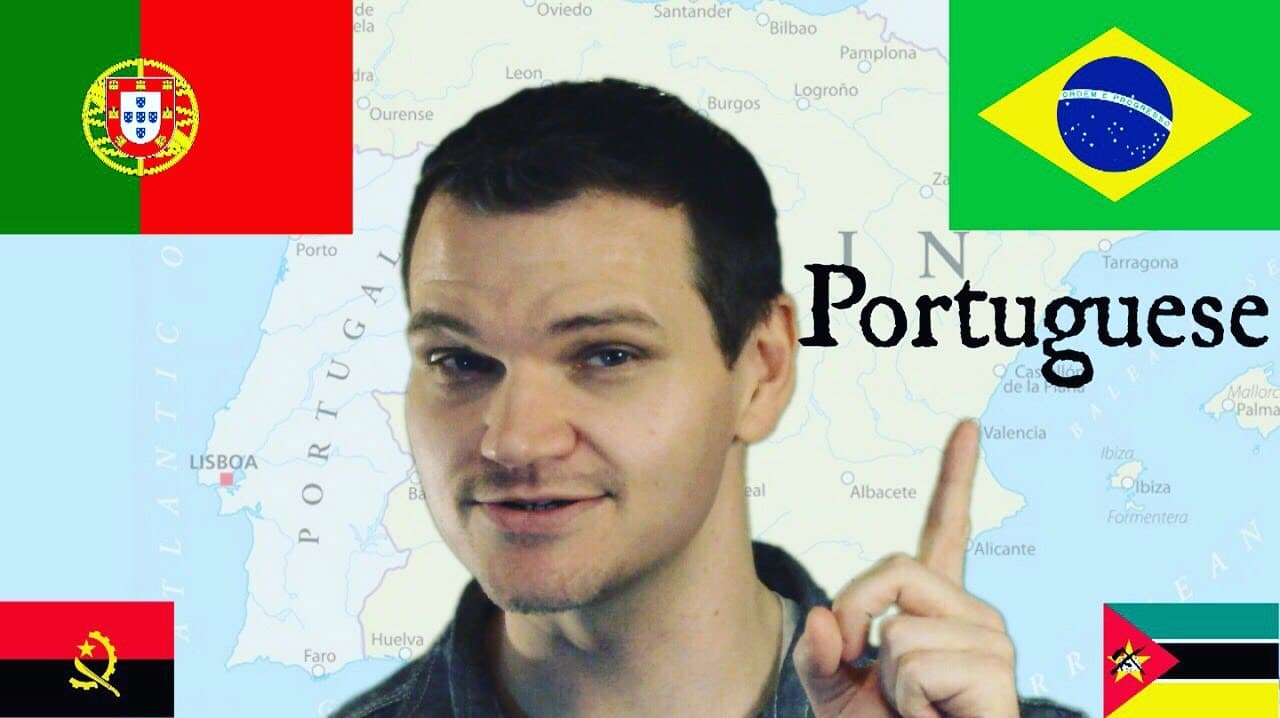
Portuguese is a major global language with diverse dialects.
Transcript
So, where are you from? Oh, Brasil. Es verdad? Hablo español! Awe! (Oh Brazil. Really? I speak Spanish.) Hello everyone. Welcome to the Langfocus channel. My name is Paul. Today, I'm going to talk about Portuguese. Portuguese is a language that far too often gets ignored. In Canada, if you tell someone you want to study Portuguese, they might say ... Read More
Key Insights
- Portuguese is one of the world's major languages, spoken by 215 to 220 million people and is the second most widely spoken Romance language after Spanish.
- Portuguese is the only official language in several countries, including Portugal, Brazil, and Mozambique, and is co-official in others like East-Timor and Macau.
- The language developed from Vulgar Latin and forms the Ibero-Romance branch along with Spanish and Galician, with significant historical influences from Arabic.
- Portuguese diverged from Galician-Portuguese in the 16th century, and the language was standardized in the 1500s, spreading globally through colonization.
- Brazilian Portuguese is considered easier to learn and is more widely spoken globally compared to European Portuguese, with notable differences similar to UK versus American English.
- Portuguese has absorbed vocabulary from Arabic and has contributed words to English, with many Portuguese words recognizable to English speakers due to Latin and French influences.
- Portuguese is the sixth most widely spoken language globally, with a significant presence in South America, Africa, and parts of Asia.
- Learning Portuguese requires effort in phonology and grammar, but reading can be accessible for English speakers and those familiar with other Romance languages.
Install to Summarize YouTube Videos and Get Transcripts
Explore YouTube Video Summarizer or Get YouTube Transcript Extractor
Questions & Answers
Q: What is the global significance of the Portuguese language?
Portuguese is a major global language, spoken by approximately 215 to 220 million people. It is the second most widely spoken Romance language after Spanish and serves as the official language in several countries across different continents. Its global significance is further enhanced by its historical spread during the colonial period.
Q: How did the Portuguese language develop historically?
Portuguese developed from Vulgar Latin, which was spoken during the Roman Empire. It forms part of the Ibero-Romance branch along with Spanish and Galician. Over time, it diverged from Galician-Portuguese, becoming a distinct language by the 16th century. Its standardization was aided by the printing press in the 1500s, facilitating its global spread.
Q: What are the main differences between Brazilian and European Portuguese?
Brazilian and European Portuguese differ mainly in accent, pronunciation, vocabulary, and some grammatical structures. These differences are akin to those between UK English and American English. Brazilian Portuguese is generally considered easier to learn and is more globally prevalent, influenced by native and African languages present in Brazil.
Q: What influences has Arabic had on the Portuguese language?
During the period of Islamic rule on the Iberian Peninsula, Portuguese absorbed influences from the Arabic language. This includes approximately 800 vocabulary words of Arabic origin, reflecting the historical interactions and cultural exchanges between the two regions during that time.
Q: How does Portuguese compare to Spanish in terms of global presence?
While Spanish is more widely spoken globally, Portuguese holds its own as a major global language. It is the sixth most widely spoken language worldwide and the most spoken in South America, despite being primarily spoken in Brazil. Its global presence is marked by its status as an official language in multiple countries.
Q: Why might someone choose to learn Brazilian Portuguese over European Portuguese?
Many learners opt for Brazilian Portuguese due to its global prevalence and easier learning curve. Brazil's large population and cultural exports, such as popular soap operas, make Brazilian Portuguese more accessible and relevant for global communication. Additionally, learners are more likely to encounter Brazilian Portuguese speakers worldwide.
Q: What are some challenges and advantages of learning Portuguese for English speakers?
For English speakers, Portuguese offers the advantage of recognizable vocabulary due to Latin and French influences on English. However, challenges include mastering its phonology and grammar. Despite these challenges, familiarity with other Romance languages can facilitate the learning process, especially for reading comprehension.
Q: What role do Portuguese Creoles play in the language's global spread?
Portuguese Creoles, spoken in regions like Cape Verde and Guinea-Bissau, play a significant role in the language's global spread. These Creoles often serve as native languages, with Portuguese as a second language for official purposes. They highlight the language's adaptability and influence in diverse linguistic landscapes.
Summary & Key Takeaways
-
Portuguese is a major global language, spoken in several countries as an official language, with a rich history and diverse dialects. It developed from Vulgar Latin and became standardized in the 1500s, spreading through colonization. Despite its similarities to Spanish, it stands as an important language on its own.
-
Brazilian Portuguese is more widely spoken and considered easier to learn than European Portuguese. The language has absorbed influences from Arabic and has contributed vocabulary to English. It is the most widely spoken language in South America and is recognized for its global presence.
-
Learning Portuguese can be accessible for English speakers due to recognizable vocabulary. However, mastering its phonology and grammar requires effort. The language is a significant cultural and communicative tool, not just a variant of Spanish, with a unique global identity.
Read in Other Languages (beta)
Share This Summary 📚
Summarize YouTube Videos and Get Video Transcripts with 1-Click
Try YouTube Summary with ChatGPT & Claude or YouTube Transcript Generator
Explore More Summaries from Langfocus 📚
Summarize YouTube Videos and Get Video Transcripts with 1-Click
Try YouTube Summary with ChatGPT & Claude or YouTube Transcript Generator