Why Is Wall Street Unfazed by Big Tech's Debt?
TL;DR
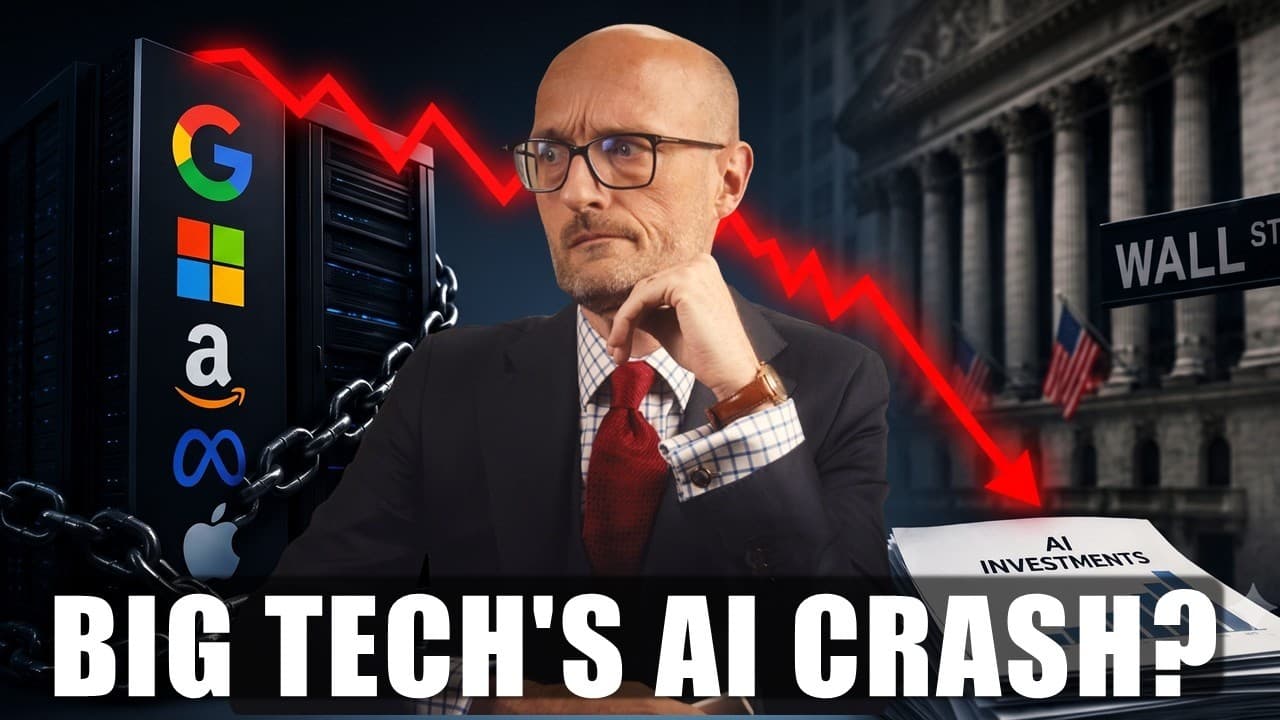
Big Tech's off-balance-sheet commitments are not presented as Enron-style fraud because they follow standard accounting rules and appear in financial-statement footnotes. The greater concern is whether enormous AI investments will generate enough revenue, especially as free cash flow weakens, depreciation grows, and stock-based compensation dilutes shareholders or requires costly buybacks.
Transcript
A few weeks ago, Nick Aasia reported that the five biggest US tech companies are carrying $1.65 trillion of debt that doesn't appear anywhere on their balance sheets. Not the debt that you can see, a second larger pile hidden behind it. A few days later, the Financial Times found another 50 billion in leases that Nvidia had signed for a single data... Read More
Key Insights
- The reported $1.65 trillion is an estimate of commitments beyond conventional balance-sheet debt, including long-term purchases and leases for infrastructure that may not yet exist or operate. Because additional commitments were announced afterward, the transcript argues that the estimate was already incomplete.
- Enron was a deliberate accounting fraud that concealed debts and losses through secret off-the-books entities. The Big Tech commitments discussed here are materially different because the relevant leases, purchase agreements, joint ventures, and financing structures are disclosed in corporate accounts, particularly within the footnotes.
- Standard accounting rules do not require undelivered goods or inactive leased facilities to appear immediately as balance-sheet liabilities. Future commitments are instead disclosed until delivery or commencement, after which leases become recognized liabilities and purchase commitments generally become chips, buildings, or other owned assets.
- Debt financing can signal management's confidence that an investment will earn returns worth preserving for existing owners. If executives expect a project to turn each invested dollar into substantially more value, borrowing lets shareholders retain more of that potential upside than issuing additional equity would.
- The scale of Big Tech's financing matters more than any single funding method. Companies are simultaneously using debt, equity, convertibles, leases, and other arrangements, signaling that they believe the AI buildout offers an opportunity large enough to justify an unusually expansive capital-raising effort.
- Adjusted earnings can obscure the economic burden of AI infrastructure by excluding depreciation and amortization. Data centers and chips require upfront cash and eventually wear out, so excluding depreciation may make current performance look stronger while understating the continuing cost of replacing physical assets.
- Stock-based compensation remains a genuine economic cost even when companies exclude it from adjusted earnings as non-cash. Issuing shares transfers value to employees and dilutes existing owners, while repurchasing stock to offset that dilution consumes real cash and may occur regardless of valuation.
- The central investment risk is whether future AI revenue will justify the commitments, not whether disclosed borrowing constitutes hidden fraud. The strain is already visible in cash generation, with the four largest hyperscalers reporting their lowest combined free cash flow in a decade at $7 billion.
Install to Summarize YouTube Videos and Get Transcripts
Explore YouTube Video Summarizer or Get YouTube Transcript Extractor
Questions & Answers
Q: Is Big Tech's off-balance-sheet debt comparable to Enron?
The comparison does not hold under the analysis presented. Enron deliberately hid debts and losses through secret entities, leaving investors with accounts that were essentially fictional. Big Tech's future leases, purchase commitments, joint ventures, and financing vehicles are disclosed in financial statements and footnotes. They may be difficult to find and aggressively structured, but the transcript distinguishes limited visibility from criminal concealment.
Q: Why do Big Tech commitments stay off the balance sheet?
Many commitments concern goods that have not been delivered or data centers that have not begun operating. Under the standard accounting treatment described, companies do not record those future payments immediately as balance-sheet liabilities. They disclose them in footnotes instead. Once a leased data center becomes operational, its lease generally moves onto the balance sheet, making much of the difference a question of timing.
Q: What does the reported $1.65 trillion figure include?
The $1.65 trillion estimate covers obligations attributed to the five largest US technology companies that do not appear as conventional balance-sheet debt. Much of the total consists of long-term graphics-card purchase agreements and data-center leases for facilities that have not yet been built or activated. The transcript says later earnings disclosures added further commitments, so the original estimate was already too low.
Q: Why might a technology company use debt to fund AI infrastructure?
Borrowing can signal that management expects the investment to generate attractive returns and wants existing shareholders to retain those gains. A company confident that new infrastructure will create much more value than it costs may prefer debt, because the loan can eventually be repaid without permanently surrendering ownership. Debt is therefore not automatically evidence of financial weakness or poor investment judgment.
Q: Why are Big Tech companies raising both debt and equity?
The companies are pursuing AI infrastructure on such a large scale that they are using multiple funding channels, including debt, equity, convertibles, leases, and other commitments. When every route is used simultaneously, the financing choice alone provides a limited signal. The more revealing fact is the overall amount of capital being raised, which reflects management's conviction that a valuable opportunity may exist.
Q: How does depreciation affect reported AI profits?
Depreciation recognizes that physical assets such as chips and data centers wear out and require replacement. Cash is spent upfront, while the accounting expense appears gradually as the equipment is used. Adjusted measures that exclude depreciation can therefore make earnings appear stronger by overlooking a recurring economic cost. That concern becomes more important as technology companies invest billions in short-lived infrastructure.
Q: Why is stock-based compensation a cost to shareholders?
Stock-based compensation transfers company ownership to employees, even though no cash changes hands at the moment of payment. Existing shareholders can be diluted when new shares are issued. Companies often spend real cash repurchasing shares to offset that dilution, creating an expensive treadmill. Because these purchases may follow a schedule, firms cannot necessarily wait until their shares are attractively priced.
Q: What is the biggest financial risk in the AI buildout?
The principal risk is that the enormous expected AI revenue may not arrive at the level needed to justify current spending and commitments. Borrowing itself is not presented as the decisive danger because the obligations are disclosed and often become recognized assets or liabilities over time. The warning signs instead include falling free cash flow, heavy replacement costs, stock dilution, and dependence on optimistic demand assumptions.
Summary & Key Takeaways
-
The reported $1.65 trillion is largely composed of future purchase agreements and data-center leases that have not yet commenced. Standard accounting rules keep many such commitments off the balance sheet until goods arrive or facilities begin operating, while requiring disclosure in footnotes. This makes the obligations less visible, but not necessarily fraudulent or concealed.
-
Big Tech is financing its AI infrastructure expansion through debt, equity, convertibles, leases, and other structures. Borrowing can indicate that management expects attractive returns and wants existing shareholders to retain ownership of those gains. However, using every available financing route mainly demonstrates the extraordinary scale and urgency of the capital program.
-
The deeper risks appear in cash generation and the assumptions supporting AI investment. The four largest hyperscalers produced only $7 billion in combined free cash flow, while Alphabet became cash negative for the first time since going public. Investors must assess depreciation, stock compensation, buybacks, and whether future AI revenue justifies current commitments.
Read in Other Languages (beta)
Share This Summary 📚
Summarize YouTube Videos and Get Video Transcripts with 1-Click
Try YouTube Summary with ChatGPT & Claude or YouTube Transcript Generator
Explore More Summaries from Patrick Boyle 📚






Summarize YouTube Videos and Get Video Transcripts with 1-Click
Try YouTube Summary with ChatGPT & Claude or YouTube Transcript Generator