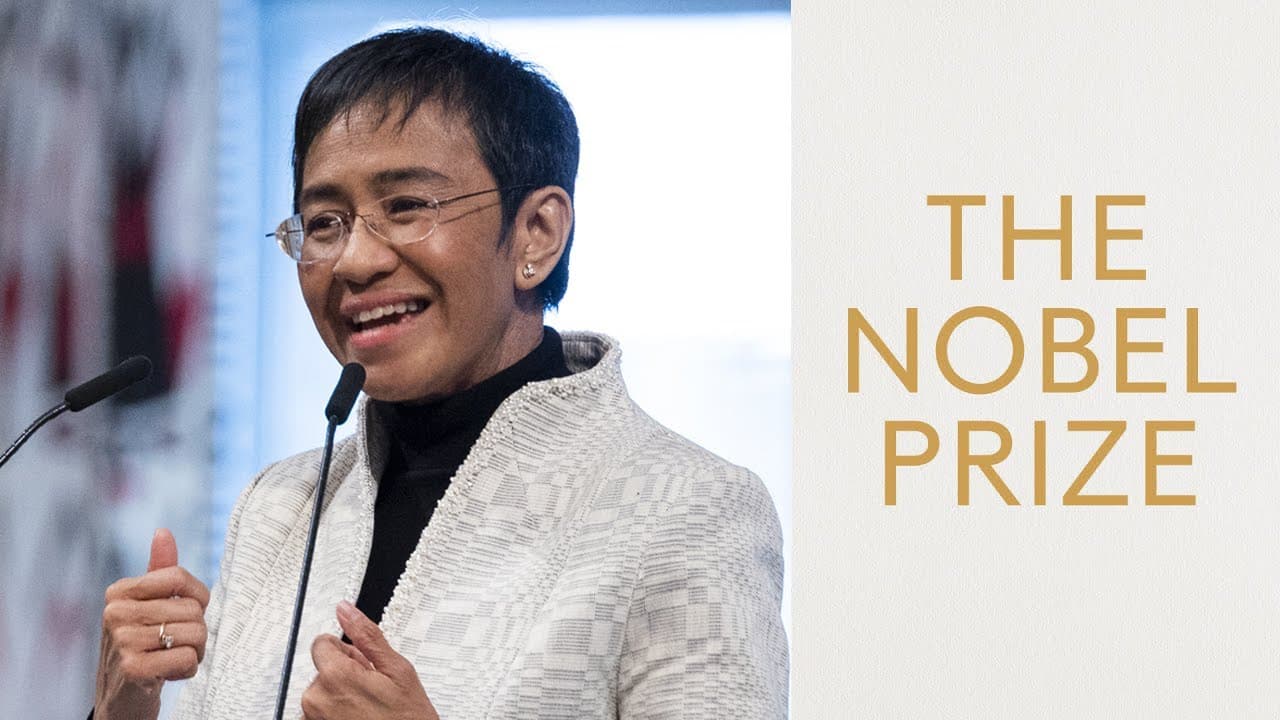
Nobel Prize lecture: Maria Ressa, Nobel Peace Prize 2021
TL;DR
Maria Ressa's Nobel Prize lecture emphasizes the critical role of journalism in defending truth and democracy against authoritarian regimes and disinformation. She highlights the dangers posed by technology and social media, urging for global cooperation to restore factual integrity and protect journalists. Ressa calls for a collective effort to create a more equitable and truthful world.
Transcript
I call upon Maria ressa to deliver her Noble lecture for 2021 please take the [Applause] stage thank you your majesties your Royal highnesses distinguished members of the Norwegian Nobel committee your excellencies distinguished guests ladies and gentlemen I stand before you a representative of every journalist around the world who is forced to sac... Read More
Key Insights
- Journalism is essential for holding power accountable and defending democracy.
- Authoritarian regimes often target journalists to suppress truth and control narratives.
- Technology and social media have accelerated the spread of disinformation and hate.
- Global cooperation is needed to restore factual integrity in information ecosystems.
- The financial model of journalism needs reform to ensure its survival and independence.
- Social media platforms prioritize profit, often at the expense of truth and democracy.
- Legislation and regulation are necessary to address the biases in algorithmic amplification.
- Journalists face significant personal risks, yet remain resolute in their mission to report the truth.
Install to Summarize YouTube Videos and Get Transcripts
Explore YouTube Video Summarizer or Get YouTube Transcript Extractor
Questions & Answers
Q: How does Maria Ressa view the role of journalism in democracy?
Maria Ressa views journalism as a fundamental pillar of democracy, essential for holding power accountable and ensuring the public has access to truthful information. She argues that journalists play a crucial role in defending democratic values and fighting against disinformation and authoritarian regimes that seek to suppress the truth.
Q: What threats do journalists face according to Maria Ressa?
According to Maria Ressa, journalists face threats from authoritarian regimes that target them to suppress truth and control narratives. They also encounter dangers from technology and social media platforms that spread disinformation and hate. These threats can lead to personal risks, including imprisonment and violence, yet journalists continue their mission to report the truth.
Q: Why does Maria Ressa criticize social media platforms?
Maria Ressa criticizes social media platforms for prioritizing profit over truth, which has led to the spread of disinformation and hate. She argues that these platforms' algorithms are biased against facts and journalists, contributing to the division and radicalization of societies. Ressa calls for regulation to address these issues and restore factual integrity in the information ecosystem.
Q: What solutions does Maria Ressa propose for the challenges facing journalism?
Maria Ressa proposes several solutions, including global cooperation to restore factual integrity, reforming journalism's financial model to ensure its survival, and regulating social media platforms to address algorithmic biases. She also emphasizes the need for new institutions and codes to prevent the spread of disinformation and protect journalists from state-targeted attacks.
Q: How does Maria Ressa describe the impact of disinformation on society?
Maria Ressa describes disinformation as a virus that infects societies, spreading hate and division and setting the stage for the rise of authoritarianism. She warns that disinformation undermines democracy by eroding trust in facts and truth, making it difficult to address existential challenges like climate change and pandemics. Ressa calls for urgent action to combat this threat.
Q: What is the significance of Maria Ressa's Nobel Prize lecture?
Maria Ressa's Nobel Prize lecture is significant because it highlights the critical role of journalism in defending democracy and truth in the face of growing threats from authoritarian regimes and disinformation. Her speech serves as a call to action for global cooperation to protect journalists, restore factual integrity, and build a more equitable and truthful world.
Q: What personal risks does Maria Ressa face as a journalist?
As a journalist, Maria Ressa faces significant personal risks, including the threat of imprisonment and violence. She has been targeted by the Philippine government with multiple arrest warrants and legal charges, which could result in a lengthy prison sentence. Despite these risks, Ressa remains committed to her mission of reporting the truth and holding power accountable.
Q: What does Maria Ressa urge individuals to consider in her lecture?
In her lecture, Maria Ressa urges individuals to consider what they are willing to sacrifice for the truth. She emphasizes the importance of standing up for democratic values and working together to create a world based on peace, trust, and empathy. Ressa calls for collective action to protect journalists, restore factual integrity, and combat the spread of disinformation.
Summary
Maria Ressa, a journalist and co-founder of Rappler, delivers a powerful speech about the challenges faced by journalists worldwide and the need to prioritize truth and accountability in the information ecosystem. She highlights the risks and sacrifices journalists make to hold power accountable and emphasizes the role of technology companies in perpetuating hate and division. Ressa calls for a collective effort to rebuild journalism, protect journalists, regulate social media platforms, and restore trust in facts.
Questions & Answers
Q: What is the message Maria Ressa wants to convey in her speech?
Maria Ressa wants to highlight the sacrifices made by journalists and the importance of holding power accountable. She emphasizes the role of technology companies in spreading hate and division and advocates for the prioritization of truth and accountability in the information ecosystem.
Q: Can you provide examples of journalists who have been targeted for their work?
Maria Ressa mentions several journalists who have faced persecution, including Jamal Khashoggi, Daphne Caruana Galicia, Luce Meli Reyes, Roman Protozovich, Jimmy Lai, and Jess Malabanan. She also mentions the high number of lawyers and human rights defenders who have been killed in the Philippines under President Rodrigo Duterte's administration.
Q: How has technology contributed to the spread of lies and division?
According to Maria Ressa, technology companies, particularly social media platforms, have allowed the dissemination of false information and manipulation of public opinion. She argues that their algorithms, driven by profit, prioritize spreading hate and triggering strong emotions, leading to the rise of authoritarians and dictators around the world.
Q: What is the impact of this misinformation on society?
The impact of misinformation is profound, as it divides people, fuels anger and hatred, and undermines trust in shared realities. It hampers efforts to tackle important global challenges such as climate change and the COVID-19 pandemic. Maria Ressa also highlights the specific threat this poses to women journalists and LGBTQ+ individuals, who are subjected to increased risks and disinformation campaigns.
Q: How can we address the challenges facing journalism and the information ecosystem?
Maria Ressa suggests the need for a multilateral approach to restore facts and prioritize journalism. She calls for regulations to outlaw the surveillance economics that profit from hate and lies. Additionally, she proposes helping independent journalism survive by providing greater protection to journalists and increasing funding through initiatives like the International Fund for Public Interest Media. She also mentions the importance of journalists embracing technology and platforms built on facts, truth, and trust.
Q: What legislative changes are needed to combat misinformation?
Maria Ressa highlights the need for legislative changes to hold social media platforms accountable. She specifically mentions the EU's democracy action plan and suggests reforming or revoking Section 230, a law in the United States that treats social media platforms like utilities. She argues that these platforms have significant influence over the distribution of information and that their algorithms are biased and profit-driven.
Q: How can individuals contribute to creating a better world?
Maria Ressa calls on individuals to examine their own values and ask themselves what they are willing to sacrifice for the truth. She encourages people to imagine the world as it should be—a world of peace, trust, and empathy—and take action to make it a reality. She concludes with the plea to "hold the line together" and work towards a more compassionate, equal, and sustainable world.
Takeaways
Maria Ressa's speech highlights the challenges faced by journalists and the dangers posed by misinformation in the digital age. It emphasizes the need to prioritize truth, accountability, and regulation of technology companies. Ressa calls for a collective effort to protect journalists, rebuild journalism for the 21st century, and restore trust in facts and shared realities. By taking action and holding the line together, we can create a better world built on peace, trust, and empathy.
Summary & Key Takeaways
-
Maria Ressa's Nobel lecture underscores the vital role of journalists in upholding truth and democracy, despite facing significant threats from authoritarian governments. She highlights the complicity of technology and social media in spreading disinformation and calls for global action to restore factual integrity and protect journalists.
-
Ressa discusses the challenges posed by the modern information ecosystem, where technology companies prioritize profit over truth, leading to the spread of hate and division. She advocates for reforms in journalism's financial model and urges international cooperation to safeguard democratic values.
-
The lecture emphasizes the personal sacrifices journalists make to report the truth and the need for a collective effort to build a world based on peace, trust, and empathy. Ressa calls on individuals to consider what they are willing to sacrifice for the truth and to work together to create a better future.
Read in Other Languages (beta)
Share This Summary 📚
Summarize YouTube Videos and Get Video Transcripts with 1-Click
Try YouTube Summary with ChatGPT & Claude or YouTube Transcript Generator
Explore More Summaries from Nobel Prize 📚
Summarize YouTube Videos and Get Video Transcripts with 1-Click
Try YouTube Summary with ChatGPT & Claude or YouTube Transcript Generator