5. How Did Human Beings Acquire the Ability to do Math?
TL;DR
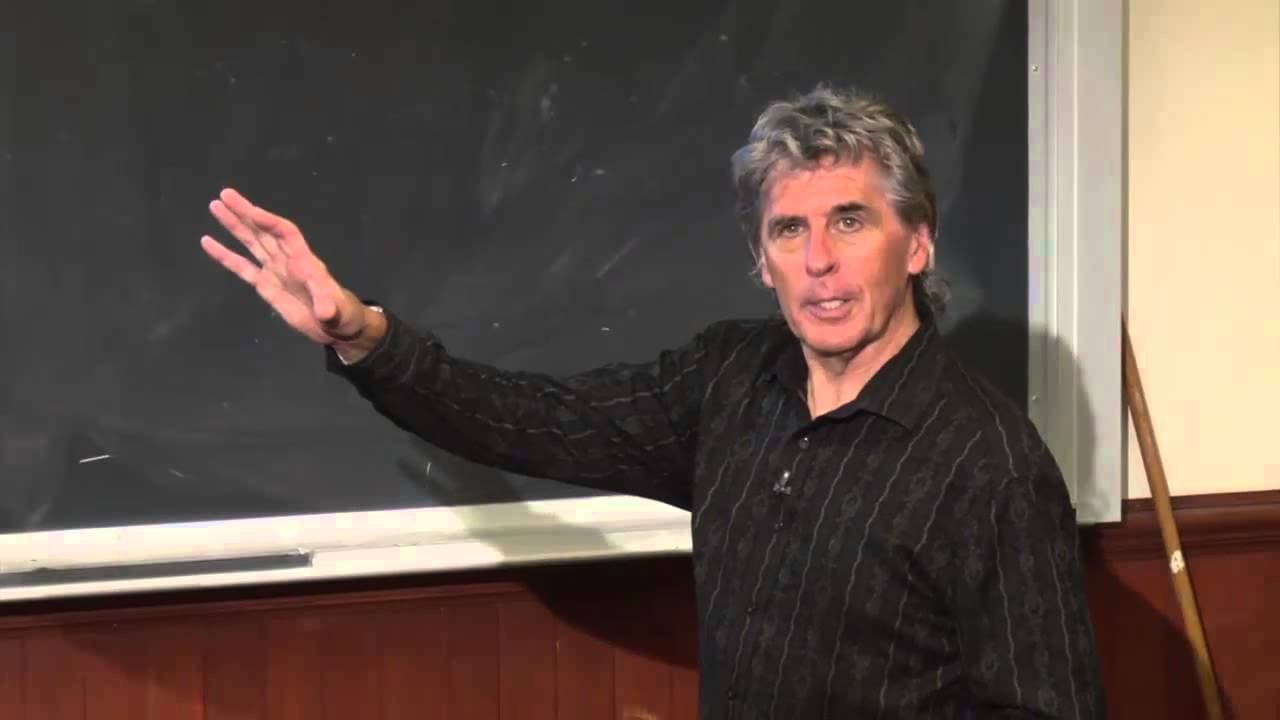
Humans acquired the ability to do mathematics by repurposing ancient mental capacities that likely share their roots with language, rather than by evolving a dedicated math gene. Formal mathematics is roughly 2,000 years old, while numbers were invented around 10,000 years ago, too recently for major brain structures to evolve specifically for math. Read on to understand how a stone-age brain learned to perform modern mathematical thinking.
Transcript
Stanford University okay so for today's um final uh session we as usual two lectures one is dealing with sort of mathematical cognition and how the brain got to be able to do mathematics at least a story that we can tell that we think is moderately plausible or I think is plausible um and then I'll finish with a sort of a grand finale by talking ab... Read More
Key Insights
- There is no math gene, according to Keith Devlin, because natural selection places a capacity into the shared gene pool for everyone to greater or lesser degrees rather than gifting it to a select few individuals.
- Mathematics is evolutionarily recent, with formal mathematics roughly two thousand years old and numbers invented around ten thousand years ago, far too recent for major structural changes in the brain to have occurred.
- The human brain is essentially a stone-age brain doing modern work, meaning the capacities used for mathematics must have existed latently, serving other purposes, for many hundreds of thousands of years before math emerged.
- The brain is the most expensive organ in the body, making up about two percent of body mass while consuming about twenty percent of the body's energy, so its evolutionary payoff had to be enormous to justify that cost.
- Mathematical thinking likely shares the same mental roots as language, since both require constructing complex mental models of things in the future, the past, or elsewhere, rather than simple present-tense communication.
- Language is not fundamentally about basic communication, because a small vocabulary and gestures handle local needs; full grammatical language becomes necessary only to express complex thoughts, plans, and models of the world.
- Mathematical cognition treats mathematics as a way of thinking, a thought process, rather than as a product or set of techniques you apply to problems, which is a meaningful distinction in research and application.
- Cooking food may have fueled brain growth, per recent research Devlin cites, because cooking releases much more usable energy from food, helping support the metabolically costly expansion of the human brain.
Install to Summarize YouTube Videos and Get Transcripts
Explore YouTube Video Summarizer or Get YouTube Transcript Extractor
Questions & Answers
Q: How did human beings acquire the ability to do mathematics?
Keith Devlin argues that humans repurposed mental capacities that had already existed for many hundreds of thousands of years. Because mathematics appeared too recently for dedicated brain structures to evolve, he proposes that mathematical thinking emerged from capacities also used to build complex thoughts and language.
Q: Is there a math gene that only some people inherit?
Devlin says there is no math gene that gives mathematical ability only to a select group. He argues that when natural selection establishes a genuine capacity in the human gene pool, that capacity is broadly present among people to greater or lesser degrees.
Q: Why is mathematics considered evolutionarily recent?
Formal mathematics is roughly 2,000 years old, numbers were invented around 10,000 years ago, and counting with notches may go back at most 35,000 years. Devlin says these periods are far too short for major structural changes in the brain or body to have evolved specifically for mathematics.
Q: What does a stone-age brain have to do with modern mathematics?
Devlin describes humans as having an essentially stone-age brain that performs modern mathematical work. The required capacities must therefore have been latent in the brain or serving other purposes long before people invented numbers and formal mathematics.
Q: How are mathematics and language connected?
Devlin proposes that mathematics grew from the same mental roots as language. Both involve constructing complex mental models of things beyond the immediate present, including the past, future, distant places, and plans.
Q: Why does mathematical thinking require effort and training?
Devlin describes mathematics as an unusual use of the brain that takes substantial training and effort and can make people tired. Its difficulty is consistent with the idea that the brain repurposes older capacities rather than relying on a structure evolved specifically for formal mathematics.
Q: What is mathematical cognition?
Mathematical cognition is the study of mathematics as a way of thinking. Devlin distinguishes treating mathematics as a thought process from treating it as a finished product or collection of techniques that can simply be applied.
Q: What helped establish mathematical cognition as a field?
Devlin says three related books appeared around the same period and helped cement the field: his own book, Stanislas Dehaene's work on number sense, and a book by George Lakoff and Rafael Nunez. These works examined numerical processing, mathematical thinking, and how the brain does mathematics from complementary perspectives.
Summary
In this video, the professor discusses the evolution of mathematical thinking in the human brain. He shares his own research and findings from other experts in the field to explain how the brain acquired the capacity for mathematics and how it has developed over time. The professor argues that mathematics is a way of thinking and that it evolved from our ability to handle abstraction and reason about relationships. He also draws parallels between mathematics and soap operas to emphasize the importance of relationships in mathematical thinking.
Questions & Answers
Q: What was the main question the professor wanted to answer?
The main question the professor wanted to answer was how the brain acquired the ability to do mathematics, considering that mathematics is a relatively recent development compared to the age of the human brain.
Q: How did the professor approach answering the main question?
The professor approached answering the main question by dividing mathematics into basic constituent capacities and explaining how each of these capacities evolved and what survival value they offered. He then explored the relationship between these capacities and the development of mathematical thinking.
Q: What are the basic capacities that contribute to mathematical thinking?
The basic capacities that contribute to mathematical thinking, according to the professor, include number sense, numerical ability, spatial reasoning ability, causal reasoning ability, algorithmic ability, abstraction ability, logical reasoning ability, and relational reasoning ability.
Q: How do numbers and language relate to each other?
Numbers and language are closely related. Research has shown that numbers are linguistic constructs and they are tied to language. Bilingual individuals are faster at arithmetic in the language they learned it in, which implies that numbers and language are interconnected in the brain.
Q: What is the role of abstraction in mathematical thinking?
Abstraction plays a crucial role in mathematical thinking. The ability to handle abstraction allows us to construct and reason about abstract mathematical models. Mathematical thinking is essentially the process of reasoning with these abstract models of numbers, shapes, and other mathematical entities.
Q: How are mathematical relationships similar to relationships in soap operas?
Mathematical relationships and relationships in soap operas share similarities in that they both involve understanding and reasoning about connections between different objects or entities. In soap operas, the relationships are based on human emotions and interactions, while in mathematics, the relationships are based on properties, equalities, and other mathematical concepts.
Q: Why does the professor compare watching a soap opera to doing mathematics?
The professor compares watching a soap opera to doing mathematics to highlight the difference in perceived complexity and ease between the two activities. While soap operas may appear more complex and intricate with their many characters and relationships, mathematics requires abstract reasoning and mental manipulation of mathematical concepts, which can be more challenging.
Q: What is the main conclusion of the professor's research?
The main conclusion of the professor's research is that mathematical thinking is not something separate or distinct from other cognitive abilities in the brain. Instead, it utilizes existing capacities such as language and reasoning about relationships in novel and abstract ways. Mathematics is a way of thinking that emerged as society became more complex and required the ability to reason about abstract concepts.
Q: What is the significance of gossip in relation to human relationships?
Gossip plays a significant role in human relationships as it helps to maintain and strengthen social bonds. It serves as a form of communication that allows individuals to exchange information about others and understand social dynamics. Gossip is considered important enough to occupy a large portion of our language use and is seen as the "oil" and "glue" that smooths and fuses relationships between individuals.
Q: How does the professor explain the evolution of mathematical thinking?
The professor explains the evolution of mathematical thinking by proposing that the brain already had latent capacities for mathematical thinking, but it required a trigger to bring them into use. As society became more complex, the need for mathematics arose, and individuals began to interpret and reason about the world using mathematical models. This transformation was facilitated by the brain's ability to handle abstraction and reason about relationships.
Summary & Key Takeaways
-
Keith Devlin closes his Stanford Continuing Studies course by asking how the human brain acquired the ability to do mathematics. Because math is evolutionarily recent, the underlying capacity must have existed in the brain for a very long time, serving other functions before math appeared.
-
Devlin's central message, drawn from his year-2000 book, is that there is no math gene. Natural selection distributes a genuine capacity across the whole gene pool, so the ability to do mathematics is something broadly available to people rather than a rare inherited talent.
-
He argues mathematics grew from the same mental roots as language. Both demand complex mental models of things not present, and building such complex thoughts closely resembles building mathematical models, suggesting math and language emerged from one shared cognitive foundation in our ancestors.
Read in Other Languages (beta)
Share This Summary 📚
Summarize YouTube Videos and Get Video Transcripts with 1-Click
Try YouTube Summary with ChatGPT & Claude or YouTube Transcript Generator
Explore More Summaries from Stanford 📚


Summarize YouTube Videos and Get Video Transcripts with 1-Click
Try YouTube Summary with ChatGPT & Claude or YouTube Transcript Generator