Cosmology Lecture 10
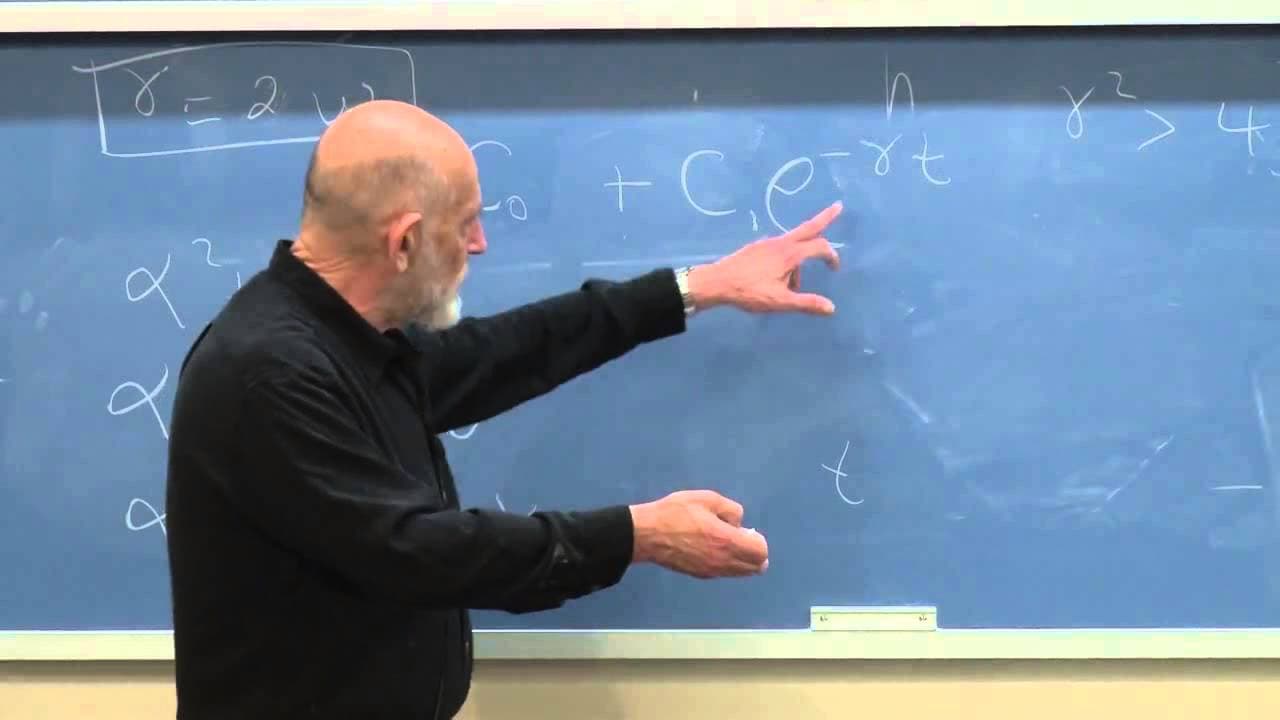
Transcript
Stanford University we do know a highly accurate description of Elementary particles it has a lot of parameters depending on the particular version of it which turns out to be true it could vary anywhere as from 25 parameters is to 150 but uh of order somewhere like 50 75 100 parameters numbers what kind of numbers the masses of quarks the masses o... Read More
Install to Summarize YouTube Videos and Get Transcripts
Explore YouTube Video Summarizer or Get YouTube Transcript Extractor
Summary
This video discusses the highly accurate theories that describe elementary particles and gravity. It explores the parameters involved in these theories, such as the masses of particles, coupling constants, and fundamental constants like the speed of light and Planck's constant. The video also introduces the concept of quantum fluctuations and explains how they are responsible for temperature variations, or ripples, in the early universe. These ripples eventually led to the formation of galaxies and other structures. The video concludes by discussing the WMAP, a map of the microwave background radiation, and how it provides evidence for these temperature fluctuations.
Questions & Answers
Q: What are the parameters in the theories of elementary particles and gravity?
The parameters in these theories include the masses of particles (such as quarks and electrons), coupling constants, and fundamental constants like the speed of light and Planck's constant. These parameters determine the specific values and characteristics of the particles and their interactions.
Q: How many parameters are involved in the theory of elementary particles?
The number of parameters can vary depending on the specific version of the theory, but it could be anywhere from 25 to 150. On average, it is estimated to be around 50-100 parameters.
Q: What do the parameters in the theory of elementary particles represent?
The parameters represent various properties of the particles, such as their masses, coupling constants, and electric charges. They reflect the specific values and characteristics of the particles in the theory.
Q: What is the significance of the speed of light in the theory of elementary particles?
The speed of light plays a fundamental role in the theory of elementary particles. It is a universal constant that governs the movement of matter and information. All matter and information are constrained to move at speeds less than the speed of light, according to Einstein's principle. This universal property reflects the deep and fundamental nature of the speed of light.
Q: What is the uncertainty principle and why is it important in the theory of elementary particles?
The uncertainty principle states that there is a fundamental limit to the precision with which certain pairs of physical properties, such as position and momentum, can be known simultaneously. This principle applies to all particles and objects, and it has profound implications for the behavior and interactions of particles. The uncertainty principle is a key principle of quantum mechanics and plays a central role in our understanding of elementary particles.
Q: What is Newton's constant and how does it relate to gravity?
Newton's constant is a fundamental constant in the theory of gravity, also known as Newton's law of gravity. It describes the force of attraction between two objects with mass. The force is inversely proportional to the square of the distance between the objects and is directly proportional to the product of their masses. Newton's constant, denoted as G, is the same for all objects and plays a universal role in the theory of gravity.
Q: What is the Planck constant and why is it considered fundamental?
The Planck constant is a fundamental constant in quantum mechanics. It relates the energy of a particle to its frequency, or inversely, its wavelength. The Planck constant, denoted as h, is a fundamental constant that governs all phenomena, not just specific types of particles or objects. Its dimensions and values are such that it allows for the derivation of basic units of length, time, and mass in physics.
Q: How do the fundamental quantities in physics relate to each other?
The fundamental quantities in physics, such as the speed of light, Planck's constant, and Newton's constant, have relationships and dependencies on each other. For example, the Planck length can be derived from a combination of these constants, indicating a fundamental connection between them. These fundamental quantities play universal roles in our understanding of the physical laws and phenomena.
Q: What is the Planck length and why is it significant?
The Planck length is a fundamental length scale in physics. It is the smallest possible length that can be measured, beyond which our current understanding of physics breaks down. The Planck length, which is about 10^-35 meters, represents the scale at which quantum effects become significant and are required to describe the behavior of particles and spacetime.
Q: How do the temperature fluctuations in the early universe relate to the formation of galaxies and structures?
The temperature fluctuations in the early universe, as captured in the WMAP observations, are thought to be responsible for the formation of galaxies and other structures. These fluctuations originated from quantum fluctuations during the early stages of the universe. Over time, these fluctuations grew and evolved due to gravity, leading to the formation of regions of higher and lower densities. These regions eventually became the seeds for the formation of galaxies, clusters, and other cosmic structures.
Q: Where did the temperature fluctuations in the early universe come from?
The temperature fluctuations in the early universe are believed to have originated from quantum fluctuations. These fluctuations are inherent to the nature of quantum mechanics and arise from the uncertainty principle. Quantum fluctuations can give rise to tiny variations in the energy density, which in turn affect the temperature of the universe. These temperature fluctuations provide the seeds for cosmic structures to form later on.
Takeaways
The theories of elementary particles and gravity involve various parameters that describe the properties and interactions of particles. These parameters encompass characteristics such as mass, coupling constants, and fundamental constants like the speed of light and Planck's constant. The speed of light, in particular, is a universal constant that governs the movement of matter and information. The uncertainty principle, a key principle of quantum mechanics, sets a limit on the precision with which certain physical properties can be known simultaneously. Newton's constant describes the force of gravity between two objects, while the Planck constant and speed of light enable the derivation of fundamental units of length, time, and mass. The temperature fluctuations observed in the early universe, as seen through the WMAP, result from quantum fluctuations and have played a pivotal role in the formation of galaxies and cosmic structures.
Read in Other Languages (beta)
Share This Summary 📚
Summarize YouTube Videos and Get Video Transcripts with 1-Click
Try YouTube Summary with ChatGPT & Claude or YouTube Transcript Generator
Explore More Summaries from Stanford 📚


Summarize YouTube Videos and Get Video Transcripts with 1-Click
Try YouTube Summary with ChatGPT & Claude or YouTube Transcript Generator